The Chicago Gambit: How Kansas City Seized the World Cup to Redefine the American Heartland
How the "Soccer Capital of America" used Chicago's exit to fuel a $700 million global rebranding effort.
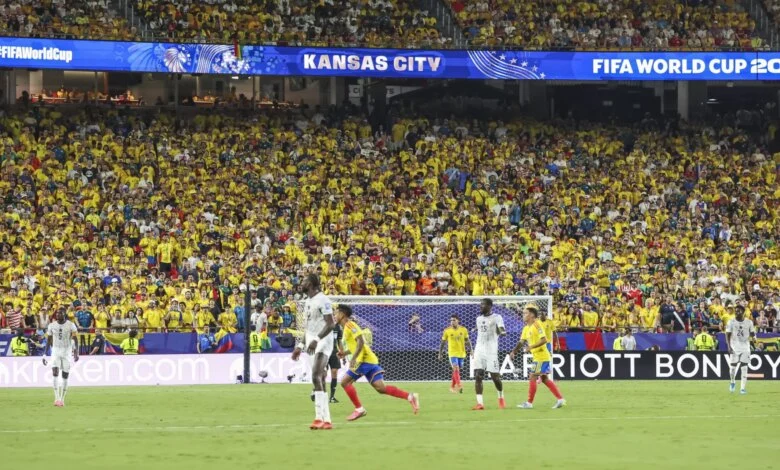
Kansas City’s presence on the global stage this month is the result of a calculated gamble that larger American metropolises were unwilling to take. While Chicago—the nation’s third-largest city—famously withdrew its bid over FIFA’s stringent financial and legal demands, Kansas City officials viewed the tournament not as a burden, but as a catalyst for a permanent regional transformation.
The city, which straddles the Missouri-Kansas border with a metro population of 2.2 million, is currently hosting six matches at Arrowhead Stadium. According to Tim Cowden, president and CEO of the Kansas City Area Development Council, the decision to pursue the bid after Chicago’s exit was a strategic move to leverage the opportunity to the hilt. While former Chicago Mayor Rahm Emanuel cited concerns over security costs and tax waivers, Kansas City organizers saw an opening to secure the city’s trademarked title as the Soccer Capital of America.
This ambition is backed by a $700 million investment in soccer infrastructure over the last 15 years. This includes Children’s Mercy Park and the recently opened CPKC Stadium, the first purpose-built professional women’s soccer stadium globally. Even the training sites have become a draw; the England national team bypassed larger coastal cities to train at Swope Soccer Village, citing a facility quality that feels like home, according to KC2026 board president Mark Jorgensen.
Operationally, the tournament has forced a car-dependent region to innovate. The city established a Joint Operations Center to coordinate 50 communities and 18 counties, managing everything from cross-state police escorts for Argentina’s squad to real-time bus rerouting during traffic incidents on I-70. To solve the lack of stadium rail access, organizers launched Connect KC 26, a temporary bus network that has slashed travel times across the metro and may serve as a blueprint for future transit expansion.
The financial math remains complex. While FIFA expects to generate $8.9 billion from the tournament, host cities often face significant shortfalls. However, Kathy Nelson, who led the Kansas City Sports Commission’s bid, argues the value lies in the dramatic results of big ideas. Beyond the estimated 500,000 visitors, the city is using KC House—an invitation-only venue for heads of state and CEOs—to court foreign investment.
For local leaders, the benchmark is the 1996 Atlanta Olympics, an event that redefined a city’s global standing despite initial skepticism. As Cowden noted, the direct economic spinoff of roughly $650 million is secondary to the epiphany of the visit—the moment international decision-makers realize the Midwestern hub is a viable alternative to traditional coastal powerhouses.