Comcast Launches Xfinity Shield Wi-Fi Motion Home Security
New platform converts ambient router signals into motion detection without cameras
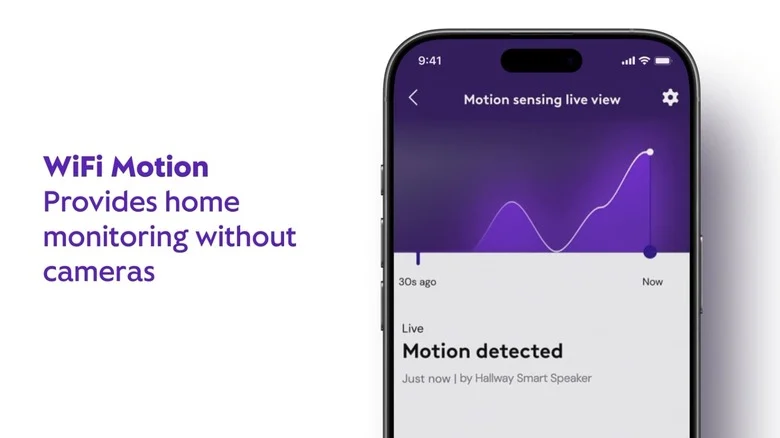
Comcast is offering a tier named Wi-Fi Shield to Xfinity Internet subscribers at no additional charge, anchored by an ambient motion-sensing feature called Wi-Fi Motion. According to data provided by Comcast, a typical Xfinity home network currently hosts an average of 36 connected devices. This opt-in capability continuously monitors subtle shifts in radio frequency (RF) signal propagation between the central Xfinity Gateway router and connected household hardware, such as smartphones, smart TVs, and laptops. When the network algorithms register unexpected disruptions in the RF environment, the system triggers real-time push alerts sent directly to the subscriber’s mobile device through the main Xfinity application. To provide technical context, this mechanism relies on Channel State Information (CSI) measurements within the 2.4 GHz and 5 GHz wireless spectrums. The Institute of Electrical and Electronics Engineers (IEEE) has actively standardized Wi-Fi sensing under the upcoming IEEE 802.11bf specification, establishing protocols for how ambient wireless signals can map physical environments without requiring dedicated motion sensors.
The broader platform behind this capability, introduced as Xfinity Shield, represents Comcast’s latest unified approach to home security, digital privacy, and parental monitoring inside a single management software interface. By positioning the home Wi-Fi network as the foundational layer of domestic defense, the telecommunications giant aims to bridge the gap between physical perimeter monitoring and digital cybersecurity. Industry analysts note that major telecommunications providers are increasingly leveraging smart home security services to reduce subscriber churn and boost Average Revenue Per User (ARPU). As traditional linear cable television subscriptions decline across North America, major internet service providers are expanding value-added network services to lock in broadband customers.
Addressing potential privacy considerations, Comcast emphasized that Wi-Fi Motion utilizes internal Xfinity Gateway processing intelligence to deliver situational awareness without capturing video footage, taking photographs, or verifying the identity of individual residents. While RF-based motion detection technology has been developed by various smart home startups and mesh network vendors over the past decade, Comcast’s deployment marks a notable instance of a major national internet provider embedding spatial sensing natively into consumer gateway infrastructure. Unlike traditional passive infrared (PIR) sensors that require battery replacements and line-of-sight positioning, radio-frequency sensing penetrates non-metallic interior walls and operates across dark rooms. Similar RF disturbance systems were previously commercialized in niche mesh systems like Linksys Aware, but Comcast’s scale gives this technology immediate distribution across millions of American households.
Alongside the standard tier, Comcast introduced a premium subscription called Shield Select priced at $15 per month. This paid offering expands hardware functionality by bundling an indoor security camera, a dedicated door or window contact sensor, cloud-based video recording history, and continuous 24/7 professional emergency response dispatch, accessible via an integrated panic button within the app. Furthermore, Shield Select incorporates artificial intelligence vision models capable of categorizing detected objects, allowing the system to distinguish between people, domestic pets, delivered packages, and approaching motor vehicles. At $15 monthly, Shield Select positions Comcast directly against established home automation platforms such as Amazon’s Ring Protect Pro ($20/month) and Google’s Nest Aware Plus ($15/month). By incorporating live emergency response dispatch into a monthly internet bill, Comcast directly targets traditional home security incumbents such as ADT, which historically relied on separate long-term service contracts and specialized installation technicians.
The foundational Wi-Fi Shield software package also includes automated network security protections designed to filter malicious traffic, block phishing attempts, and neutralize malware targeting smart appliances. Integrated directly alongside these cybersecurity controls are consolidated Family Settings, enabling primary account holders to establish distinct user profiles for family members, link specific devices, enforce daily screen time caps, and configure content filtering. Users can switch the entire environment between three preset operational modes tailored for when occupants are active at home, away from the residence, or sleeping. According to cybersecurity research firm ThreatDown, Internet of Things (IoT) devices experience thousands of automated reconnaissance attacks daily due to unpatched firmware and weak default passwords. Centralizing perimeter DNS filtering at the router level allows service providers to intercept malicious command-and-control server requests before rogue traffic reaches vulnerable smart home electronics like connected thermostats or smart TVs.
Xfinity Shield has officially launched across Comcast’s active service footprint, offering immediate access to existing broadband subscribers. Looking ahead, the company stated that it will expand the platform’s capabilities with additional hardware integrations, enhanced automation tools, and expanded software services throughout next year. As Comcast preps next year’s upgrades, telecommunications observers expect future iterations to integrate emerging smart home standards like Matter and Thread, as well as next-generation Wi-Fi 7 gateways. This ongoing roadmap positions Comcast’s network infrastructure not merely as a passive data pipe, but as an active operational hub for domestic automation and security management.