Apple Watch Series 12 and Ultra 4 Focus on Processing Power and Health Tech Ahead of Major Redesign
Late-stage testing points to faster processing chips and refined fitness tracking, while a dramatic design overhaul remains slated for upcoming years.

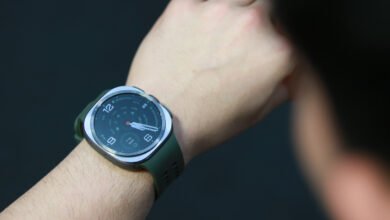
Apple is advancing late-stage testing on its forthcoming smartwatch lineup, readying the Apple Watch Series 12 and Apple Watch Ultra 4 with upgraded silicon and targeted wellness capabilities while maintaining the established physical design of its wearable hardware.
According to details reported by Bloomberg, the upcoming hardware releases will span both Wi-Fi and cellular configurations for the Series 12 alongside the rugged Ultra 4. Rather than introducing a visual overhaul, the tech giant is concentrating its engineering efforts on core processing speed, battery efficiency, and enhanced fitness tracking capabilities.
The planned internal refresh represents a key hardware iteration for Apple’s wearable architecture. The last fundamental leap in smartwatch silicon arrived with the S9 chip in 2023, which introduced dedicated quad-core Neural Engines for faster on-device Siri processing and localized machine learning tasks. Upgrading the underlying System-in-Package allows Apple to expand background health algorithms and biometric monitoring without compromising the strict power budgets inherent to wrist-worn devices.
Meanwhile, consumers looking for an entry-level device will not see a new Apple Watch SE model this cycle. Apple recently refreshed its budget-oriented wearable with the Apple Watch SE 3, adhering to a multi-year refresh cadence for its entry tier while reserving annual hardware cycles for flagship models.
Industrial design changes and transformative health capabilities remain deferred to future hardware cycles. Apple engineers continue to work on a broader platform redesign slated for release in the next one to two years. Concurrently, the company is advancing long-term development on non-invasive blood glucose monitoring, a technology intended to integrate directly with Apple’s broader health software suite.
Continuous non-invasive blood sugar tracking has long been considered a critical frontier for consumer health platforms. Achieving accurate glucose readings without puncturing the skin requires complex optical absorption spectroscopy to analyze light reflected from fluid beneath the skin—a technical hurdle that wearable manufacturers have sought to solve for years. If successfully commercialized, the technology would turn the Apple Watch into an indispensable daily monitoring tool for hundreds of millions of individuals managing prediabetes and diabetes worldwide.