Audi Unveils 2027 Q9 Flagship SUV to Challenge BMW X7 and Mercedes GLS
The three-row Q9 and performance SQ9 debut as Audi's new flagship luxury models.
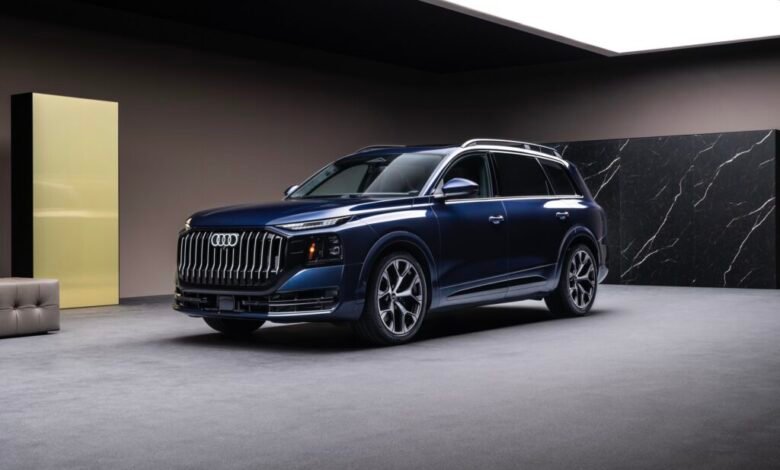
Audi has officially expanded its luxury vehicle lineup with the debut of the 2027 Q9, a full-size three-row SUV designed to capture market share in the high-capacity premium segment. Positioned above the existing Q7, the new model effectively steps in as the brand’s flagship vehicle amid a broader market shift away from traditional executive saloons like the Audi A8, for which no immediate successor is currently planned.
Measuring 209 inches (5,309 mm) in length, 79.2 inches (2,012 mm) in width, and 71.4 inches (1,814 mm) in height, the Q9 brings Audi into direct competition with established full-size luxury entries such as the BMW X7, Mercedes-Benz GLS, and Cadillac Escalade. The vehicle rides on a 123.5-inch (3,137 mm) wheelbase—an extension of 5.6 inches (142 mm) over the Q7—providing significantly increased room for third-row passengers.
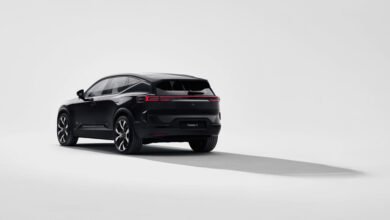
Styling for the Q9 features softer exterior curves and subtle creasing compared to previous brand design languages, giving the large SUV a proportioned profile reminiscent of an enlarged estate car. Optional digital OLED tail lights are offered at the rear. Underneath the bodywork, the model is built on Volkswagen Group’s Premium Platform Combustion (PPC) architecture, a flexible framework also utilized by the redesigned A5, Q5, and third-generation Q7. Technical release updates published on the official Audi MediaCenter showcase the architecture’s role in accommodating modern mild-hybrid and internal combustion powertrains.
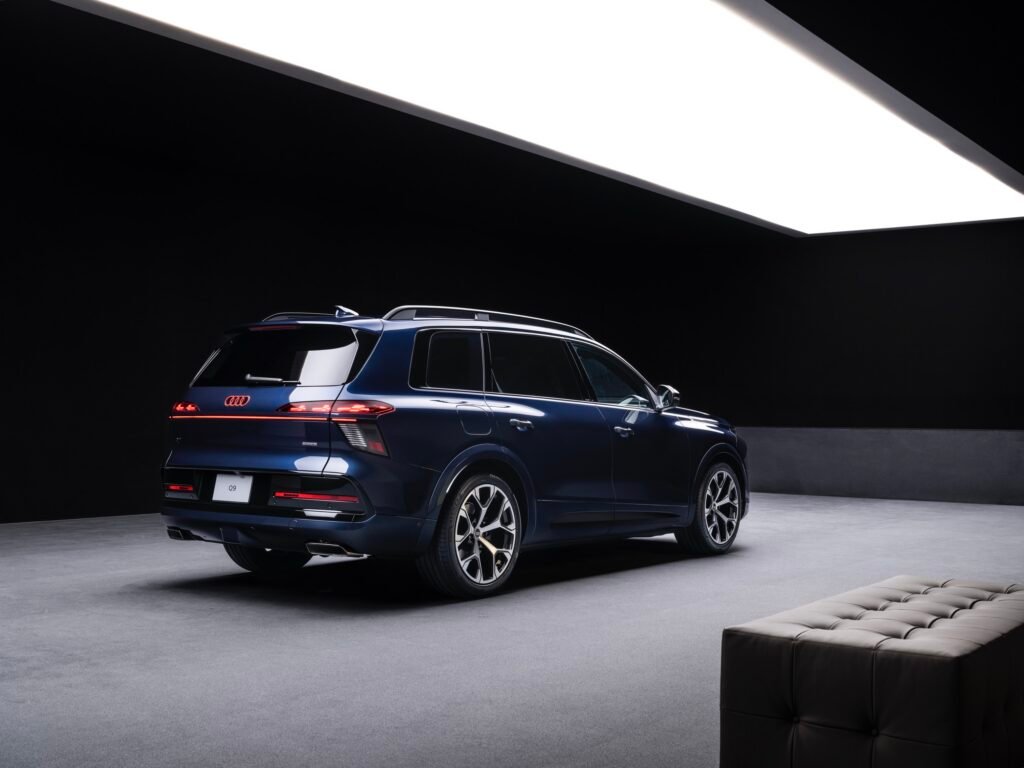
At launch, standard Q9 variants will be powered by a 2.9-liter turbocharged V6 engine. Alongside the base model, Audi revealed the higher-performance SQ9, which trades the V6 for a twin-turbocharged V8 engine shared with select RS performance models. The SQ9 is distinguished by wider wheel arches, larger alloy wheels, a distinct illuminated front grille, and an all-wheel-drive system configured for rear-biased power delivery during standard driving conditions.