First Drive: The 519-HP 2026 Cadillac Optiq-V Redefines the Brand’s Electric Performance Lineup
Testing Cadillac's 519-horsepower electric performance crossover.

Cadillac is expanding its electric vehicle portfolio with the 2026 Cadillac Optiq-V, a high-performance compact crossover that challenges traditional luxury segments. Priced at nearly $80,000 as tested, the dual-motor performance EV balances everyday usability with athletic driving dynamics, positioning itself as an intriguing alternative in a rapidly crowding luxury electric vehicle market.
Weighing in at 5,437 pounds (2,466 kg), the Optiq-V features a dual-motor powertrain that generates 519 horsepower (387 kW). Cadillac claims a 0-60 mph acceleration time of 3.5 seconds. During real-world GPS testing conducted at a 21 percent state of charge, the vehicle recorded a 0-60 mph time of 4.53 seconds without rollout and 4.21 seconds with rollout.

Chassis Tuning and Driving Dynamics
The crossover’s athletic handling is supported by upgraded dual-valve dampers that manage body motions without sacrificing ride quality. It also features upgraded Brembo brakes for enhanced stopping power and a quicker steering ratio compared to standard Optiq models.
Rather than delivering an artificially harsh ride common in some performance EVs, the chassis tuning remains composed during aggressive cornering while maintaining daily driving comfort. The power delivery and mechanical upgrades give the vehicle a hot-hatch character despite its crossover ride height.
Design and Cabin Experience
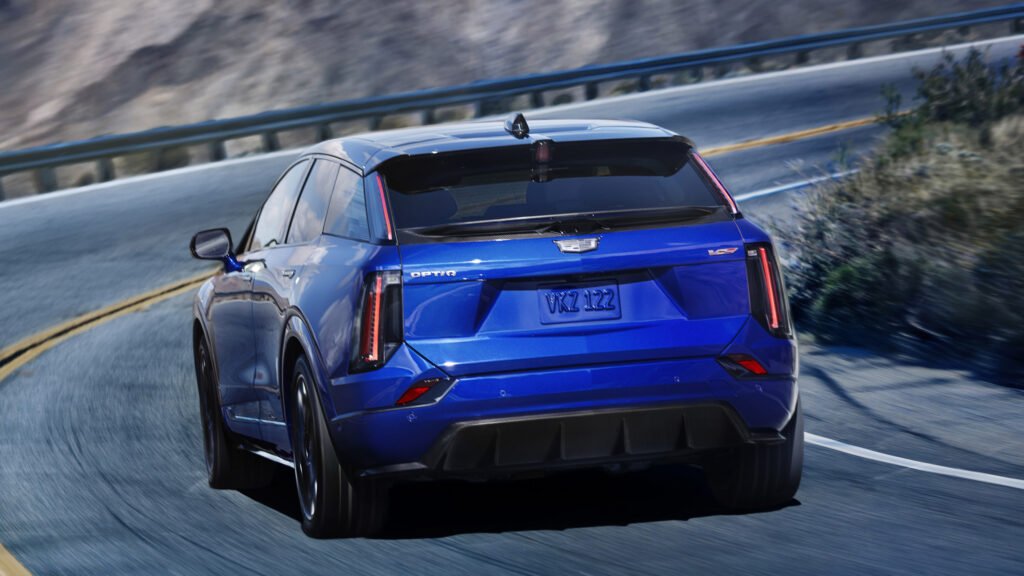
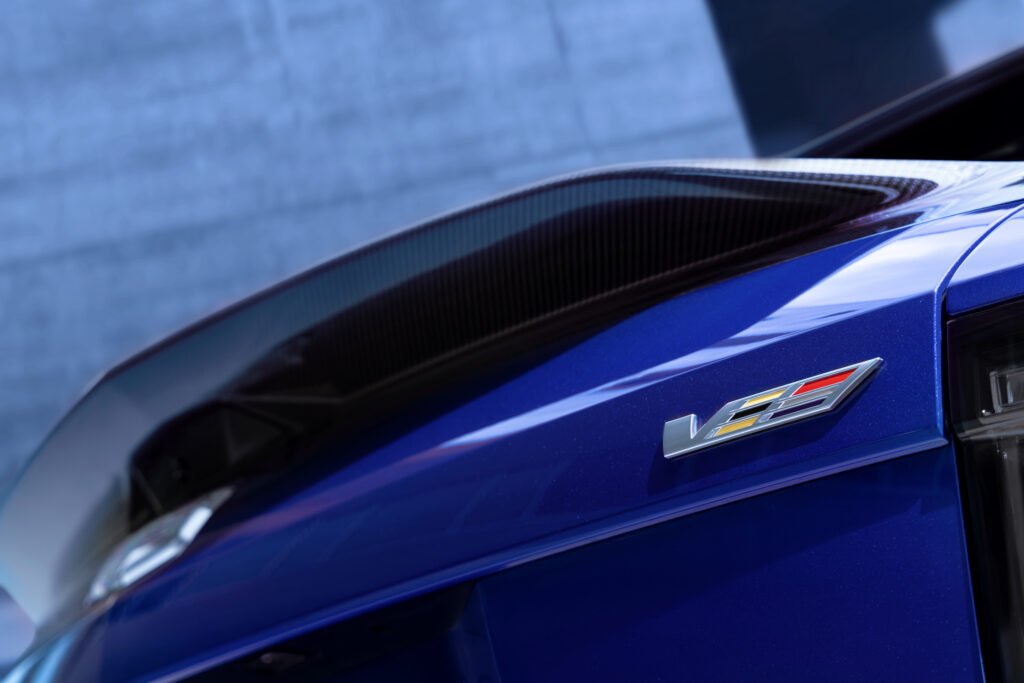
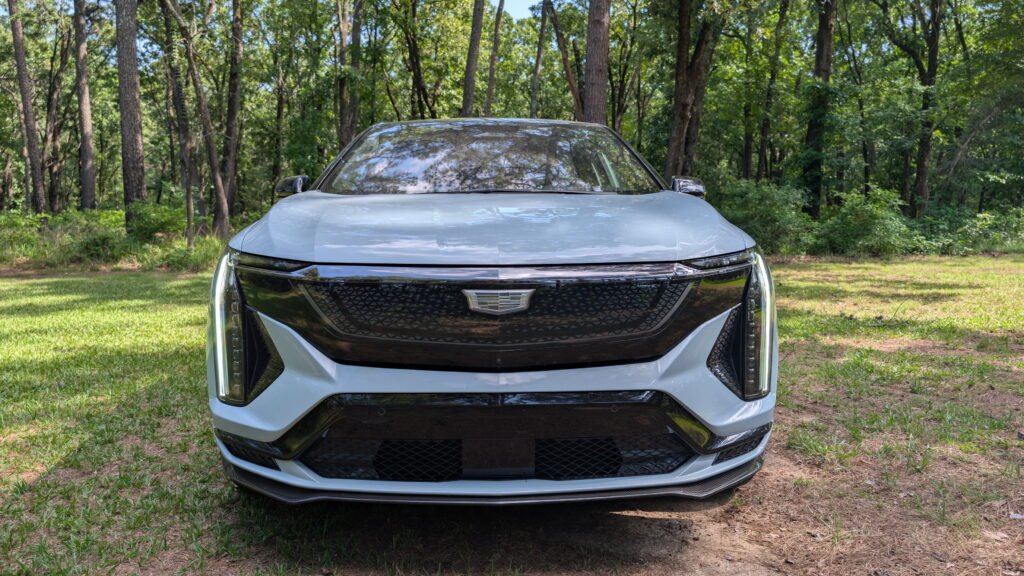
The exterior design of the Optiq-V features angular sheetmetal, sharp lighting signatures, and a blend of black and bright trim. Distinctive elements include a dual-spoiler arrangement and reverse pop-out door handles.
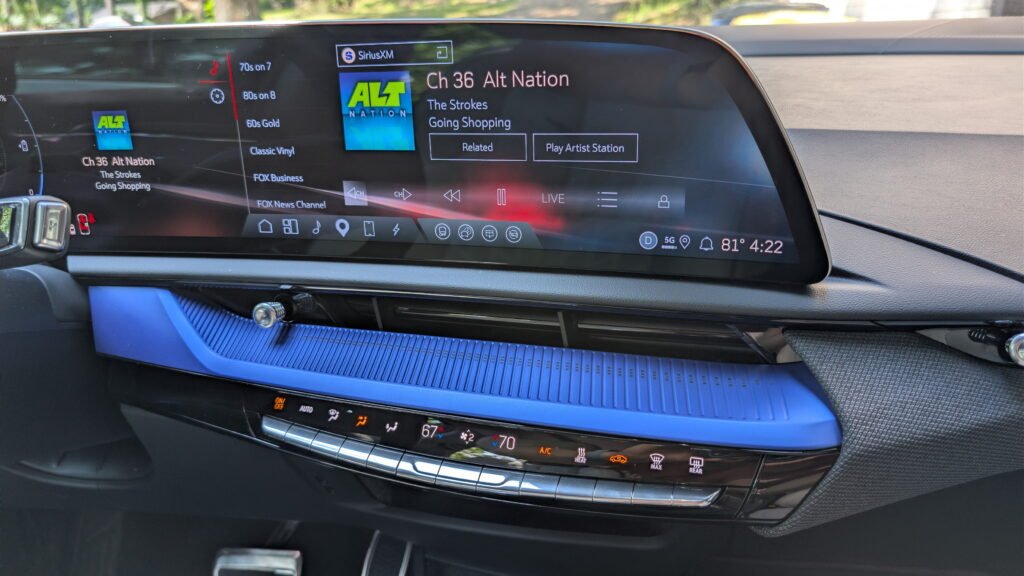
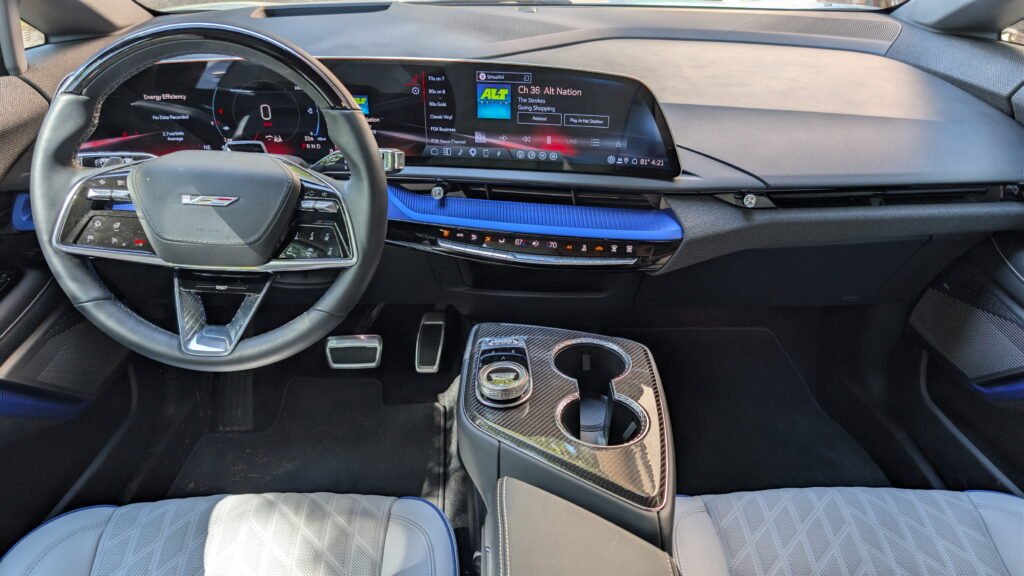
Inside, the cabin presents a mix of premium materials and cost-saving plastics. High-quality touches include rich leather upholstery, contrast stitching, fabric door inserts, and sturdy physical climate controls. However, the heavy use of piano black plastic on high-touch surfaces like the steering wheel quickly accumulates fingerprints. The steering wheel also features chrome-look plastic trim, and the blue accent trim throughout the cabin feels less premium than its visual appearance suggests.
For utility, the Optiq-V offers a 26 cubic-foot cargo area behind the second row, a hidden wireless charging area beneath the center console, and physical buttons alongside a rotary dial with haptic controls.
Range, Battery, and Charging
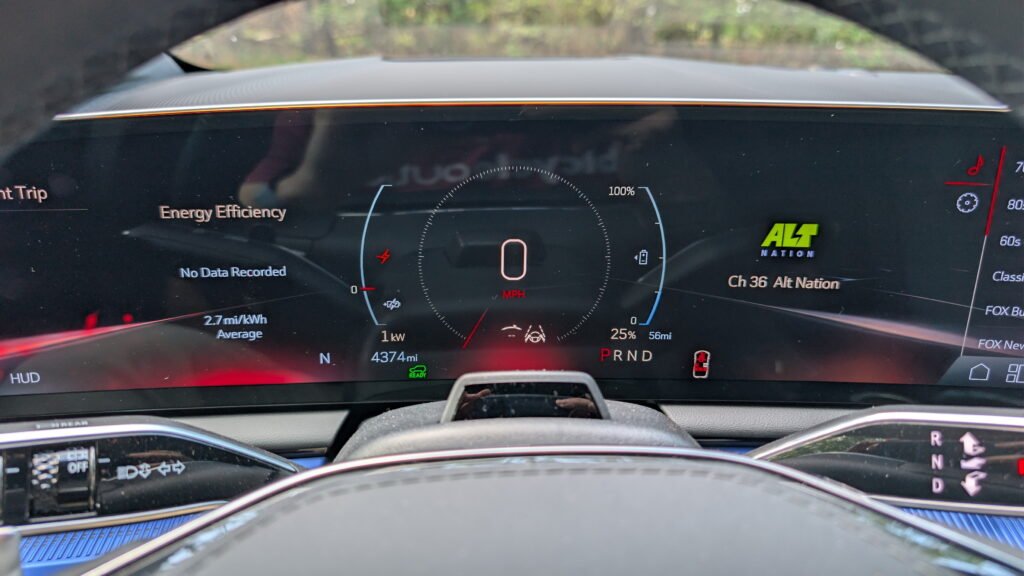
Equipped with an 85-kWh battery pack, the Optiq-V achieved an average efficiency of 2.7 mi/kWh over approximately 220 miles of mixed driving, translating to a calculated real-world range of roughly 230 miles. This falls short of Cadillac’s official EPA estimate of 275 miles, which remains subject to driving style, speed, and weather conditions.
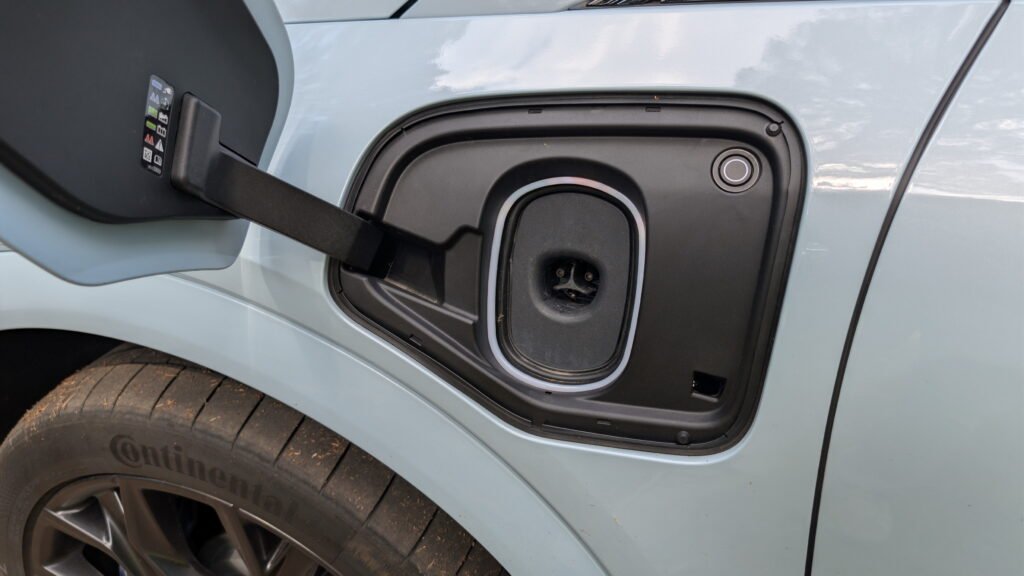
Crucially, the vehicle features native NACS charging compatibility, granting owners direct access to Tesla’s Supercharger network without requiring adapters.
Pricing and Competition
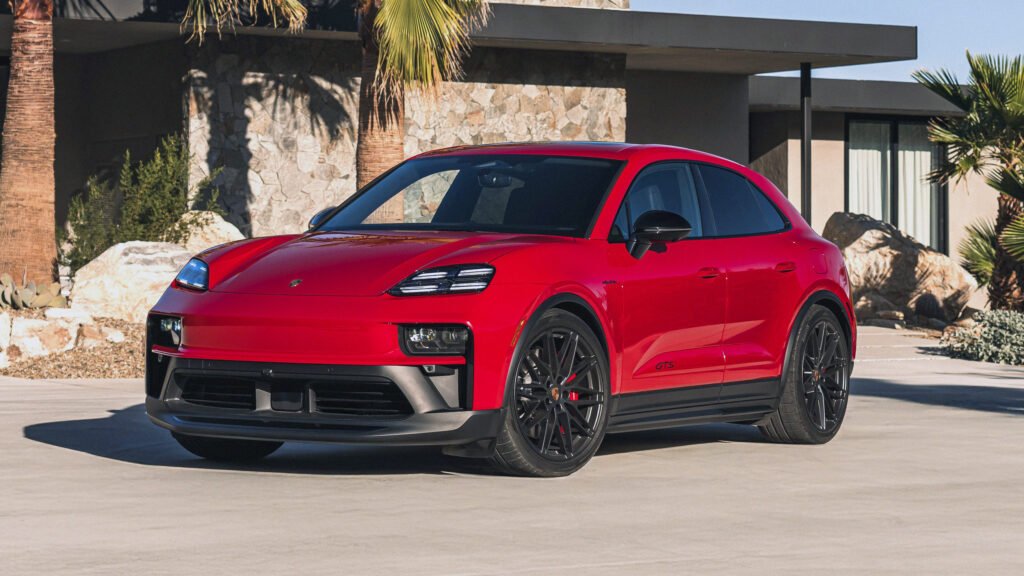
At an as-tested price of nearly $79,000, the Optiq-V faces stiff competition. The Porsche Macan Electric starts around $82,000, offering a benchmark driving experience at a higher price point with less power. Other competitors include the upcoming Volvo EX60, the Mercedes-Benz GLC-Class EV, and the Audi SQ6 e-tron.
Buyers can lower the entry cost by managing options. Forgoing the $5,700 carbon fiber package and selecting the $2,555 Charging and Convenience Package II brings the final price closer to $71,000, making the vehicle significantly more competitive.
Background: Cadillac’s V-Series and the EV Transition
To understand the positioning of the Optiq-V, it is helpful to look at Cadillac’s performance heritage. Cadillac established its V-Series sub-brand in 2004 to compete directly with European performance divisions like BMW’s M division and Mercedes-AMG. Historically defined by high-displacement, supercharged V8 engines, the V-Series is currently undergoing a strategic transition toward electrification.
The Optiq-V utilizes General Motors’ modular Ultium platform, which serves as the foundation for the group’s modern electric vehicle lineup. This architecture allows for flexible battery configurations and dual-motor all-wheel-drive setups.
The inclusion of native NACS charging compatibility marks a significant industry shift. In 2023, major automakers agreed to adopt Tesla’s North American Charging Standard (NACS) to provide consumers with more reliable public charging infrastructure, moving away from the previously dominant Combined Charging System (CCS) connector.