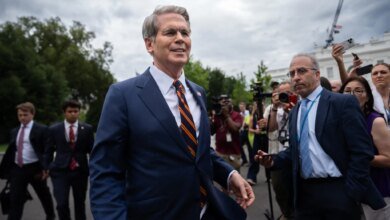
Nelson Peltz Assembles Investor Consortium for Takeover Offer as Wendy’s Struggles With Declining Sales
Largest Shareholder Eyes Privatization After 7% Sales Drop and 289 Store Closures

Billionaire activist investor Nelson Peltz is moving to take Wendy’s private through an investor consortium as the fast-food chain fights six consecutive quarters of declining U.S. sales and a market capitalization that has fallen to $1.62 billion.
Peltz’s Trian Fund Management has assembled a consortium that could potentially submit an offer to take Wendy’s private in the coming weeks, according to reports from the Financial Times and Reuters. The group is expected to include Abu Dhabi-based BlueFive Capital and Flynn Group, one of the world’s largest restaurant franchise operators and a major Wendy’s franchisee.
Peltz has been preparing for a potential takeover as early as February, when Trian said in a regulatory filing that it believed Wendy’s stock was “undervalued” and disclosed the fund was reaching out to possible co-investors about strategic options, including taking the company private. Peltz personally owns roughly a 16.24% stake in Wendy’s while Trian holds roughly 7.85%, which, at over 24% combined, make up Wendy’s largest shareholder.
Submissions filed with the U.S. Securities and Exchange Commission detailed that Trian began evaluating structural alternatives after stock performance trailed broader restaurant indexes. Partnering in the consortium is Flynn Group, led by founder Greg Flynn, which currently operates 309 U.S. Wendy’s franchise locations within a global portfolio of over 2,600 restaurant locations generating $4.7 billion in annual sales.
The buyout effort follows Wendy’s Aug. 7 second-quarter results, which showed a 7% drop in U.S. same-restaurant sales and a 12.5% plunge in customer traffic.
Amid 17 consecutive months of sales contraction in the quick-service burger category, Wendy’s closed 289 U.S. restaurants during the first half of 2026, rescinded its 2026 financial guidance, and lowered its quarterly dividend to 7 cents a share. CEO Bob Wright told Wall Street analysts, “I’m sure there will be additional closures.”
Addressing the chain’s operational backdrop, Wright told investors, “Traffic is down, our value proposition has slipped, and franchisee economics are under pressure. We can’t just do what we’ve always done better. We do have to innovate.”
CFO Steve Cirulis noted on the second-quarter earnings call that Wendy’s reduced customer discounting and cut back breakfast hours across select stores, while a 5.6% increase in average check only partially offset guest traffic losses.
Product launches and marketing campaigns failed to drive required volumes. Cirulis stated that Wendy’s new chicken sandwich platform and a Minions & Monsters movie promotion did not deliver expected traffic, following earlier friction in February 2024 when former CEO Kirk Tanner announced a $20 million plan to install digital menu boards and test dynamic pricing, prompting consumer concerns over surge pricing until the company clarified it would not raise prices during peak hours.
Execution variances between corporate and franchised stores have further concentrated focus on store operations. U.S. company-operated locations beat the wider U.S. franchise system on same-restaurant sales by 280 basis points during the second quarter.
Morgan Stanley lowered its price target on Wendy’s stock from $7 to $5.50 two days prior to reports of Trian’s consortium bid, after which Wendy’s shares rose 12%.