AI Automation Risks Creating Workplace ‘Moral Crumple Zones’ for Human Workers, Expert Warns
Princeton Researcher Highlights How Automated Decision Systems Shift Liability to Human Operators
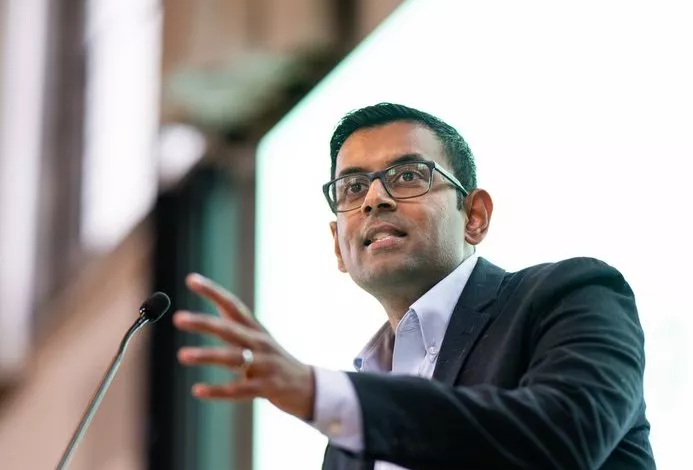
Princeton computer science professor Arvind Narayanan, co-author of AI Snake Oil, warned that the primary workplace threat from artificial intelligence is the creation of oversight roles that force human workers to absorb legal and operational liability when automated systems fail.
Narayanan described workplace labor under AI as a “sandwich” structure where supervision, verification, and auditing requirements expand even as direct human execution shrinks. In fields such as law, finance, healthcare, and human resources, automated decision tools increase the total volume of checking work required from human operators who must continuously evaluate algorithmic outputs against adversarial or regulatory standards.
The bigger risk, he said, may be a workplace in which people still have jobs but are relegated to what he called “janitorial work” — his phrase, but he acknowledged that others had circled the same idea with different words. Monitoring systems perform much of the intellectual labor while workers absorb the blame when something goes wrong.
He also invoked a second term for that arrangement: the “moral crumple zone,” a phrase more widely used in AI-ethics circles. Just as crumple zones in cars absorb impact to protect the vehicle, the person nominally in charge becomes the one punished for the failure of an automated system they lack the visibility or authority to truly control.
The term moral crumple zone was established by researcher Madeleine Clare Elish in a 2019 study published in Engaging Science, Technology, and Society. Elish’s research on automated aviation and autonomous driving found that legal and operational frameworks consistently attribute fault to human operators when highly automated systems malfunction, even when those operators lack real-time visibility or intervention capacity.
That liability dynamic surfaced in legal practice during the 2023 federal case Mata v. Avianca in the U.S. District Court for the Southern District of New York. Judge P. Kevin Castel sanctioned two attorneys who submitted legal filings containing fictitious citations generated by ChatGPT, establishing that human professionals remain fully liable for verification despite delegating research to generative algorithms.
Narayanan noted that this structural disconnect is especially severe in high-stakes prediction systems used by hospitals, insurance companies, human-resources departments, and criminal-justice entities. Machine-learning algorithms deployed to forecast employee performance, bail risks, or medical diagnoses push human staff into monitoring roles where they must endorse automated forecasts without having access to the underlying algorithmic decision logic.
The structural impact differs between technical fields based on system design. Software developers using AI interactively experience what Narayanan called a “growth cycle,” reviewing code outputs and asking systems to identify bugs while retaining direct control over evaluation. In contrast, systems that output finished products remove human involvement from the generative phase, leaving workers strictly in a verification capacity.
“It’s not inevitable,” Narayanan said, emphasizing that engineering design choices across the development pipeline dictate human agency. Drawing an analogy to industrial machinery, he noted that while autonomous cranes were technically feasible, industry standards mandated human operators to maintain direct physical control over where structural beams are placed.