LVMH Succession Spotlight Shifts to Financials as Outside Executive Outperforms Heir-Led Units
Bernard Arnault's defense of family unity coincides with half-year earnings showing luxury leather fatigue while non-family leadership drives jewelry growth.
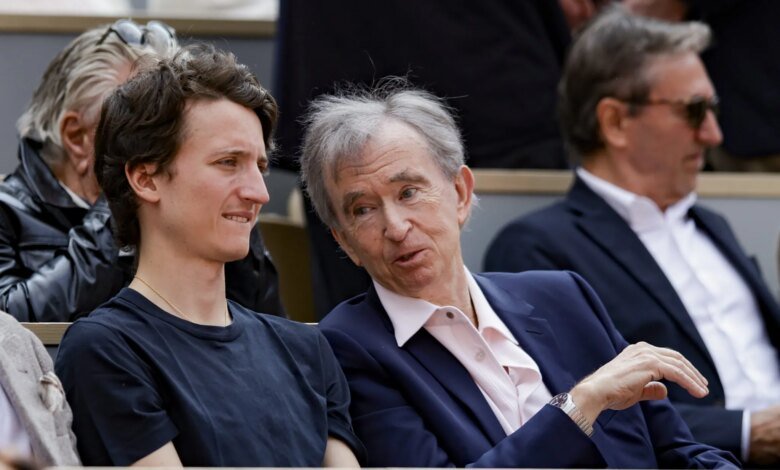
A public defense of family unity by 77-year-old patriarch Bernard Arnault has refocused global attention on governance at luxury giant LVMH Moët Hennessy Louis Vuitton. The chairman and chief executive made his debut on social media platform X with an open letter dismissing reports of a bitter succession feud among his five children, following a multi-part investigative series published by French newspaper Le Monde.
Arnault’s statement, which surpassed 4.5 million views within 24 hours, characterized family interactions as collaborative rather than adversarial. Yet financial figures published shortly after present an intriguing counter-narrative: the luxury conglomerate’s standout division is currently managed by a non-family professional rather than one of the founder’s heirs.
During the latest half-year reporting period, LVMH’s Watches & Jewelry division emerged as the top performer, recording a 9 percent year-over-year increase in organic revenue alongside a 9 percent rise in operating profit. The division, which incorporates flagship brands Tiffany & Co. and Bvlgari, surpassed Wall Street sales estimates by 1.88 percent, buoyed by mid-teens growth at both major houses.
The business unit operates under executive Jean-Christophe Babin, who assumed overarching leadership after 31-year-old Frédéric Arnault transitioned in 2025 to head Italian luxury house Loro Piana. That brand sits inside LVMH’s central driver, the Fashion & Leather Goods division, which is managed by 51-year-old Delphine Arnault in her role as chief executive of Christian Dior Couture.
Fashion & Leather Goods delivered less robust metrics, posting a 1 percent organic revenue decline and a 7 percent drop in profit to €6.2 billion, narrowly missing consensus revenue expectations. JPMorgan sector analyst Chiara Battistini identified potential market “fatigue” in premium leather goods following successive post-pandemic price increases across the broader sector.
Despite recent divisional headwinds, financial research firm Morningstar views Delphine Arnault as strategically positioned near the peak of executive oversight. Morningstar analyst Jelena Sokolova noted that steering Dior through a period of decelerating sector demand represents a crucial test of operational capability and future leadership readiness.
Broader market dynamics currently favor hard luxury over soft luxury items. High gold valuations have bolstered high-end jewelry as an enduring store of value, while high-net-worth consumers continue to demonstrate resilient demand. Competitors in the segment have seen similar performance trends; Swiss conglomerate Richemont posted gains at Cartier and Van Cleef & Arpels, while Swatch Group reported high-single-digit expansion among its entry-luxury watch brands.
Elsewhere within LVMH, the Wines & Spirits unit—managed by 34-year-old Alexandre Arnault—achieved 5 percent organic revenue growth, outpacing modest market forecasts. Meanwhile, market tracking data compiled by Bloomberg analysts reflects sustained institutional confidence in the broader conglomerate, with 23 buy ratings, 12 holds, and zero sell recommendations.
The long-term ownership matrix remains anchored by family holding company Agache. In 2022, the patriarch restructured the entity into Agache Commandite, establishing a governance mechanism that divides equity equally among his five children through 20 percent non-transferable stakes locked for 30 years. Operational decisions within the vehicle require an agreement among at least three siblings.
The family maintains 50.2 percent of LVMH’s equity and controls 66.4 percent of voting rights, assisted by statutory double-voting rights granted to shares retained for over three years. Shareholders previously approved a proposal with 99 percent support to raise the chief executive age limit to 85, granting the senior Arnault extended leeway over operational transition plans.