Congo Rejects U.S.-China ‘Competition’ Narrative, Seeks Strategic Mineral Partnerships
Foreign Minister Thérèse Kayikwamba Wagner emphasizes 'complementarity' over competition as the U.S. seeks to secure cobalt and copper supply chains.
UNITED NATIONS — The Democratic Republic of Congo (DRC) is positioning itself as a neutral hub for global resource investment, rejecting the narrative that increased American involvement in its mining sector constitutes a zero-sum contest with China.
In an exclusive interview at the United Nations, Congolese Foreign Minister Thérèse Kayikwamba Wagner emphasized that Kinshasa is seeking “complementarity” rather than taking sides in a geopolitical tug-of-war. The DRC, often described by economists as a “geological scandal” due to its estimated $24 trillion in untapped mineral deposits, remains the world’s primary source of cobalt and a leading producer of high-grade copper.
“I don’t like talking about competition. I like talking about complementarity,” Kayikwamba Wagner said. “A country as big as the USA, but also a country as big as the DRC and as big as China, they do not develop just with one single partner. They develop with different partnerships that respond to different needs and that bring different expertise to the table.”
The remarks come as the Trump administration intensifies efforts to secure strategic mineral supply chains and reduce American dependence on processing facilities currently dominated by Chinese firms. On Dec. 4, 2025, Washington and Kinshasa signed a strategic partnership designed to foster economic cooperation and transparency in the extraction of lithium, gold, and other critical resources.
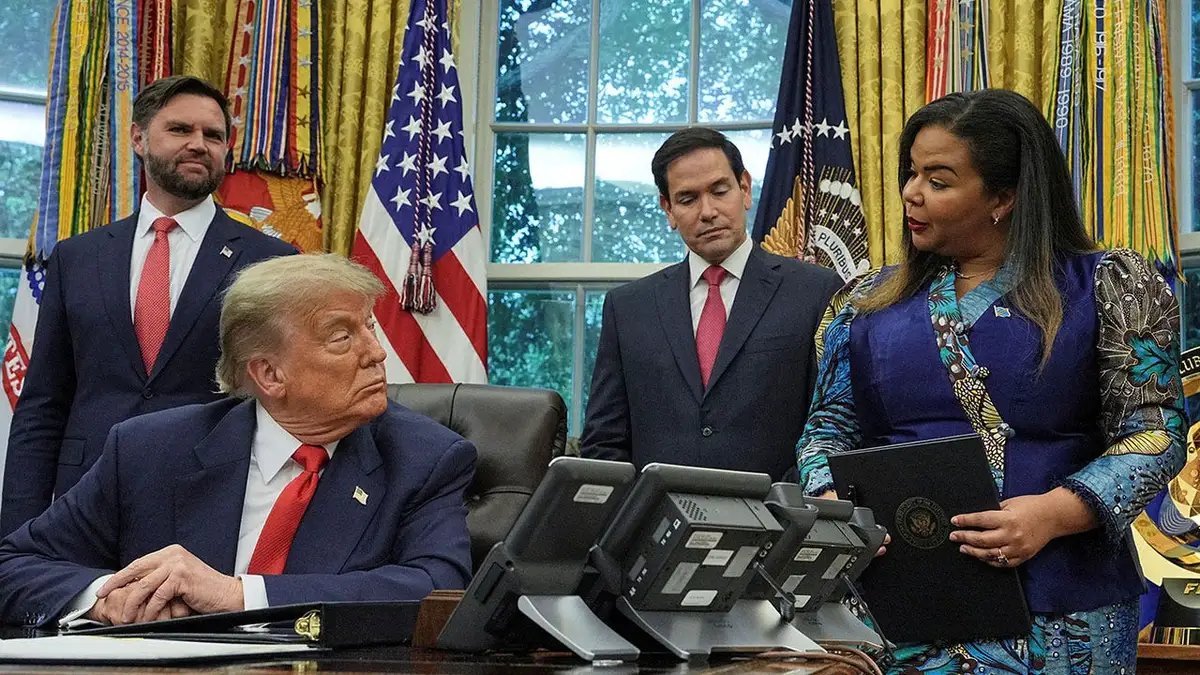
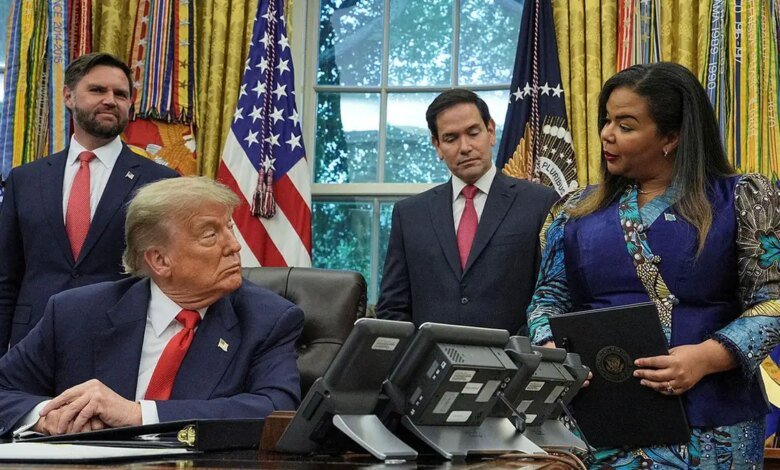
U.S. President Donald Trump, Secretary of State Marco Rubio and Vice President JD Vance meet Democratic Republic of the Congo’s Foreign Minister Therese Kayikwamba Wagner and Rwanda’s Foreign Minister Olivier Nduhungirehe (not pictured) in the Oval Office at the White House in Washington D.C., June 27, 2025. (Ken Cedeno/Reuters)
The Shift Toward Industrialization
For decades, the DRC has functioned primarily as an exporter of raw ores, a model that Kayikwamba Wagner warned must change. Speaking at a high-level U.N. meeting, she argued that the global push for green energy—which relies heavily on Congolese cobalt for electric vehicle batteries—must not mirror colonial-era exploitation.
“The global energy transition must not become another extractive transition,” she said. “If it merely replaces one form of dependency with another, it will have fallen short of its promise.”
The Foreign Minister called for partnerships that prioritize local processing and technology transfers. She noted that Kinshasa welcomes U.S. interests that can deliver “tangible transformations for the lives of Congolese” while providing reliable returns for American investors.
A pivotal component of this strategy involves a deal between the DRC’s state mining giant, Gécamines, and the commodities trader Mercuria. The arrangement could grant U.S. buyers priority access to copper and cobalt supplies, with the U.S. International Development Finance Corporation (DFC) expressing interest in a strategic stake. The DFC, the U.S. government’s development bank, has increasingly focused on critical minerals to counter China’s Belt and Road Initiative.
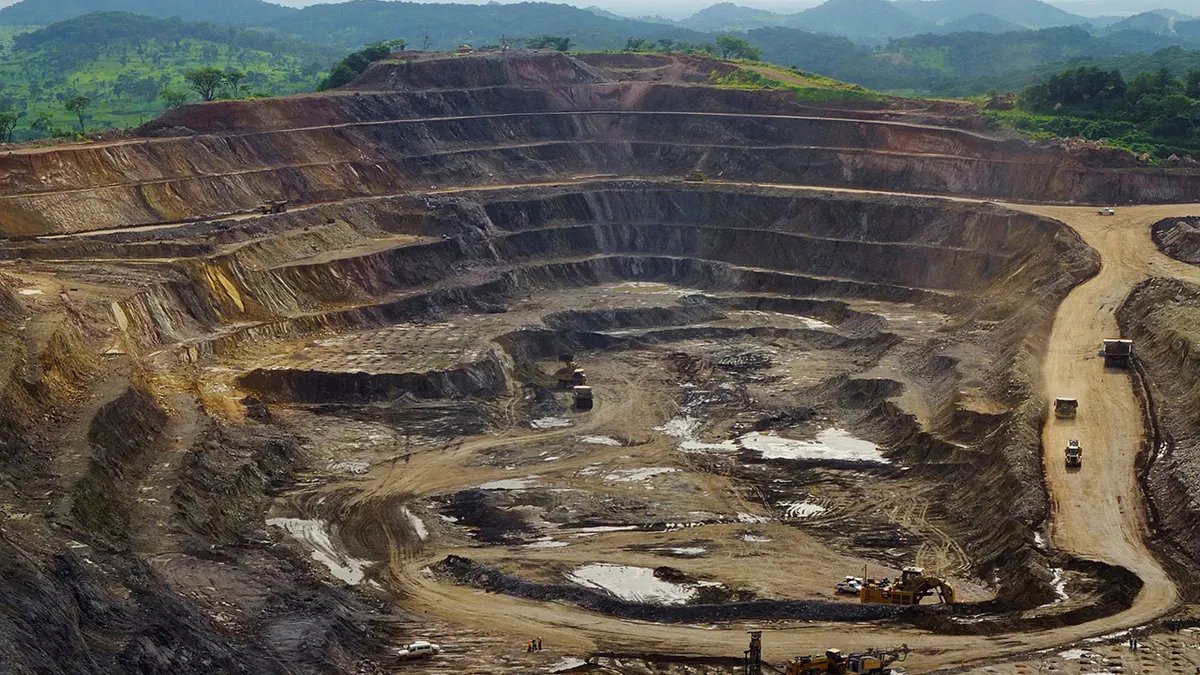
Excavators and drillers at work in an open pit at Tenke Fungurume, a copper and cobalt mine 110 km (68 miles) northwest of Lubumbashi in Congo’s copper-producing south, January 29, 2013. (REUTERS/Jonny Hogg/File Photo)
Mineral Wealth and Regional Conflict
The pursuit of mineral security is inextricably linked to the volatile security situation in eastern Congo. The region has been plagued by conflict for 30 years, involving a complex web of local militias and foreign-backed rebel groups.
The Washington peace framework, mediated by the U.S., seeks to resolve tensions between the DRC and Rwanda. While a peace agreement was initially signed on June 27, 2025, and reaffirmed by Presidents Félix Tshisekedi and Paul Kagame on Dec. 4, violence persists. Central to the friction is the M23 rebel group, which the U.S. Treasury Department asserts is supported by the Rwanda Defense Force (RDF).
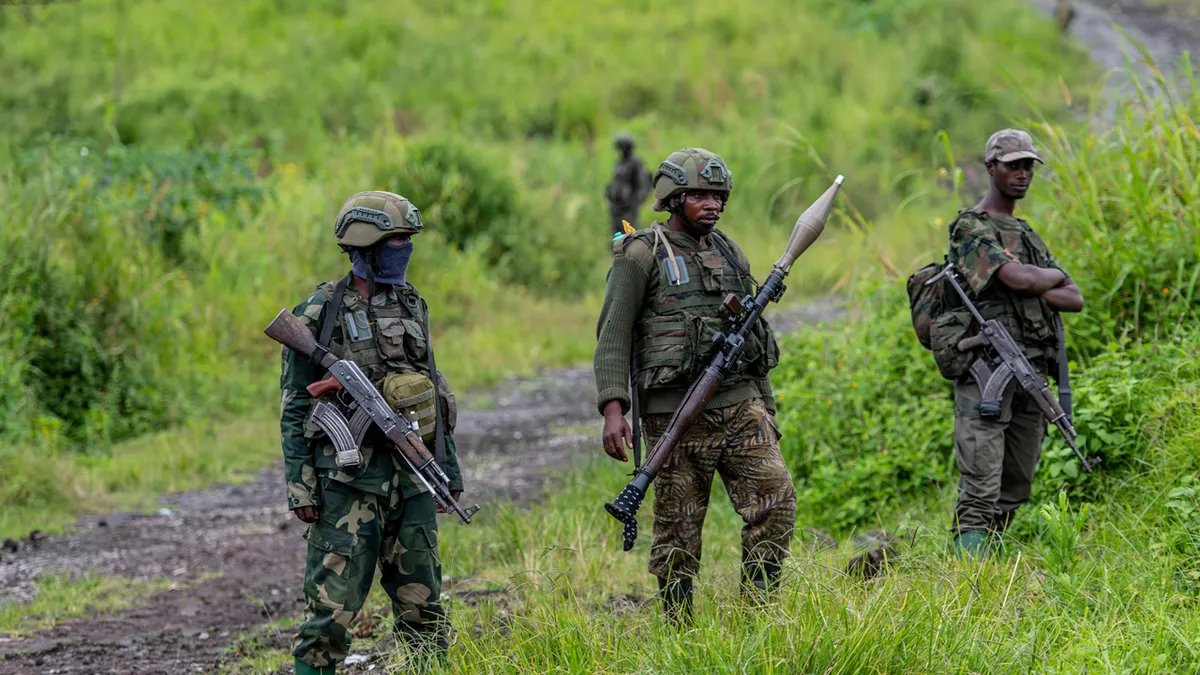
M23 rebels stand with their weapons in Kibumba, in the eastern of Democratic Republic of Congo, Dec. 23, 2022. M23, a rebel group with alleged links to Rwanda, has seized Rubaya, a mining town in eastern Congo known for producing a key mineral used in smartphones, the group said Thursday, May 2, 2024, in a statement. (AP Photo/Moses Sawasawa)
Kayikwamba Wagner praised the Trump administration for maintaining pressure through sanctions against the RDF and senior Rwandan officials. “I find it encouraging to see that we have with us a partner that is not willing to give up at the first obstacle,” she said, acknowledging that ending the three-decade conflict “is not going to happen overnight.”
The Human Cost of Illicit Trade
As the DRC holds the U.N. Security Council presidency for July, the government is highlighting the link between natural resource theft and conflict-related sexual violence. Kayikwamba Wagner reported a sharp rise in sexual violence in areas occupied by M23 and Rwandan forces, where victims are often cut off from medical care and legal recourse.
The economic engine of this violence is the illicit mineral trade. In the Rubaya mining area, a major source of global tantalum (coltan), U.N. experts estimate that 1,400 tons of coltan were smuggled into Rwanda in a single year. This illegal trade generates approximately $800,000 per month for armed groups.
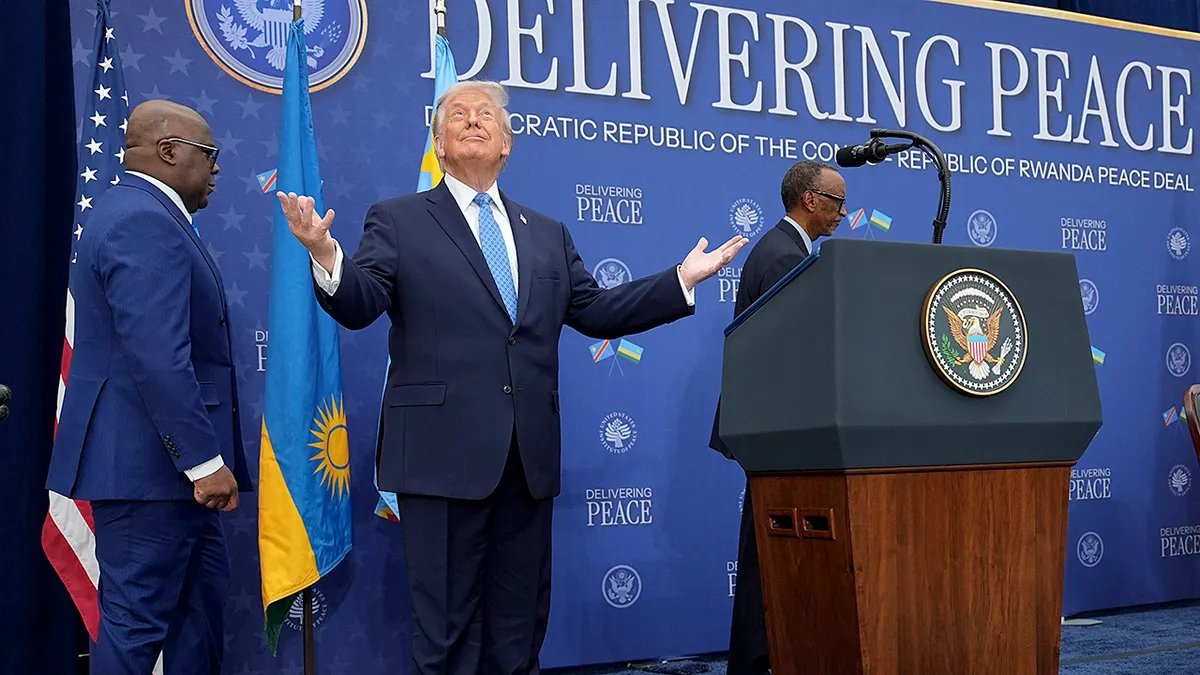
President Donald Trump arrives for a signing ceremony with Rwanda’s President Paul Kagame and Democratic Republic of Congo President Felix-Antoine Tshisekedi at the Donald J. Trump Institute of Peace, Thursday, Dec. 4, 2025, in Washington. (AP Photo/Evan Vucci)
In response, the U.S. Treasury imposed additional sanctions on June 25 against a smuggling network accused of facilitating M23’s operations. For Kinshasa, restoring state authority over these mines is not only a matter of economic sovereignty but a humanitarian necessity to provide justice for survivors of the conflict.