Nvidia CEO Jensen Huang Donates $75 Million to Establish Vanderbilt Art and Design College in San Francisco
The record gift will establish a new art and design college on the site of the historic California College of the Arts.
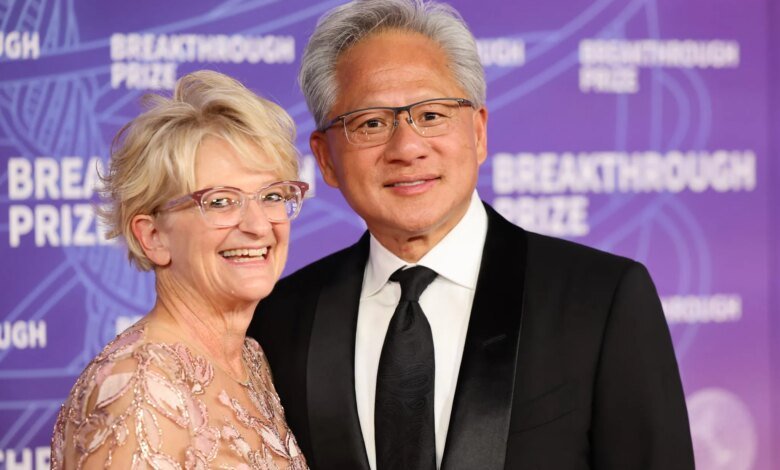
Nvidia co-founder and CEO Jensen Huang, whose company sits at the center of the global artificial intelligence boom, is directing a record $75 million donation to Vanderbilt University to establish a new art and design college in San Francisco.
The new institution, named the Jen-Hsun and Lori Huang College of Art, Architecture and Design, will be built on the campus of the California College of the Arts (CCA). The 119-year-old CCA, the last private art and design school in the Bay Area, is scheduled to graduate its final class in 2027 following years of declining enrollment and a mounting $20 million budget deficit.
“Technology expands what we can build. Art and design determine why we build it,” Huang said in a statement explaining the unexpected alignment between high-tech philanthropy and creative education. “Together they shape civilization.”
The $75 million gift from Huang and his wife, Lori, has already triggered an additional $25 million in matching donations, bringing the initial funding pool to over $100 million. The contribution represents the largest single academic donation Huang has ever made, eclipsing the more than $50 million he previously gifted to his alma mater, Oregon State University. It also follows a series of philanthropic endeavors by the billionaire, including a recent donation of his signature leather jacket to raise nearly $1 million for the Edge Institute, a tech and society nonprofit.
For Vanderbilt University, a prestigious 153-year-old institution based in Nashville, Tennessee, the San Francisco acquisition is part of an unusually aggressive national expansion. While many American universities are scaling back budgets and consolidating programs due to demographic shifts and financial pressures, Vanderbilt is pushing outward. The university is launching a New York City campus, planning a graduate facility in West Palm Beach, Florida, and establishing a quantum-computing hub in Chattanooga, Tennessee.
Vanderbilt Chancellor Daniel Diermeier noted that the San Francisco campus will position students at the epicenter of the global tech economy, preparing creative leaders to shape industries and communities worldwide.
However, the transition has sparked friction within the local creative community. Because Vanderbilt is not absorbing CCA, current faculty and staff are not guaranteed positions at the new college, and existing students are not guaranteed admission. Diermeier clarified that while transfer pathways may be explored for interested students, the university is “not absorbing CCA in any way.”
Critics point to the bittersweet irony of the transition. The rapid growth of the AI industry—driven largely by Nvidia‘s high-performance microchips—has contributed to soaring living costs and real estate pressures in San Francisco, which have historically squeezed local arts organizations. To preserve some of the site’s heritage, Vanderbilt has pledged to establish a “CCA Institute” within the new college to house the historic school’s archives and maintain its Wattis Institute gallery.