Bitcoin Onchain Recovery Reaches 57% Profitability but Long-Term Signals Remain Unconfirmed
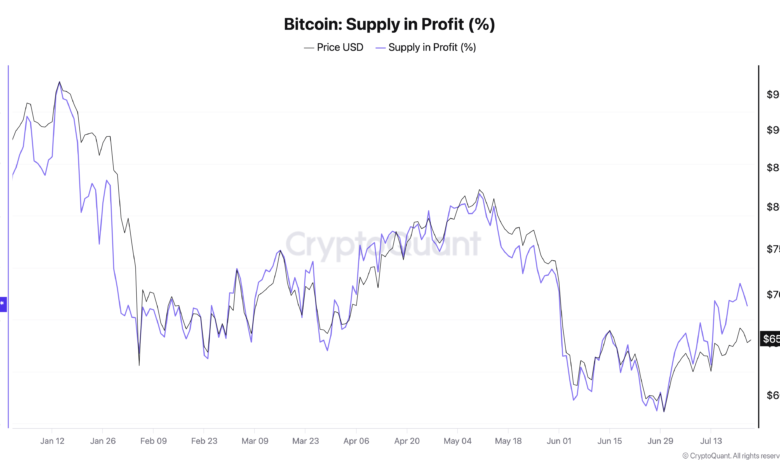
Bitcoin network metrics are demonstrating early signs of financial relief, but key structural indicators suggest the market has not yet locked in a sustainable bull trend.
Data published by blockchain intelligence platform CryptoQuant reveals that the share of profitable Bitcoin supply climbed to 57.5% as of July 22, mounting a solid rebound from its 2026 trough of 46.2% recorded on June 30. While this rebound pushes the network back toward aggregate profitability, onchain researchers caution that the broader market recovery remains fragile.
Analyzing supply profitability offers vital structural context for market health. Unlike traditional capital markets where average entry costs are opaque, public ledgers allow analysts to evaluate the precise price at which every token last transacted. When network profitability crosses major percentage thresholds, selling pressure often subsides as underwater investors return to break-even positions.
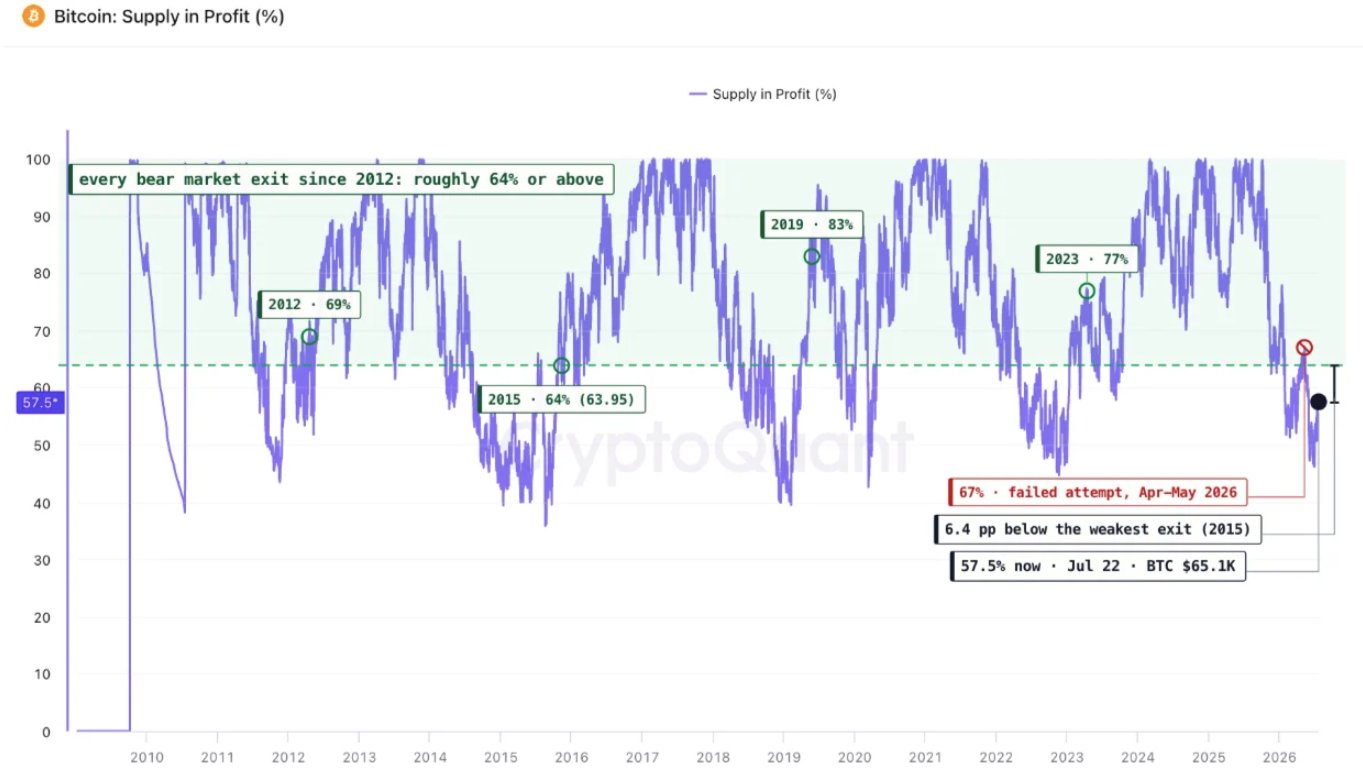
Despite the recent uptick in overall profitable supply, long-term holder (LTH) behavior—referring to market participants whose coins have remained dormant for six months or longer—continues to show lingering stress. According to CryptoQuant analyst thechessONCHAIN, historical transitions out of bear market cycles require two key conditions: overall supply in profit must sustainably clear 64%, and the 30-day simple moving average (SMA) of the long-term holder spent output profit ratio (LTH-SOPR) must firmly hold above 1.0.
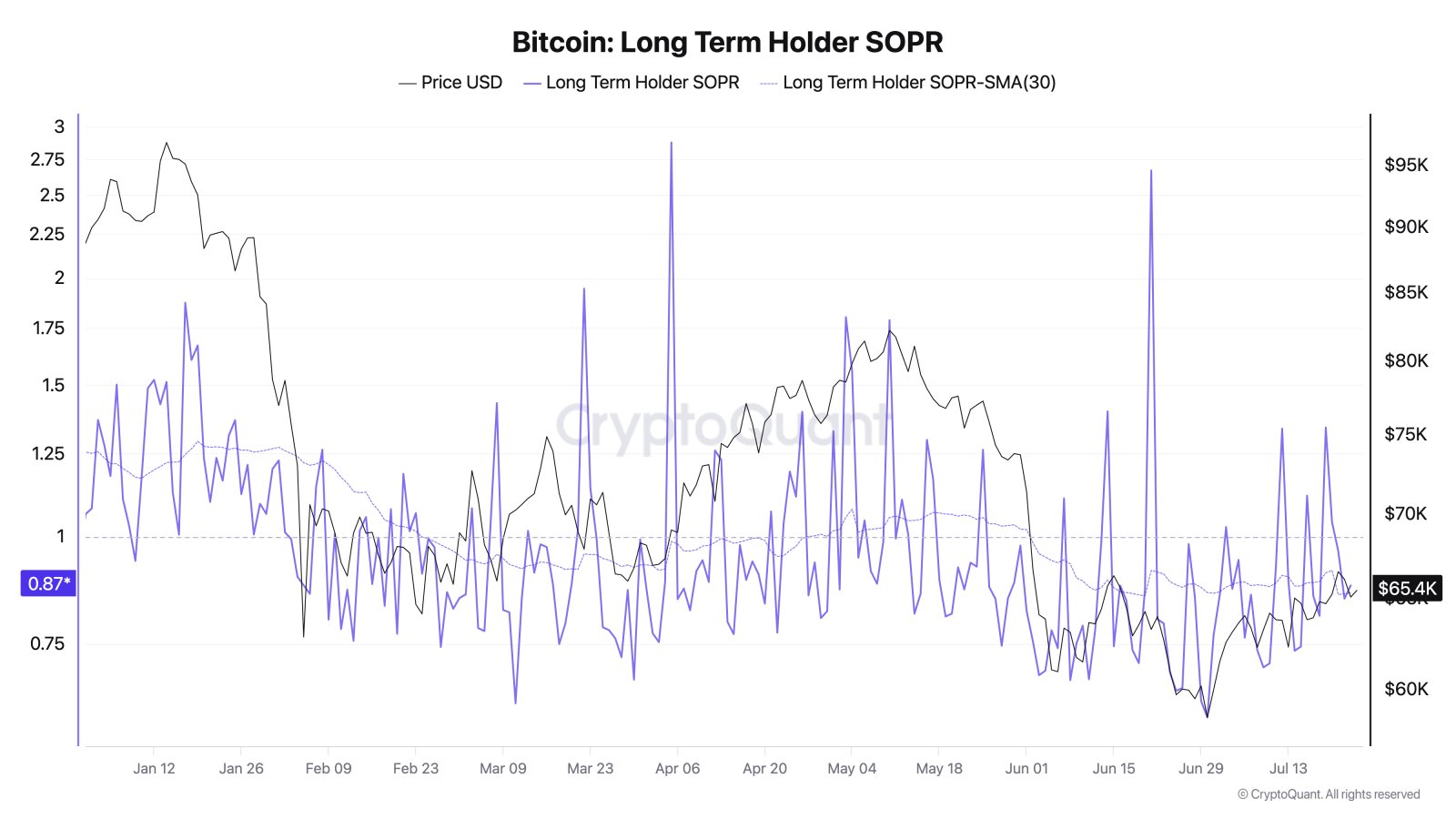
The LTH-SOPR evaluates whether mature market participants are moving their assets at a net profit or loss. Readings below 1.0 show that long-term investors are locking in realized losses, a classic indicator of extended capitulation. Prior to the recent bounce, the 30-day average spent more than 50 consecutive days pinned below the 1.0 threshold.
Traders remain wary of a secondary false breakout similar to the bull trap experienced earlier this year. From April 28 to June 1, the 30-day LTH-SOPR average briefly sustained above 1.0 for 35 days while overall supply in profit touched 67%. However, momentum faltered and both indicators rolled back down, illustrating how early macro rallies can fail to materialize into lasting bull regimes without sustained market demand.
The underlying market structure reflects a bifurcated landscape. In June, the portion of supply held at a loss briefly breached 50%, an event that historically flags the final stages of cycle bottoms. While spot market interest has remained sluggish, renewed institutional inflows continue to absorb supply, leaving traders monitoring major crypto market indicators for verified confirmation of a macro trend reversal.