Panera Founder Ron Shaich Scales Interactive Entertainment Bet with $100 Million Level99 Investment
The Panera founder is applying his fast-casual playbook to a new category of challenge-based social venues.

Act III Holdings, the investment vehicle led by Panera Bread founder Ron Shaich, has doubled its financial commitment to Level99, an interactive, challenge-based entertainment concept. The firm is injecting an additional $50 million into the venture, bringing its total stake to $100 million as the brand prepares for an aggressive national rollout.
The capital infusion follows the successful June launch of Level99’s fifth location at Disney Springs in Lake Buena Vista, Florida. According to Level99 founder and CEO Matt DuPlessie, the new site has exceeded internal performance projections within its first month of operation. This momentum has prompted Shaich to accelerate the company’s growth trajectory from opening one venue per year to a target of one per quarter.
Shaich, who transformed Panera Bread into a 2,500-unit powerhouse and served as a primary architect behind the Mediterranean chain Cava’s rise to a public company, is applying a familiar playbook. His strategy focuses on identifying categories with long-term “tailwinds” and establishing a dominant market position before competitors can achieve scale. He views the shift toward physical, social experiences—often referred to as the “experience economy”—as a primary driver for the next decade of consumer spending.
Level99 differentiates itself from traditional arcade-style venues like Dave & Buster’s by focusing on proprietary intellectual property. The venues, which typically span 35,000 to 50,000 square feet, feature three distinct formats: collaborative “Challenge Rooms” for small groups, arena-style “Duels,” and “Hunt Art” scavenger hunts integrated with local installations. Unlike digital entertainment, these activities require physical presence and teamwork, leaning into the concept of the “third place”—social surroundings separate from the two usual social environments of home and the workplace.

To support this rapid expansion, Level99 has built a corporate infrastructure of over 100 employees, including in-house engineering and software development teams. This overhead is unusually high for a company with only a handful of operational units, but DuPlessie notes that the investment was intentional to ensure the organization could scale without compromising quality. The company’s growth plan includes an upcoming opening in West Hartford, Connecticut, in late 2024, followed by four new locations in 2025.
A critical component of the business model is the integration of high-end culinary offerings. While many location-based entertainment (LBE) venues treat food as a secondary revenue stream, Shaich and DuPlessie have prioritized a scratch-made, farm-to-table menu. This includes house-made dough and daily-prepped ingredients, aiming to drive recurring visits from customers who might otherwise only visit for the games.
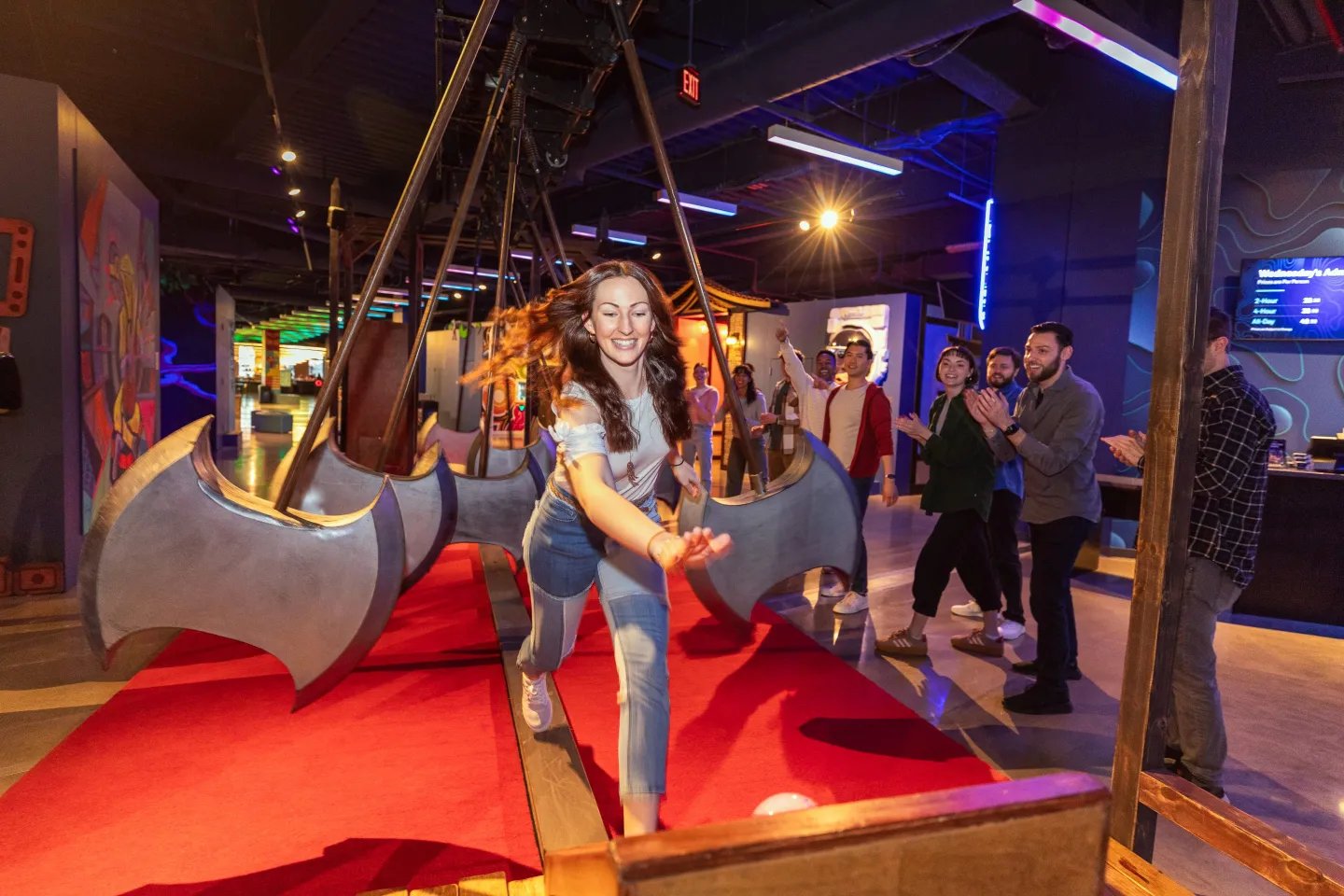
The LBE sector has faced headwinds recently, with several public operators reporting declines in same-store sales. However, Shaich remains bullish on Level99’s unit economics, citing margins that often exceed those found in the traditional restaurant industry. He attributes this to the “recurring revenue” potential of the challenge-based format, where players return to master specific puzzles or compete in new arena events like the “Axe Run.”
Act III Holdings’ portfolio currently includes several high-growth hospitality brands, such as Tatte Bakery & Café and Life Alive. Shaich’s long-term approach mirrors his previous successes, where he focused on building operational capabilities ahead of the growth curve. With the Disney Springs location serving as a high-profile proof of concept, the firm is now positioned to take the Level99 brand into major metropolitan markets across the United States.