Volvo EX30 Cross Country Exits US Market as Cost-Cutting Measures Overshadow Performance
A look at the ergonomic failures and performance gaps that led to the early exit of Volvo's most ambitious EV.

The Volvo EX30 was intended to be the definitive proof that legacy automakers could produce a high-volume, affordable electric vehicle. Marketed with a promised starting price of $35,000 and a 300-mile range, it arrived as a symbol of the brand’s aggressive pivot toward electrification. However, less than two years after its American debut, the model is being discontinued in the United States, leaving a trail of ergonomic frustrations and unfulfilled promises in its wake.
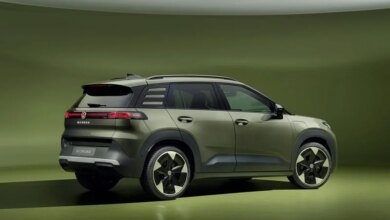
The 2026 Volvo EX30 Cross Country represents the peak of this short-lived lineup. While it delivers the quickest acceleration in the company’s history, the vehicle struggles to balance its high-tech aspirations with the practical needs of daily drivers. This tension is particularly evident in the cabin, where extreme cost-cutting measures have replaced traditional tactile controls with digital interfaces that many users find counterintuitive.
Under the stewardship of the Geely Holding Group, Volvo has utilized shared global platforms to accelerate its EV development. This synergy allowed for the creation of a vehicle that is visually striking, featuring a rugged topographical map of a Swedish mountain on the front grille and a unique Sand Dune exterior color. The Scandinavian aesthetic remains one of the car’s strongest selling points, offering a minimalist charm that distinguishes it from more aggressive competitors.
Inside, the vehicle continues this minimalist theme, though the execution has drawn significant criticism. To reduce manufacturing complexity for both left- and right-hand drive markets, Volvo centralized nearly all functions into a single 12.3-inch screen. This display is the only way to adjust side mirrors, open the glovebox, or manage climate control settings. Even the window switches have been reduced to just two toggles on the center console, requiring the driver to press a separate button to switch between front and rear operation.

The hardware configuration is equally unconventional. The front USB-C outlets are located on the floor of the vehicle, obscured by protective flaps that make them nearly impossible to access while driving. Furthermore, the traditional dashboard speakers have been replaced by a Harman Kardon soundbar mounted under the windshield. While this saves weight and reduces wiring complexity, it contributes to an interior environment that feels more like a tech experiment than a luxury crossover.
Performance-wise, the EX30 Cross Country is powered by a 69.0 kilowatt-hour battery and a twin-motor setup producing 422 horsepower. This allows for a 0-60 mph sprint in just 3.4 seconds. However, this power comes at the expense of efficiency. While the official estimate suggests a 227-mile range, real-world testing indicates that the battery depletes rapidly unless driven in a restricted battery-saver mode. This range anxiety is compounded by software issues; the integrated Google navigation system often fails to display available charging stations unless specifically searched for by the user.
Charging infrastructure also remains a hurdle. The vehicle utilizes the Combined Charging System (CCS) rather than the North American Charging Standard (NACS) adopted by many other manufacturers. In testing, the vehicle frequently reported connection errors with non-fast chargers, citing “loose plug” issues that halted the charging process. These technical hurdles, combined with a tested price of $49,545, have made the EX30 a difficult value proposition in a market where competitors offer more range for less money.
The discontinuation of the EX30 in the U.S. comes amid broader geopolitical shifts affecting the automotive industry. Increased tariffs on Chinese-manufactured EVs have forced many brands to reconsider their import strategies. While Volvo is reportedly developing a successor more tailored to American expectations, the EX30 serves as a cautionary tale regarding the limits of digital-first interior design and the importance of meeting range expectations in the premium segment.
Despite its flaws, the EX30 handles with a level of agility rarely found in 4,000-pound crossovers. Its compact footprint makes it ideal for urban environments, and the suspension tuning manages to mask the vehicle’s substantial weight over uneven pavement. However, these mechanical triumphs are ultimately overshadowed by the ergonomic compromises that define the cabin experience.