NASA Releases Stunning Mars Timelapse Captured by Psyche Spacecraft
The deep-space probe utilized Martian gravity to boost its speed on its way to the asteroid belt.
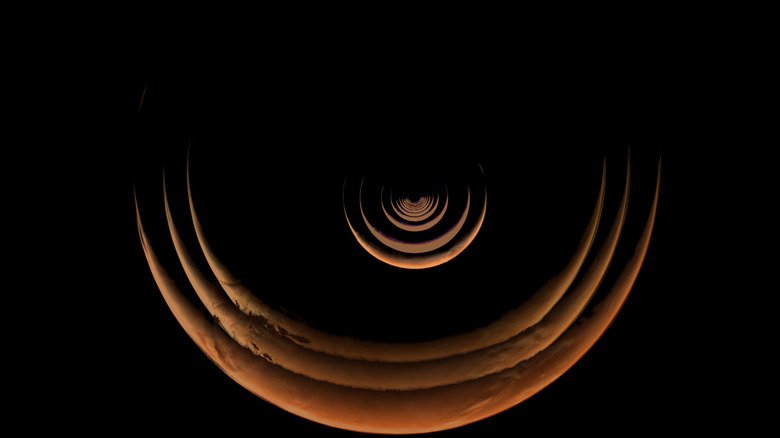
NASA has released a captivating timelapse video of Mars, compiled from thousands of images captured by its Psyche spacecraft during a critical flyby. The spacecraft utilized the red planet for a gravity assist in May, a maneuver designed to slingshot the probe toward its ultimate destination in the outer main asteroid belt.
The spacecraft began its approach to Mars on May 2 and reached its closest point on May 15. By leveraging Martian gravity, the mission team achieved a vital trajectory adjustment, boosting the spacecraft’s speed and saving significant propellant reserves for the remainder of its long journey.
During the encounter, the probe’s onboard multispectral imager was put to work, capturing a sequence of highly detailed images. The newly released timelapse stitches these frames together, offering a unique perspective of Mars as a glowing crescent, followed by sweeping views of its dusty surface and the icy south pole as the spacecraft departed.
Beyond the aesthetic appeal of the footage, the flyby served as a crucial testing ground for the spacecraft’s scientific instruments. Jim Bell, the instrument lead for the imager at Arizona State University, noted that the camera performed exceptionally well under real-world deep-space conditions.
According to Bell, the encounter allowed scientists to calibrate the instrument and test its sensitivity to scattered light. The team even managed to spot the small Martian moons, Phobos and Deimos, from a vast distance. This observation acted as a dress rehearsal for the mission’s future search for tiny moonlets orbiting the asteroid Psyche.
Launched in October 2023, the Psyche mission is one of NASA’s most ambitious deep-space endeavors. Unlike most missions that target rocky or icy worlds, Psyche is headed toward a unique metal-rich asteroid known as 16 Psyche. Scientists believe this asteroid may be the exposed partial core of an ancient planetesimal, offering an unprecedented opportunity to study the building blocks of terrestrial planets and the mysteries of planetary cores that are otherwise unreachable deep within planets like Earth.
The spacecraft is scheduled to reach its target in 2029, where it will spend at least 26 months mapping and analyzing the asteroid’s composition.