How a Massive Infrastructure Boom is Quietly Solving the EV Charging Crisis
Data shows fast-charger installations have doubled since 2023 as reliability scores climb into the mid-90s.
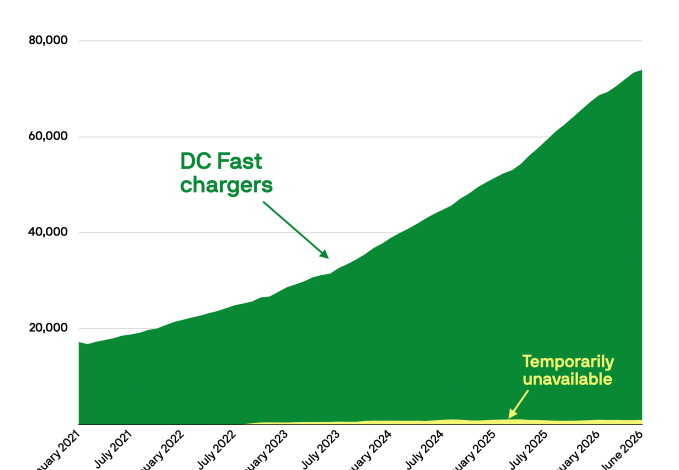
The landscape of electric vehicle ownership in North America is undergoing a quiet but massive transformation. Long plagued by “range anxiety” and complaints of broken hardware, the public charging infrastructure is finally catching up to consumer demands, backed by billions in federal funding and aggressive private sector expansion.
According to data from the Joint Office of Energy and Transportation, the number of active DC fast chargers in the United States has more than doubled since July 2023, when the country had roughly 32,000 units. Today, that figure exceeds 64,000, driven in part by the Biden administration’s National Electric Vehicle Infrastructure (NEVI) formula program, which allocated $5 billion to states to build out fast-charging corridors along major highways.
This rapid expansion is not just about quantity; reliability has also taken a significant leap forward. Industry metrics from the Paren reliability index, which tracks successful charging sessions and station downtime, show that charger reliability has risen from a score of 85 last year to the mid-90s. While Tesla’s network has historically set the standard for uptime, competing networks are rapidly closing the gap, spurred by intense market competition and the widespread adoption of the North American Charging Standard (NACS).
The impact of these improvements is most visible on long-distance road trips. Just three years ago, a typical 350-mile journey in a non-Tesla electric vehicle could easily turn into an ordeal of broken stalls, incompatible payment apps, and hours spent on the phone with customer service. Today, however, even a 600-mile international road trip can be completed with virtually no charging friction.
Modern route-planning software has also matured. Applications like A Better Route Planner, which is now owned by Rivian, allow drivers to input their vehicle specifications, battery degradation, and real-time weather conditions to map out optimal stops. On a recent trip from New England to Montreal, drivers utilizing these tools found fully operational 300-kilowatt chargers with no wait times, capable of delivering maximum power to vehicles in under 20 minutes.
Even crossing the border into Canada reveals a highly integrated network. While minor regional hurdles remain—such as requiring a specific app for Quebec’s Circuit Électrique network when physical card readers fail—the overall density of charging options has made such hiccups minor inconveniences rather than trip-ruining disasters. Most modern hotels now offer reliable overnight destination charging, reducing the need for mid-trip fast charging altogether.
Despite these rapid technological and infrastructural strides, public perception remains cautious. A survey conducted by AAA revealed that just over half of prospective buyers still view public charging infrastructure as a primary barrier to purchasing an electric vehicle. Bridging this gap between consumer anxiety and the rapidly improving reality on the ground remains one of the automotive industry’s biggest hurdles.