Rodri’s World Cup Resurgence Puts Manchester City Contract Standoff in Sharp Focus
As Spain prepares for a high-stakes final against Argentina, the midfielder's return to peak form highlights his irreplaceable value for club and country.
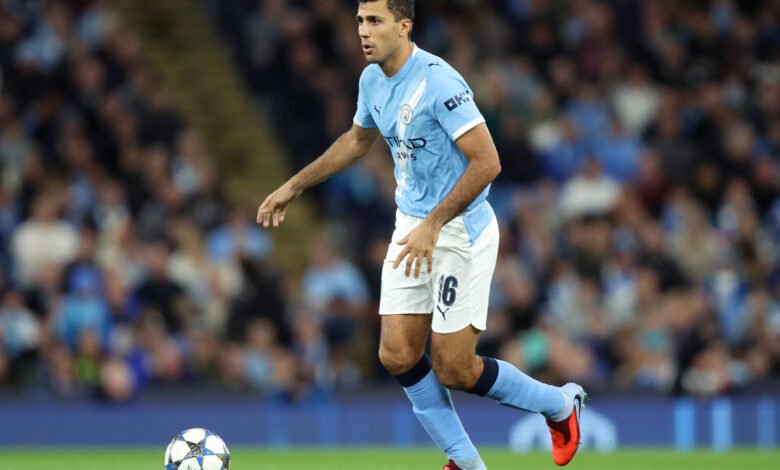
MANCHESTER — When Pep Guardiola made a bold prediction last October, it sounded like a manager trying to inject confidence into a recovering player. “At the World Cup will be the best Rodri and next season will be the best Rodri,” the Manchester City manager insisted. At the time, his star midfielder was still clawing his way back from a devastating anterior cruciate ligament injury that had sidelined him for 15 months.
Today, on the eve of a World Cup final between Spain and Argentina, Guardiola’s words look less like wishful thinking and more like tactical prophecy. Rodri has not only returned to the pitch; he has reclaimed his status as the premier midfield controller in world football, dictating tempo, space, and territory with the effortless authority that defines the elite modern “number six.”
The journey back to the pinnacle of international football was far from guaranteed. Reports indicate that serious doubts persisted within both the Manchester City hierarchy and the Spanish national team setup regarding whether the 2023 Ballon d’Or winner could get all the way back to his peak.
An ACL tear is one of the most feared injuries in professional sports, typically requiring reconstructive surgery and a grueling recovery period that tests a player both physically and mentally. For a defensive midfielder in a high-pressing system, the demands are particularly punishing. The role requires constant lateral movement, explosive acceleration to close down counter-attacks, and the physical resilience to withstand heavy contact in crowded central areas. Rodri’s 15-month absence was marked by a disrupted recovery timeline and reported frustrations with the medical rehabilitation process. Yet, his return has defied the skepticism. Rather than easing his way back, the midfielder has immediately restored tactical coherence to every side he represents. When Rodri is on the pitch, Manchester City and Spain operate with a structural balance that disappears in his absence.
While Spain reaps the immediate rewards of Rodri’s resurgence, Manchester City faces a looming administrative crisis. The midfielder’s current contract is set to expire next summer, making his long-term future at the Etihad Stadium a matter of urgent concern for the Premier League champions.
City officials have reportedly been doing everything they can to get him to sign a new contract. However, negotiations have yielded little progress so far, with both parties planning to revisit talks after the World Cup.
In Guardiola’s possession-heavy system, the defensive midfielder acts as the team’s heartbeat—a role previously perfected by players like Sergio Busquets at Barcelona. Without Rodri to anchor the midfield, City’s ability to control transitions and sustain pressure drops significantly. If Manchester City fails to secure a renewal before he enters the final year of his contract, they risk losing their most vital tactical asset at a significantly reduced market price. With his contract winding down, he could be available for less than usual, which changes the calculations for every major side that needs a controller in midfield.
Rodri’s contract uncertainty has inevitably alerted Europe’s elite clubs. The Madrid-born midfielder has long been understood to be open to playing at the Santiago Bernabeu, a prospect that always carries weight in Spanish football.
However, Real Madrid has reportedly maintained an emphatic stance, indicating they have no intention of signing him. This lack of movement has reportedly surprised those close to the player, especially given the admiration Rodri commands among senior figures in the Madrid dressing room. Interestingly, sources close to rival presidential candidate Enrique Riquelme suggest that signing Rodri was a priority of his campaign platform had he won the election.
Meanwhile, Barcelona’s financial constraints and alternative squad priorities have kept them out of the running for now. This leaves Manchester City in a theoretically strong position, though a stellar performance in the World Cup final could quickly reignite interest from clubs looking for an established world-class controller.
Spain’s path to the final was highlighted by a masterclass in the semi-finals, where they dismantled France 2-0. The match was a jolt for many neutrals, as the side managed by Didier Deschamps arrived with huge attacking pedigree but left looking completely disconnected. Under Rodri’s stewardship, Spain suffocated the French transition game, starved their attackers of service, and controlled the rhythm of the match from start to finish.
Argentina, however, presents a vastly different challenge. The South American champions bring an intense emotional intensity, defensive resilience, and the mercurial presence of Lionel Messi, who remains capable of dismantling any defensive structure. Facing an indomitable Argentina team that will give absolutely everything to win their fourth World Cup, Spain cannot rely solely on technical superiority; they must prepare for a highly physical, tactical battle.
For Spain to lift the trophy, Rodri must deliver another flawless performance. He will be tasked with acting as the primary outlet under pressure, executing quick counter-presses, and disrupting the central channels that feed Messi.
For Manchester City, the final represents both a source of pride and anxiety. Every minute Rodri spends on the pitch in this high-stakes environment further cements his value—and increases the urgency for City to secure his long-term future before the transfer market intervenes.