Prediction Markets Mount Serious Threat to US Sportsbooks During World Cup
Financial betting platforms capture over a quarter of US wagering volume, outpacing traditional sportsbooks in app downloads.
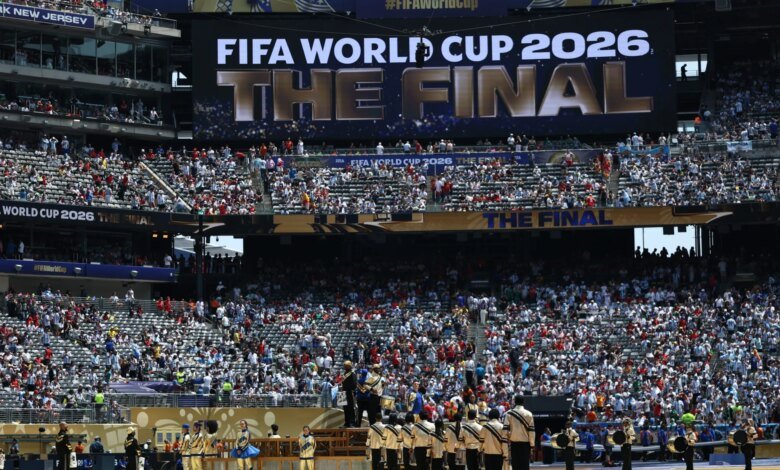
During the recently concluded World Cup, the sports-gambling industry faced an unprecedented challenge from financial prediction platforms. According to data from H2 Gambling Capital, prediction-market activity accounted for approximately 27% of all legal sports wagering volume in the United States during the tournament’s first month, a massive jump from just 9% at the start of the year.
This rapid expansion has been led by Kalshi, which repeatedly shattered its own trading records during the tournament. App intelligence firm Apptopia reported that Kalshi’s mobile application recorded more daily active users during the World Cup than the apps of DraftKings and FanDuel, the two largest sportsbooks in the United States.
The rise of these platforms marks a significant shift in the US wagering landscape. Less than two years ago, federal rules prohibited prediction platforms from offering sports-related contracts. However, favorable oversight from the Commodity Futures Trading Commission has allowed these startups to bypass state-level restrictions that govern traditional sports betting.
Unlike conventional sportsbooks, which are restricted to users aged 21 and older and heavily regulated on a state-by-state basis, event betting exchanges can legally accept users aged 18 and older. They are also accessible in states where traditional sports gambling remains illegal. Furthermore, these exchanges operate on a peer-to-peer model, meaning they do not profit directly from customer losses, positioning themselves as a more transparent alternative to traditional sportsbooks.
To capitalize on the tournament, which culminated in a final between Spain and Argentina, Kalshi launched an aggressive marketing campaign, including securing pitch-side digital advertising during the knockout stages. This helped the platform outpace its main rival, Polymarket. Data compiled by users on Dune Analytics revealed that Kalshi generated more than double the trading volume of Polymarket during the World Cup. Polymarket has recently struggled with regulatory delays in launching its domestic US operations.
The competitive pressure is also intensifying with the arrival of new players. Robinhood Markets Inc., in partnership with Susquehanna International Group, recently launched its own prediction platform, which drew substantial trading volume during the tournament.
This shifting dynamic has caught the attention of Wall Street. Ian Moore, an analyst at Bernstein, noted that the rapid growth has forced legacy operators to consider offering similar exchange-style products. While companies like DraftKings and FanDuel’s parent company, Flutter Entertainment PLC, saw their stock prices rise ahead of the World Cup, both equities slumped as the tournament progressed, leaving them down more than 25% for the year.
FanDuel has attempted to counter the threat by launching its own standalone prediction app, though Apptopia data indicates it has struggled to gain traction. Nevertheless, a spokesperson for FanDuel noted that the World Cup generated record customer engagement, with the tournament producing the top ten highest-volume soccer matches in the company’s history.
Ed Birkin, managing director at H2 Gambling Capital, suggested that while prediction markets are “eating around the edges” of the sports betting market, they may ultimately target a different demographic. Whether these platforms can maintain their momentum post-World Cup remains to be seen, but their performance has established them as a permanent fixture in the broader gaming ecosystem.