From Labs to Streets: How China is Accelerating the Commercialization of Embodied AI and Autonomous Driving
Beijing's $48.7 billion AI ecosystem drives the rapid real-world deployment of humanoid robots and driverless transit networks.
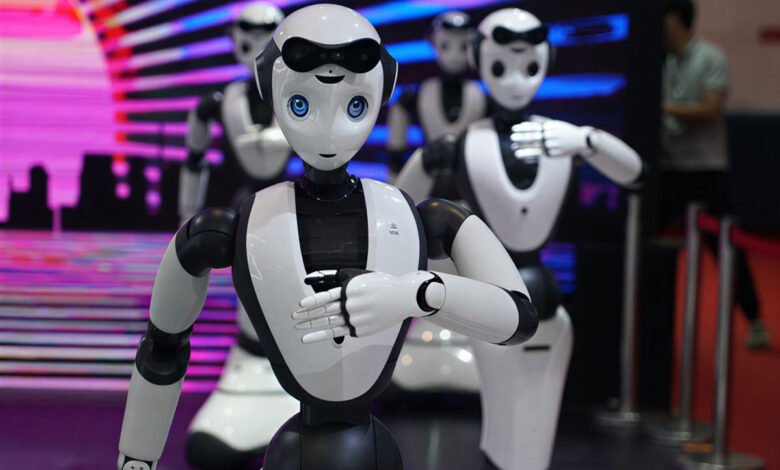
China is rapidly transitioning from theoretical artificial intelligence to physical deployment, leveraging a massive industrial push in embodied intelligence and autonomous driving systems. This shift is moving advanced machinery out of research laboratories and directly into commercial spaces, hospitals, and public transport networks across the country.
At the center of this technological push is Beijing, which has established itself as a primary hub for AI development. By 2024, the capital city hosted more than 2,400 AI enterprises, representing a core industrial value of nearly 350 billion yuan ($48.7 billion)—accounting for over half of China’s national AI sector. This concentration of capital and research is accelerating the commercialization of machines designed to perceive, decide, and act within physical environments.
A key manifestation of this trend is the emergence of specialized commercial hubs, such as the Robot Mall in Beijing. Operating as a full-lifecycle ecosystem, this venue acts as a “Robot 4S Store” that combines product displays, real-world application testing, and business matchmaking. Inside, visitors can interact with interactive humanoids, including models designed to mimic historical figures like Albert Einstein and the classical poet Li Bai, alongside domestic service robots capable of performing precise household chores like folding laundry or crafting latte art.
Beyond domestic and novelty applications, the technology is seeing deep integration into high-stakes sectors. In healthcare, specialized surgical robots are already assisting in dental implants, orthopedic procedures, and cardiac interventions, reducing human error and improving clinical outcomes. According to the International Federation of Robotics, China has consistently ranked as the world’s largest market for industrial robots, driven by a national strategy to automate its manufacturing base amid shifting demographic trends and a shrinking labor force.
Parallel to these robotic advancements, China is scaling its autonomous mobility infrastructure through an integrated vehicle-road-cloud model. This framework connects intelligent vehicles with smart roadside infrastructure and cloud-based management systems to create a unified transport network.
Beijing initiated this transition in 2020 by establishing the world’s first high-level autonomous driving demonstration zone. Since its launch, the zone has expanded to cover hundreds of square kilometers in the city’s suburban districts, logging tens of millions of kilometers in safety testing. In areas like the Beijing Economic-Technological Development Area, driverless passenger vans, delivery pods, and security patrols operate alongside other unmanned systems to form a highly automated urban transit network.
This domestic progress is increasingly finding a global footprint. Chinese autonomous driving companies are deploying driverless buses and robotaxis in urban centers across Europe, Asia, and the Middle East. However, industry analysts note that international expansion faces significant headwinds, including varying regulatory frameworks, strict cross-border data compliance laws, and the high capital costs associated with scaling physical infrastructure.
To manage these challenges domestically, Chinese regulatory bodies have introduced comprehensive safety guidelines for driverless vehicles, establishing clear parameters for testing, public operations, and liability. These evolving frameworks aim to transition autonomous transit from controlled pilot zones into mainstream public transportation networks, including major airports and high-speed railway hubs.