Trump Threatens Tariffs on Canada Over Wildfire Smoke, Sparking Bilateral Clash Over Forest Management
U.S. President Donald Trump accuses Ottawa of 'willful negligence' in forest management as smoke impacts American cities.
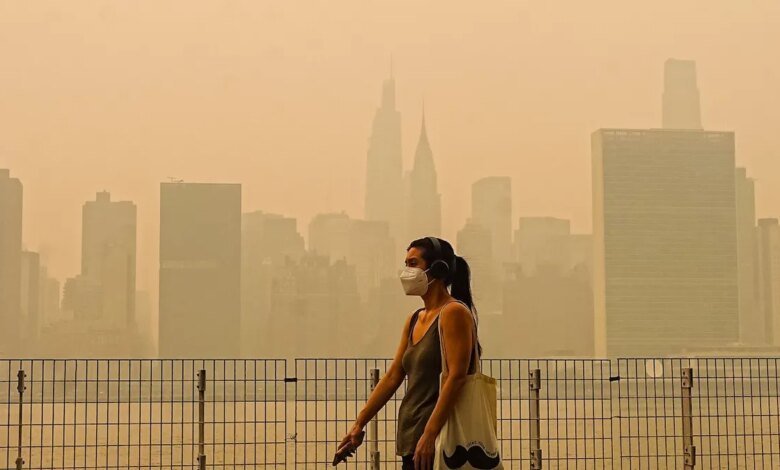
As seasonal smoke from Canadian wildfires continues to drift across the border, choking major metropolitan areas in the United States, a simmering environmental crisis has erupted into a high-stakes diplomatic and economic dispute. U.S. President Donald Trump has accused Ottawa of “Willful Negligence” in its forestry practices, threatening to impose economic tariffs on Canadian imports to offset the costs of the air pollution.
The threat of using trade tariffs—historically reserved for commercial disputes under frameworks like the United States-Mexico-Canada Agreement (USMCA)—over transboundary air pollution represents a sharp escalation in bilateral tensions. Canada’s vast boreal forest, which spans millions of square kilometers, has become increasingly vulnerable to intense blazes due to rising temperatures and prolonged droughts, sparking intense debate over how these public lands are managed.
Writing on Truth Social, Trump declared, “We are holding Canada responsible for the fact that they are not properly maintaining their Forests, and Brush therein, and the United States is being unnecessarily invaded by filthy, polluted, and unhealthy air.” Trump added that he intends to call Canadian Prime Minister Mark Carney to address what he characterized as a refusal to engage in “basic Forest Management and Debris Removal.”
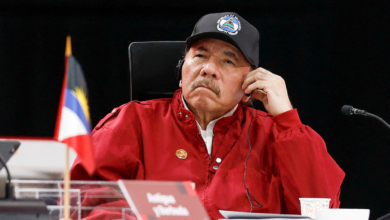
The political friction comes at a sensitive time for Prime Minister Carney. During a speech at the Toronto International Film Festival, Carney hinted that Trump had been threatening Canadian sovereignty in recent months.
During a speech at the Toronto International Film Festival, Canadian Prime Minister Mark Carney hinted at President Donald Trump threatening Canadian sovereignty in recent months. (Jim Watson/Getty Images)
Regional Impact and Congressional Pressure
The pressure on Ottawa is not limited to the White House. Earlier this week, four Republican members of Michigan’s congressional delegation—Representatives Jack Bergman, John James, Lisa McClain, and John Moolenaar—penned a joint letter to Carney. They noted that residents in their state were once again breathing unhealthy air due to smoke drifting south from Canadian wildfires.
“We are done accepting apologies in place of action,” the lawmakers wrote, calling for measurable plans to reduce future smoke crossings and accusing Canada of underinvesting in forest thinning, fuel reduction, and prescribed burns.
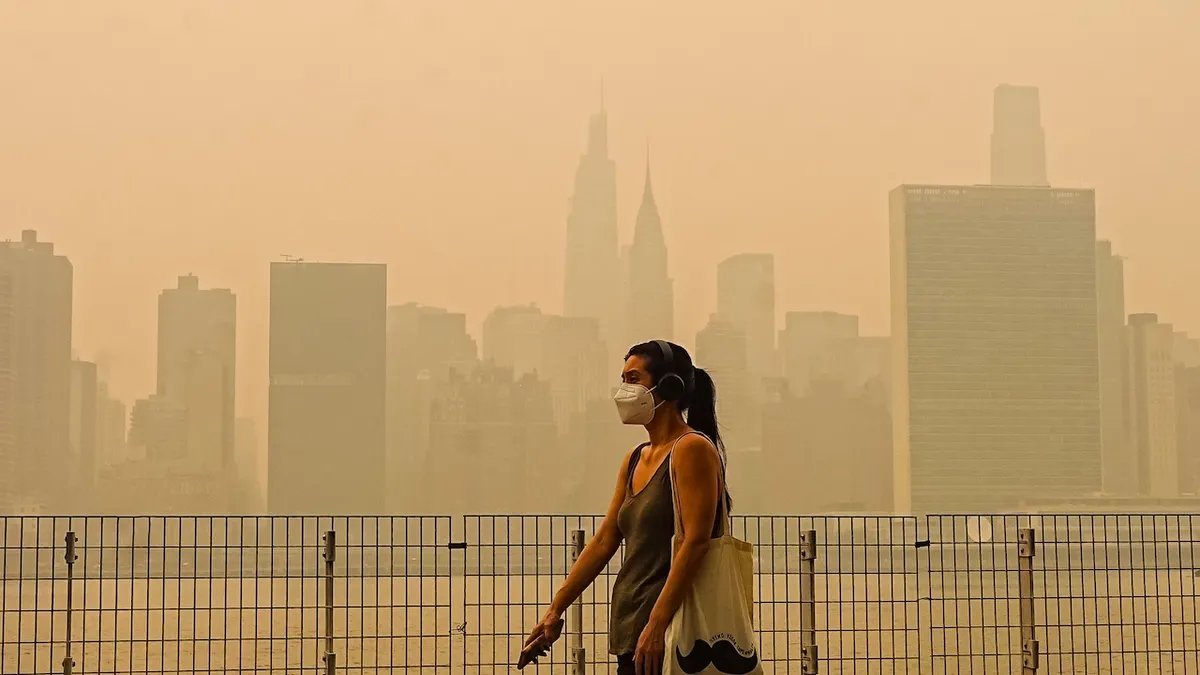
NEW YORK CITY, UNITED STATES – JULY 16: Smoke from massive wildfires in Canada engulfed the New York City skyline, reducing visibility and casting an orange haze over the New York City, United States on July 16, 2026. (Photo by Selcuk Acar/Anadolu via Getty Images) (Getty Images)
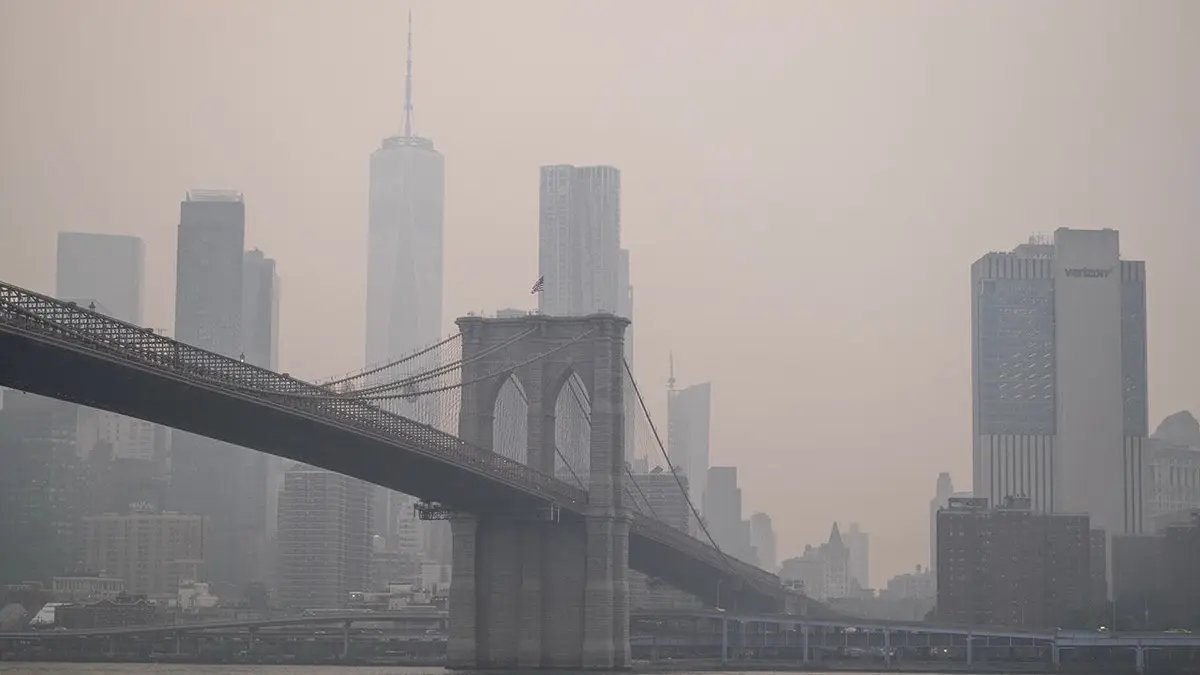
Smoke from wildfires in Canada shrouds the Manhattan skyline in Brooklyn, New York, on Thursday, July 16, 2026. (Victor J. Blue/Bloomberg via Getty Images)
The Science and Debate of Forest Management
While political leaders clash, forestry experts and scientists point to systemic issues in how North American forests are maintained. Andrew Hale, a Canadian fellow at Advancing American Freedom, argued that Canada’s current policies have failed to prioritize active forest management.
“Canada has a policy of not keeping reservoirs. They also will not cut firebreaks and will not thin their forests,” Hale said. He attributed this to “the undue influence of environmental groups who are firmly politically motivated and have divorced themselves from science and good stewardship,” adding that “Canada and the rest of North America is suffering as a result.”
Ecologists note that for over a century, fire suppression policies across North America have led to an unnatural accumulation of underbrush and dead wood—often referred to as “fuel load.” Historically, Indigenous communities utilized controlled, low-intensity fires to clear this debris, a practice now recognized as vital for ecological resilience.
Paul Hessburg, a professor at the University of Washington’s School of Environmental and Forest Sciences, testified that while climate change is exacerbating conditions, proactive forest management remains a powerful tool.
“The punchline is, with climate change, these conditions will intensify with less snowpack, more fires, bigger fires, hotter fires,” Hessburg said. “The question is: Can we restore resilience? We can. We can bring back these elements and put the governors back into the landscape that historically regulated the flow of fire.”
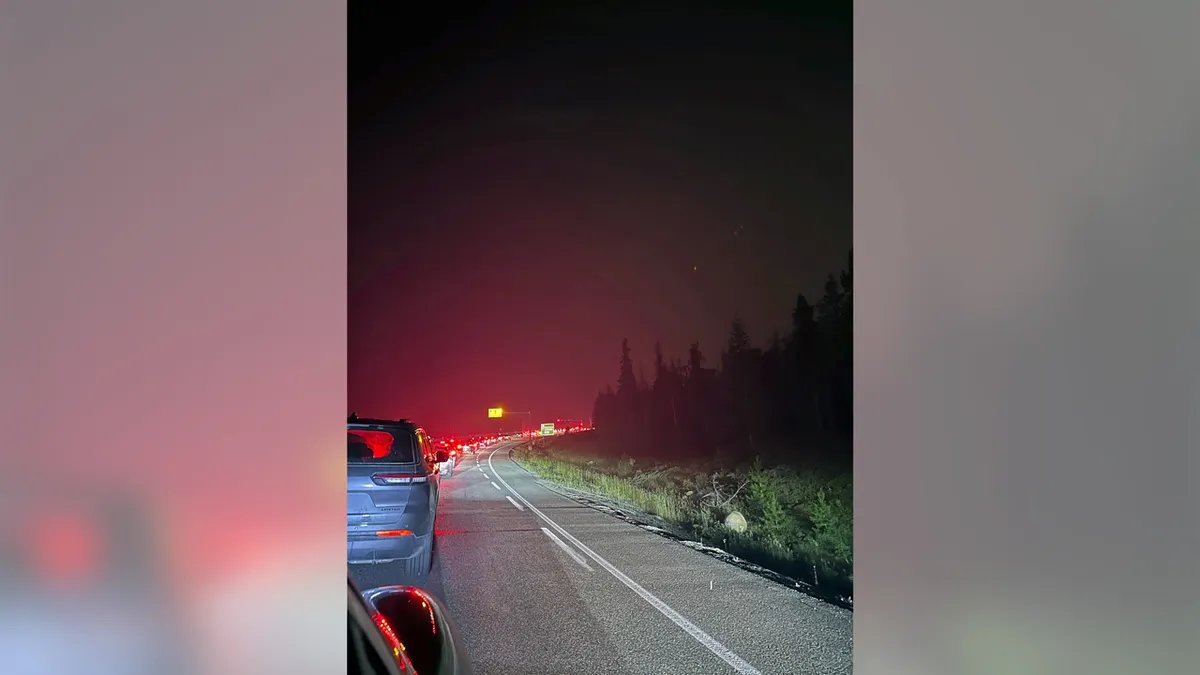
Cars sit in intense traffic as people evacuate because of wildfires early on July 23, 2024, in Jasper, Alberta. Multiple wildfires in Canada’s Jasper National Park have flared up, forcing all park visitors along with the 4,700 residents of Jasper to flee. (Carolyn Campbell/The Canadian Press via AP))
Jason Hayes, a senior research fellow in energy and environmental policy at the Heritage Foundation, emphasized that the solution lies in pre-fire mitigation. “The best thing to do is get out, space and thin, do prescribed burns and recognize that these are renewable resources,” Hayes said, noting this would result in “much less intense wildfires.”
However, Hayes acknowledged the immense logistical hurdles of managing Canada’s rugged geography. Many fires burn in remote areas of northern Ontario and other parts of the country that are inaccessible by road. “You have to fly in, and it’s just difficult to do,” Hayes explained.
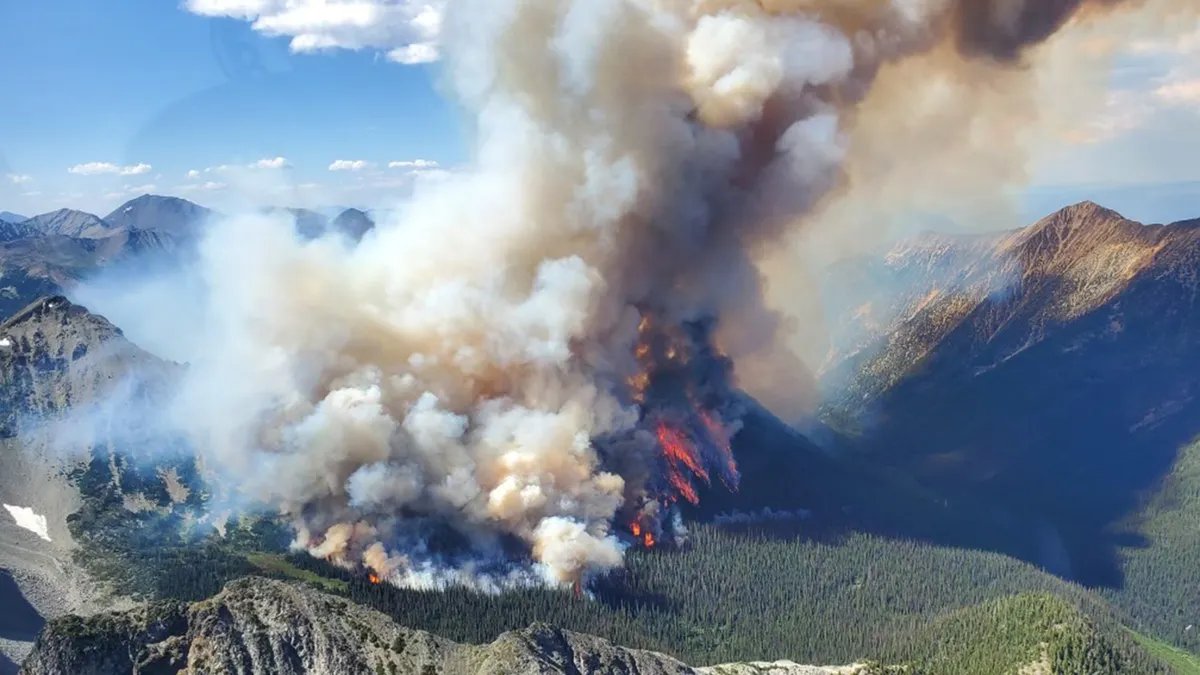
BRITISH COLUMBIA, CANADA – JULY 10: An aerial view of wildfire of Tatkin Lake in British Columbia, Canada on July 10, 2023. (BC Wildfire Service/Anadolu Agency via Getty Images)
Canada’s Own Self-Assessment
These challenges are echoed within Canada itself. In June, the Senate Committee on Agriculture and Forestry released a comprehensive report titled Canada on Fire: The Catastrophic and Escalating Effects of Wildfires on Lives and Communities. The report was compiled after holding 17 meetings, hearing testimony from 79 witnesses, and receiving 23 written briefs from scientists, government officials, Indigenous leaders, and industry experts.
The committee concluded that while climate change is accelerating fire behavior “beyond the capacity of existing systems,” Canada’s prevention efforts have lagged. A major focus of the report is fuel management—the reduction of dry grass, dead trees, and fallen branches. “Several witnesses agreed that prescribed fire is the most important risk-reduction tool for helping to manage or slow wildfire on the landscape and restoring ecological integrity,” the report stated.
Beyond fuel management, the Senate report highlighted critical resource deficits, including a shortage of wildfire-management expertise and an aging aerial firefighting fleet. Specifically, the report noted that provincial fleets still rely on 22 older CL-215 aircraft, with at least 20 of these water bombers requiring immediate replacement.
The Office of Prime Minister Mark Carney did not respond to requests for comment in time for publication.