Elizabeth Warren Demands Early Crypto Disclosures From Trump Amid CLARITY Act Debate
Senator Warren urges President Trump to release his 2026 digital asset earnings ahead of a crucial Senate vote on the CLARITY Act.
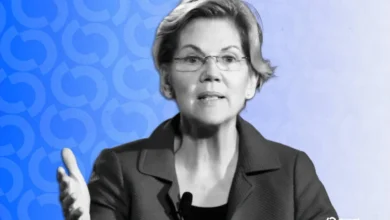
The intersection of federal digital asset policy and executive branch ethics has flared into a high-stakes confrontation on Capitol Hill. Senator Elizabeth Warren, a long-standing critic of the digital asset industry who frequently associates digital assets with illicit activities, has formally requested that President Donald Trump release an early, voluntary update on his personal cryptocurrency holdings and earnings.
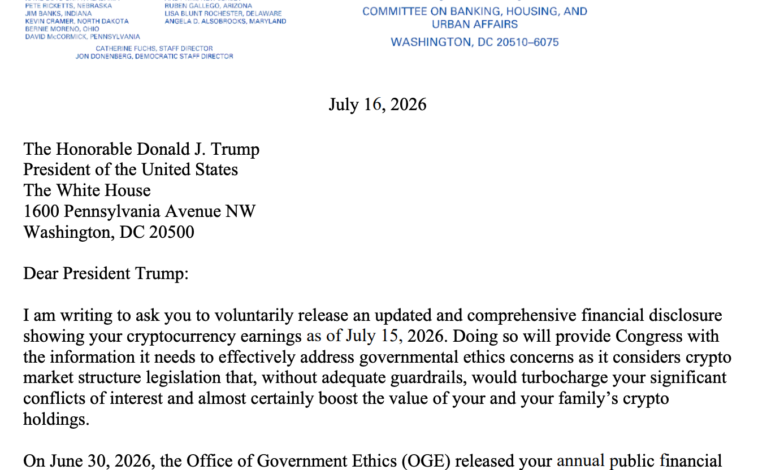
In a letter sent on Thursday, Warren urged the president to submit a voluntary financial disclosure report covering his crypto-related transactions and earnings between January 1 and July 15. The request comes on the heels of Trump’s 2025 financial disclosures, which revealed he had generated an estimated $1.4 billion from various crypto-related ventures during that year. These lucrative endeavors included his associated memecoin, Official Trump (TRUMP), and World Liberty Financial, a decentralized finance (DeFi) initiative closely tied to his family.
“Your financial disclosure raises key questions about the appropriateness of Presidents, Vice Presidents, senior administration officials, members of Congress, and their families profiting off the crypto industry, just as the US Senate debates crypto market structure legislation that has the potential to increase the value of your crypto holdings,” Warren wrote in the letter, which was released by the Senate Banking Committee.
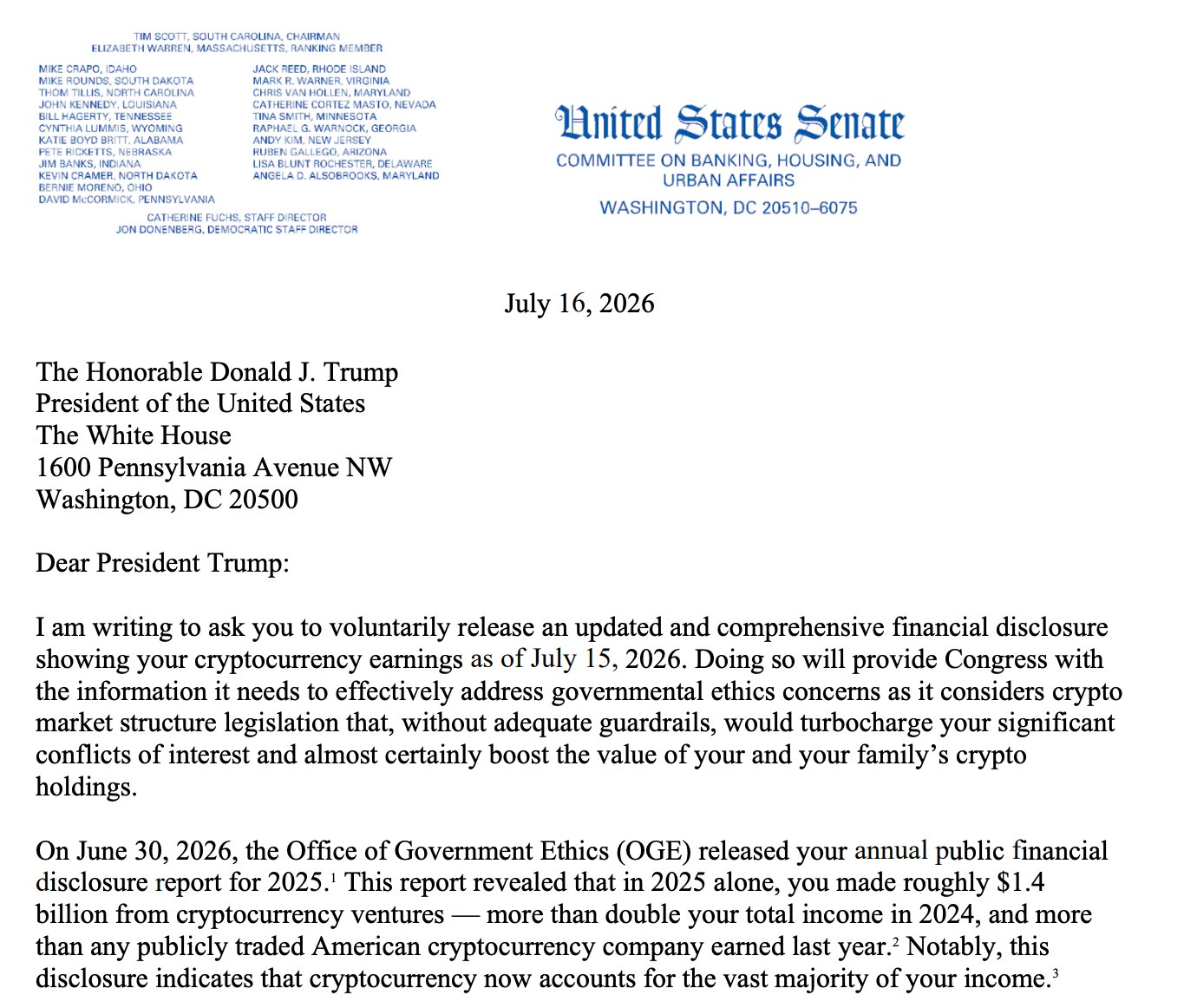
Thursday letter from Elizabeth Warren requesting financial disclosures from Donald Trump. Source: Senate Banking Committee
Under current rules established by the US Office of Government Ethics to prevent conflicts of interest among elected officials, Trump’s 2025 disclosure was filed on June 30. While the president is not legally mandated to submit his 2026 annual report until May 2027, Warren is pushing for a voluntary filing by July 23. This accelerated timeline is strategically aimed at the Senate’s upcoming deliberations on the Digital Asset Market Clarity (CLARITY) Act, a sweeping legislative proposal designed to establish a comprehensive crypto market structure.
The debate over executive conflicts of interest in the crypto space has intensified as digital assets have moved from the regulatory fringes to the center of Washington’s legislative agenda. Trump, who has increasingly embraced the Web3 community, has dismissed concerns over his personal financial involvement in the sector. In a July 2 interview, Trump asserted there was “nothing illegal” and “nothing wrong” with profiting from his crypto investments as president.
The White House has also moved to downplay any ethical concerns. White House spokesperson Anna Kelly stated that “all of the president’s assets are in held in fully discretionary accounts managed by independent third-party financial institutions” and maintained that “there are no conflicts of interest.” In federal ethics practice, utilizing independent discretionary accounts is a traditional method designed to shield public officials from direct decision-making power over their personal portfolios, thereby theoretically neutralizing potential policy biases.
However, the political battle lines are hardening in the Senate. Senate Majority Leader John Thune has indicated that the upper chamber plans to hold a vote on the landmark crypto bill before lawmakers depart for the August states work periods. The legislative path remains highly contentious. Numerous Senate Democrats have publicly declared they will withhold support for any regulatory framework that lacks robust ethical guardrails, with several lawmakers specifically pointing to Trump’s potential conflicts of interest as a primary cause for concern.
Meanwhile, efforts to advance the CLARITY Act continue in the House of Representatives. On Friday, the House Financial Services Committee’s Subcommittee on Digital Assets, Financial Technology, and Artificial Intelligence convened a field hearing in New York City to discuss the bill. The legislation originally cleared the House of Representatives with bipartisan support in July 2025. However, because it must secure at least 60 votes to clear the Senate, any subsequent amendments would require the bill to return to the House for a final vote.
Representative French Hill, who chairs the full committee and attended the Friday field hearing, emphasized that the regulatory framework has been a “bipartisan priority” for Congress. Despite Hill’s characterization, the partisan divide was on display in New York, as no Democratic representatives appeared to be present at the hearing.
The ongoing struggle highlights a deeper philosophical divide in Washington. Proponents of the legislation argue that clear rules of the road are desperately needed to keep digital innovation within the United States, while critics like Warren argue that rushing to legitimize the industry without addressing executive ethics risks compromising the integrity of federal financial policy.