Bitcoin Holds Steady at $65,000 Post-South Korea Rate Hike as ZachXBT Warns on Hardware Wallet Security
As macroeconomic shifts test market resilience, on-chain security remains a critical vulnerability for digital asset holders.


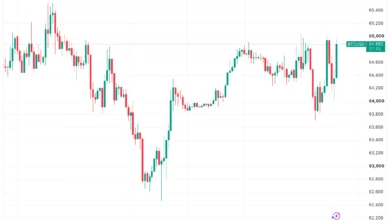
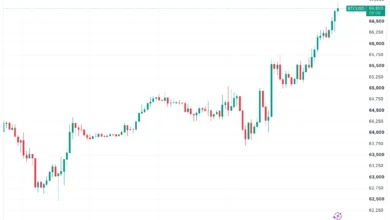
The global cryptocurrency market showed notable resilience this week as Bitcoin traded steady near $65,000, weathering the macroeconomic ripples of South Korea’s rate hike. While digital assets continue to mature as macroeconomic instruments, the industry is simultaneously grappling with persistent security vulnerabilities at the individual user level. Highlighting this internal friction, renowned blockchain investigator ZachXBT came down heavily on hardware wallets, sparking a renewed debate over user security, self-custody practices, and the limits of physical cold storage.
### Macro Resilience: Bitcoin Absorbs South Korea’s Rate Hike
South Korea has long been an influential hub for digital asset trading, characterized by highly active retail participation and the famous “Kimchi Premium”—the price discrepancy where cryptocurrencies trade higher on South Korean exchanges compared to global platforms. Consequently, shifts in the country’s monetary policy frequently reverberate through the broader digital asset ecosystem.
The Bank of Korea’s decision to implement South Korea’s rate hike represents a tightening of liquidity designed to curb domestic inflation and stabilize the housing market. Typically, higher interest rates increase the cost of capital, prompting investors to de-risk and capital to flow out of speculative assets. However, Bitcoin’s ability to trade steady near $65,000 in the immediate aftermath suggests that global liquidity remains robust and that the market has increasingly priced in macroeconomic tightening from major central banks.
This stability highlights Bitcoin’s evolving narrative. No longer viewed solely as a speculative retail asset, it is increasingly treated as an institutional macro-hedging tool, absorbing regional policy shifts with minimal volatility.
### The Security Illusion: ZachXBT Critiques Hardware Wallets
While the macro outlook remains stable, the micro-level security of digital assets continues to face severe challenges. In a sharp critique that resonated across the decentralized finance (DeFi) community, blockchain investigator ZachXBT came down heavily on hardware wallets, challenging the widely held belief that physical custody devices offer absolute protection against theft.
Hardware wallets are widely considered the gold standard of cryptocurrency self-custody. These physical devices are engineered to isolate a user’s private keys from internet-connected environments, preventing remote hackers from stealing funds. However, ZachXBT pointed out that a hardware wallet is only as secure as the user operating it.
The core issue lies in the distinction between securing private keys and executing smart contract transactions. While cold storage prevents the unauthorized extraction of keys, it does not protect users from signing malicious transactions. Phishing campaigns, address poisoning, and sophisticated social engineering schemes frequently trick users into approving transactions that grant drainer contracts access to their funds.
When a user signs a transaction on a hardware wallet without fully understanding the smart contract permissions they are granting, the physical device faithfully executes the command. In these scenarios, the security of the hardware wallet is bypassed entirely, as the user has willingly, if unknowingly, authorized the transfer of their assets to malicious smart contracts.
### Redefining Self-Custody in Web3
ZachXBT’s warnings serve as a crucial reminder that technology cannot entirely compensate for human error. The security model of the digital asset ecosystem is shifting from simple key storage to comprehensive transaction security.
To combat these vulnerabilities, security firms are advocating for better wallet interfaces that offer “clear signing” rather than “blind signing.” Clear signing translates complex smart contract code into human-readable language, showing users exactly what assets are leaving their wallet and which smart contracts are receiving permissions before they press confirm on their physical device.
Ultimately, the dual developments of Bitcoin’s macroeconomic resilience and the ongoing debate over hardware wallet safety illustrate a maturing industry. While institutional infrastructure is stabilizing, individual security practices must evolve to protect participants from increasingly sophisticated on-chain threats.