Bitcoin Holds Near $62,600 as Reinstated Strait of Hormuz Blockade Stirs Inflation Concerns
Reinstated U.S. blockade on Iranian ships drives oil prices higher, complicating the outlook for interest rates and cryptocurrency markets.

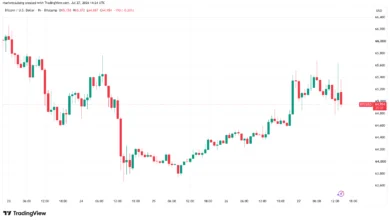
Bitcoin traded near $62,600 on Tuesday, down 0.3% over 24 hours and roughly flat on the week, according to CoinDesk Data. While the cryptocurrency market appeared steady on the surface, the underlying macroeconomic backdrop shifted significantly following new geopolitical developments in the Middle East.
President Trump reinstated the U.S. blockade of Iranian ships through the Strait of Hormuz and demanded a 20% fee on all other cargo moving through the waterway. The decision revived a geopolitical conflict that a June peace deal had previously appeared to settle.
Oil Prices and Rate Hike Expectations Rise
Following the announcement, Brent crude rose as much as 2.8% to about $85 a barrel, marking its second consecutive day of gains. In response to rising energy costs, financial market traders lifted bets on a Federal Reserve interest rate hike.
The combination of rising oil and increased rate expectations runs directly against the cryptocurrency market. Higher oil prices feed the inflation pressure that kept the Federal Reserve hawkish through June. The easing of that specific pressure had previously allowed bitcoin to recover from its late-June lows near $58,000. With the peace trade now unwinding, rate-hike odds are climbing back.
Over the past month, bitcoin has remained bounded between roughly $59,000 and $66,000, while major alternative cryptocurrencies showed mixed performance. Ether held near $1,783 and is up on the week, whereas Solana, XRP, and Hyperliquid are all down 5% or more over a seven-day period.
Inflation Data Presents Immediate Test
The upcoming June inflation print scheduled for today serves as the next immediate test for the market. A soft inflation number would likely ease the rate-hike pressure that the news regarding Iran recently revived. Conversely, a hot inflation report, particularly alongside climbing oil prices, would present a second hawkish signal to the market just two weeks before the Federal Reserve meets on July 28 and 29.
Geopolitical and Economic Context
The Strait of Hormuz is a strategically vital waterway located between Oman and Iran. It connects the Persian Gulf with the Gulf of Oman and the Arabian Sea, serving as the primary maritime route through which a significant portion of the world’s petroleum is transported. Disruptions or blockades in this corridor historically lead to immediate volatility in global energy markets due to supply concerns.
In macroeconomic policy, the Federal Reserve monitors energy costs closely, as crude oil prices are a major driver of headline inflation. When energy prices rise, they can increase transportation and manufacturing costs across the economy, contributing to broader consumer price increases. To combat persistent inflation, central banks typically maintain or raise interest rates, which increases the cost of borrowing and generally reduces demand for speculative assets, including cryptocurrencies.