Gold’s Rising Correlation With Equities Challenges Traditional Safe-Haven Status
The precious metal is increasingly trading in tandem with risk assets, complicating its role as a traditional hedge.
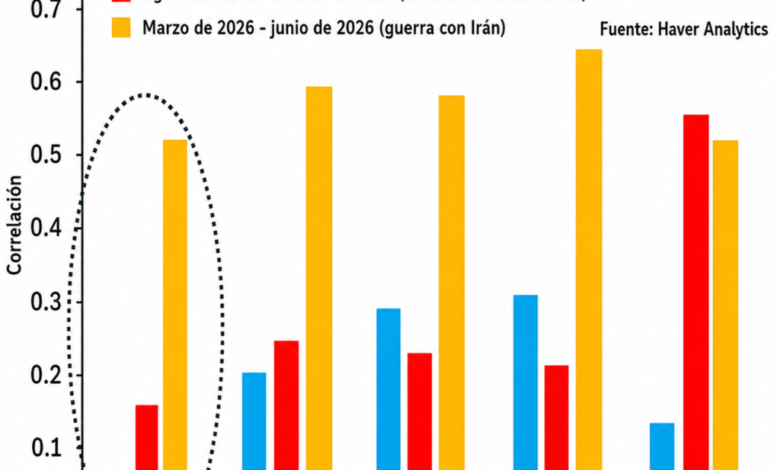
Gold is increasingly behaving like a risk asset, with its correlation to the S&P 500 reaching levels comparable to Bitcoin and challenging its long-standing reputation as a portfolio diversifier.
Analysis of market data indicates a structural shift in the precious metal’s price action. According to economist Robin Brooks, gold’s correlation with the U.S. benchmark equity index was nearly non-existent between 2011 and mid-2025. However, that relationship tightened significantly starting in late 2025 and through 2026, as the metal began responding to the same macroeconomic drivers propelling riskier assets.
This shift suggests that gold may be losing its ability to provide a hedge during periods of equity volatility. Brooks notes that during recent intervals of geopolitical tension, gold failed to trade independently, instead mirroring the fluctuations of the broader stock market. This transition coincides with the rise of the “devaluation trade,” where investors flock to both gold and cryptocurrencies as a hedge against rising sovereign debt and expansionary monetary policies.
## Break from Interest Rate Fundamentals
The evolving market positioning is further evidenced by gold’s decoupling from U.S. Treasury yields. Historically, gold prices maintained an inverse relationship with real interest rates, as the non-yielding metal becomes less attractive when bond returns rise.
Recent data from Haver Analytics shows this link has weakened. Despite real yields exceeding 2% in some periods, gold continued to reach record highs. Analysts suggest this breakdown indicates that price discovery is now being driven more by currency debasement fears and retail sentiment than by traditional interest rate mechanics.
## Institutional vs. Retail Drivers
While retail participation has introduced higher volatility and sentiment-driven price swings, institutional support remains a stabilizing factor. World Gold Council data shows that global demand reached a record 4,900 tons in 2025. Central banks have also remained net buyers, exceeding 1,000 tons of annual purchases for four consecutive years, signaling that official sectors still view the metal as a strategic reserve.
However, the $31 trillion gold market is increasingly influenced by the same liquidity cycles that affect Bitcoin. Analysts at JPMorgan have noted that both assets are benefiting from a shared narrative regarding the erosion of fiat currency value.
Daniel Arráez, an economist specializing in digital assets, suggests that the increased correlation does not necessarily mean gold has permanently lost its defensive qualities. Instead, he argues that the current macroeconomic environment—defined by high debt and monetary expansion—is forcing traditionally disparate assets into a single correlation block. For institutional investors, this convergence necessitates a re-evaluation of gold’s role in diversified portfolios, as its historical independence from the S&P 500 continues to diminish.