Polymarket Faces $15 Million Dispute Over Strategy Bitcoin Sale Timing
The conflict centers on whether corporate events are settled based on execution date or public disclosure timing.
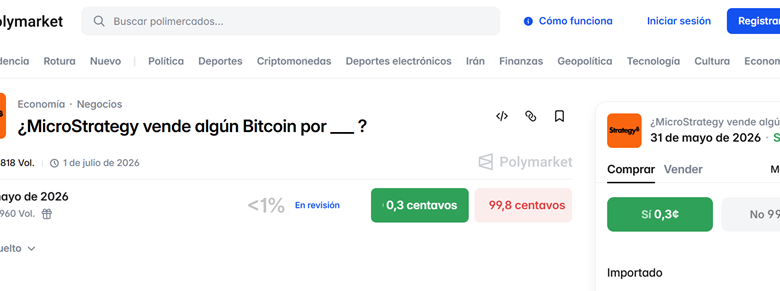
A $15 million prediction market on the decentralized platform Polymarket has entered a formal dispute process following a disagreement over the timing of a Bitcoin divestment by the firm Strategy.
The conflict centers on whether a sale of 32 bitcoin (BTC) by the company—valued at approximately $2.5 million—met the criteria for a contract that expired at 11:59 p.m. ET on May 31, 2026. While the transaction was executed in late May, Strategy did not publicly disclose the move until June 1, sparking a debate over whether the “event” occurred upon execution or upon verification.
According to market data, the specific contract is part of a broader suite of prediction products tied to Strategy’s bitcoin holdings, which have collectively generated more than $80 million in trading volume. The platform’s rules for this market stipulated a “Yes” resolution if the company sold any amount of BTC before the May 31 deadline.
The dispute has now moved to the UMA optimistic oracle, a decentralized resolution protocol. Initial proposals to resolve the market in favor of “No” holders were challenged, triggering a review period that typically lasts several days. The core of the contention lies in a clarifying note issued by Polymarket on June 1, which suggested that sufficient confirmation of the sale was not available before the market’s official closing time.
Market participants are divided on the interpretation of the contract’s terms. One faction argues that the physical execution of the trade within the month of May satisfies the conditions. Opposing traders maintain that because the information was not verifiable by the public or through on-chain data until after the deadline, the event cannot be retroactively applied to the May window.
The resolution of this case is expected to serve as a significant precedent for how prediction markets handle the lag between corporate actions and regulatory or public disclosures. As these platforms increasingly host high-volume bets on the behavior of publicly traded entities, the distinction between the occurrence of an event and its reporting becomes a critical factor in contract design and settlement integrity.
The market currently remains “In Review,” with the final decision resting on the UMA protocol’s consensus mechanism.