Land Rover Begins Testing 2028 Defender Facelift with Performance-Inspired Styling
The mid-cycle refresh brings OCTA-inspired design cues and technical chassis refinements to the iconic SUV.
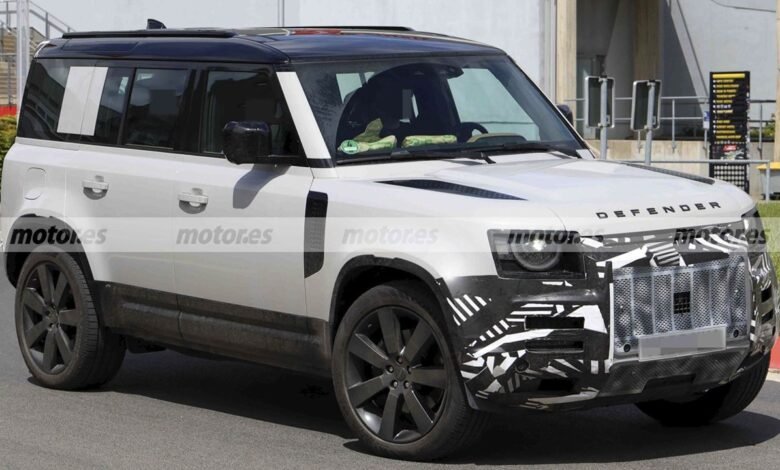
Land Rover has commenced track testing for a mid-cycle refresh of the Defender, with prototypes recently spotted undergoing high-speed evaluations at the Nürburgring. The upcoming 2028 model year update represents the first major overhaul for the current generation since its global debut nearly seven years ago.
Initial sightings of the camouflaged test mules indicate that the British automaker is focusing on a visual alignment with the high-performance Defender OCTA. While the signature headlight units and slim upper grille remains unchanged, the front fascia features a redesigned bumper and a larger, mesh-covered lower intake. The prototype also reveals new LED daytime running light signatures and revised underbody engine protection.
At the rear, the most notable addition is a new integrated roof spoiler, which may be offered as an optional performance accessory or restricted to higher trim levels. While the rear bumper has been subtly reshaped, the vertical taillight clusters appear to be carried over from the current model without modification.
Technical development is currently centered on chassis refinement. Engineers are reportedly recalibrating the suspension, steering, and braking systems to improve on-road dynamics. A significant portion of the testing program is also dedicated to NVH (noise, vibration, and harshness) reduction to enhance cabin isolation.
Inside, the 2028 Defender is expected to receive a material upgrade. The refresh will introduce a broader palette of leathers, wood veneers, and metallic accents to position the SUV more competitively within the premium segment.
Powertrain efficiency remains a priority for the update. Land Rover is working to increase the electric-only range of the plug-in hybrid (PHEV) variant, which currently offers 51 kilometers (approximately 32 miles). The diesel engine lineup is also being revised to meet stricter emissions standards, while the 4.4-liter BMW-sourced V8 will receive further optimization for fuel efficiency.
The development cycle is expected to continue for at least another six months. Industry analysts anticipate a formal reveal and market launch in mid-2027, marking an unusually long lifecycle for the current platform before a full generational replacement.