The Bold Evolution of the Lexus ES: Bigger, Bolder, and Embracing an Electric Future
With massive rear legroom, a next-gen hybrid setup, and new all-electric variants, the redesigned ES steps into flagship territory.
For decades, the Lexus ES has served as the bedrock of the brand’s sedan lineup—a quiet, conservative, and relentlessly sensible luxury cruiser. However, the latest iteration of this midsize stalwart represents a radical departure from tradition. By growing substantially in physical size, introducing fully electric powertrains, and adopting a highly distinctive design language, Lexus is repositioning the ES to fill a much larger role in its portfolio.
The physical transformation of the new ES is immediately apparent. It has grown in nearly every exterior dimension, most notably gaining 4.5 inches in height and a substantial 6.5 inches in overall length, bringing the total to 202.4 inches. This growth spurt places the new ES just 3.7 inches shy of the flagship 2026 Lexus LS 500. With its elevated stance and elongated proportions, Lexus appears to be nudging the sedan closer to crossover territory, a design philosophy reminiscent of the similarly proportioned Toyota Crown.
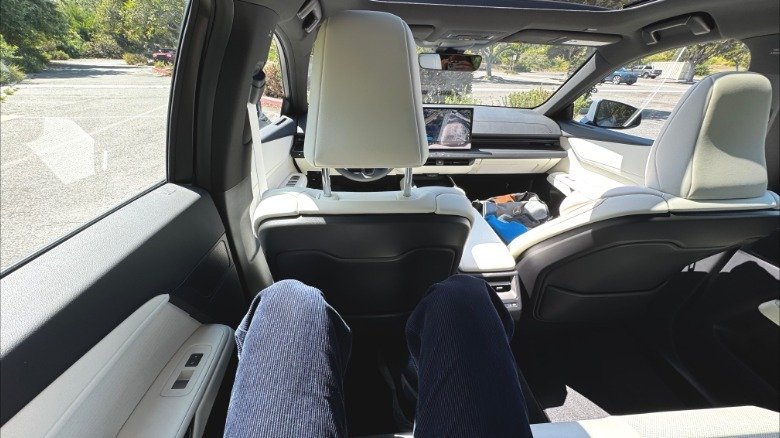
This dramatic footprint expansion pays massive dividends inside the cabin. The rear passenger compartment is exceptionally vast. Even for a passenger measuring 6-foot-8-inches, sitting behind an all-the-way-back driving position is not just possible, but remarkably comfortable, leaving legroom to spare. Buyers looking to maximize rear-seat luxury can opt for the Executive package on select trim levels, which elevates the experience by adding a luxury-class powered ottoman. Given the demise of the brand’s traditional S-Class fighter, the LS, Toyota’s luxury division now has the freedom to bestow flagship-level dimensions and high-end amenities upon the historically entry-level ES.
Logan K. Carter/ Jalopnik
Under the hood, the powertrain lineup undergoes a major modernization. The sole gasoline-powered variant is the hybrid ES 350h. This model pairs a 2.5-liter inline-4 engine with Lexus’ sixth-generation hybrid system, routing a combined 244 horsepower through a continuously variable transmission (CVT). Buyers can choose between front-wheel drive and all-wheel drive. The front-wheel-drive ES 350h delivers highly impressive EPA ratings of 48 mpg city, 44 mpg highway, and 46 mpg combined. Opting for all-wheel drive reduces those estimates by just one or two mpg across the board. This remains incredibly efficient, representing a notable improvement over the front-wheel-drive-only 2025 Lexus ES 300h, which carried EPA ratings of 43 mpg city, 44 mpg highway, and 44 mpg combined.
The headline news for this generation, however, is the introduction of two fully electric powertrains. The front-wheel-drive ES 350e utilizes a single, front-mounted electric motor producing 221 horsepower. Step up to the dual-motor ES 500e, and standard all-wheel drive is joined by a rear-axle motor, raising total system output to 338 horsepower. Both electric models are equipped with a 74.7-kWh lithium-ion battery pack. The single-motor ES 350e delivers the lineup’s maximum driving range with an EPA-estimated 307 miles, while the more powerful ES 500e is rated at 276 miles on a full charge. When it comes to replenishment, both electric models support DC fast-charging at speeds up to 150 kW, enabling a 10% to 80% charge in a respectable, if average, 30 minutes.
 Logan K. Carter/ Jalopnik
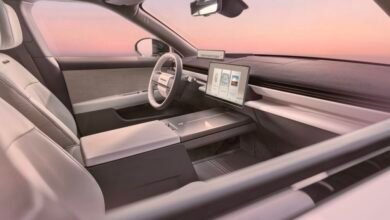
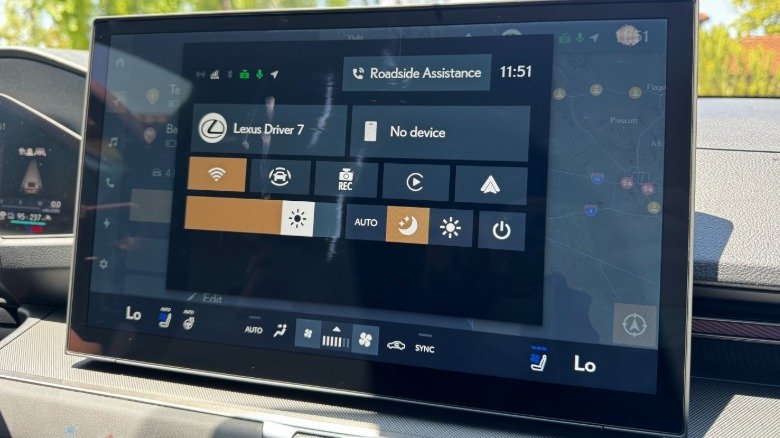
Inside the cabin, technology takes center stage with the debut of the latest Lexus Interface infotainment system. This setup features a standard 14-inch central touchscreen paired with a 12.3-inch digital driver’s display. Unlike the brand’s first dedicated EV, the RZ, the new ES comes equipped with highly useful, EV-specific software functions. This includes a dynamic range map (or “range blob”) that illustrates exactly how far the vehicle can travel in any direction based on its current state of charge, alongside highly customizable route-planning software designed to streamline charging stops.
Visually, the new ES makes a highly assertive statement. Lexus designers have successfully integrated their signature spindle grille motif into both the hybrid and electric versions. The primary styling distinction between the two lies at the front end, where the hybrid features a small grille slot that is absent on the fully electric models. While the front profile remains sharp, the rear three-quarter view presents a more polarizing aesthetic. The C-pillar transition and a generous rear overhang give the tail end a somewhat bulky, unconventional appearance. It is a distinctive, slightly unusual shape, but one that is easily forgiven once you experience the vast, limousine-like passenger space it creates.