

Bond Markets Tighten the Limits on Washington
Treasury yields test the limits of monetary and fiscal policy
WASHINGTON — The U.S. Treasury market is establishing strict parameters for federal monetary and fiscal policy as the Federal Open Market Committee prepares to conclude its two-day policy meeting on Wednesday. Longer-dated Treasury yields moved higher after the June FOMC meeting as investors absorbed a hawkish policy stance from the Fed that was not accompanied by an immediate adjustment to the benchmark federal funds rate.
inflation remains stubbornly above the Federal Reserve’s official target, while recent economic indicators have shown unexpected strength in the labor market. Fixed-income investors are demanding higher yields to offset long-term price risks, putting growing pressure on central bank policymakers.
The central bank operates under a statutory dual mandate established by Congress in a 1977 amendment to the Federal Reserve Act of 1913. The law directs the institution to pursue maximum employment and stable prices. Under former Chair Ben Bernanke, the Fed formally quantified its price stability goal in January 2012 as a 2% annual inflation rate measured by the personal consumption expenditures price index.


When bond yields spike while benchmark interest rates remain unchanged, the market signals that investors perceive unaddressed risks in the broader economy, including entrenched inflation or fiscal instability. “If a central bank remains on the sidelines while inflation is running hot or energy/supply shocks are pushing prices higher, the bond market could interpret this as policymakers accepting a higher path for inflation rather than acting to fight it, leading to higher long-term interest rates,” said Ryan Sweet, chief global economist at Oxford Economics.
Sweet noted that fixed-income markets could force central banks into action if policymakers are perceived as hesitant. Policymakers are currently weighing whether persistent price increases driven by supply-side shocks in energy, particularly crude oil, warrant monetary tightening or whether the central bank should “look through” temporary supply disruptions.
The possibility of a credibility loss also carries financial consequences. Financial analysts warn that any perceived loss of central bank independence could carry immediate structural costs for the financial system. Paul Donovan, an economist at UBS, wrote in a commentary to clients that if Fed Chair Kevin Warsh delivers a policy outcome that surprises financial markets, “it risks reawakening accusations of being a ‘sock puppet’ and raising credibility questions which would require a risk premium in bond pricing.”
Donovan added that such a outcome “would raise real borrowing costs for the government and private sector, with implications for investment and trend growth.” Choosing not to act on inflation, meanwhile, risks eroding institutional credibility if market participants conclude that the central bank is reluctant to contain broader inflationary pressure.
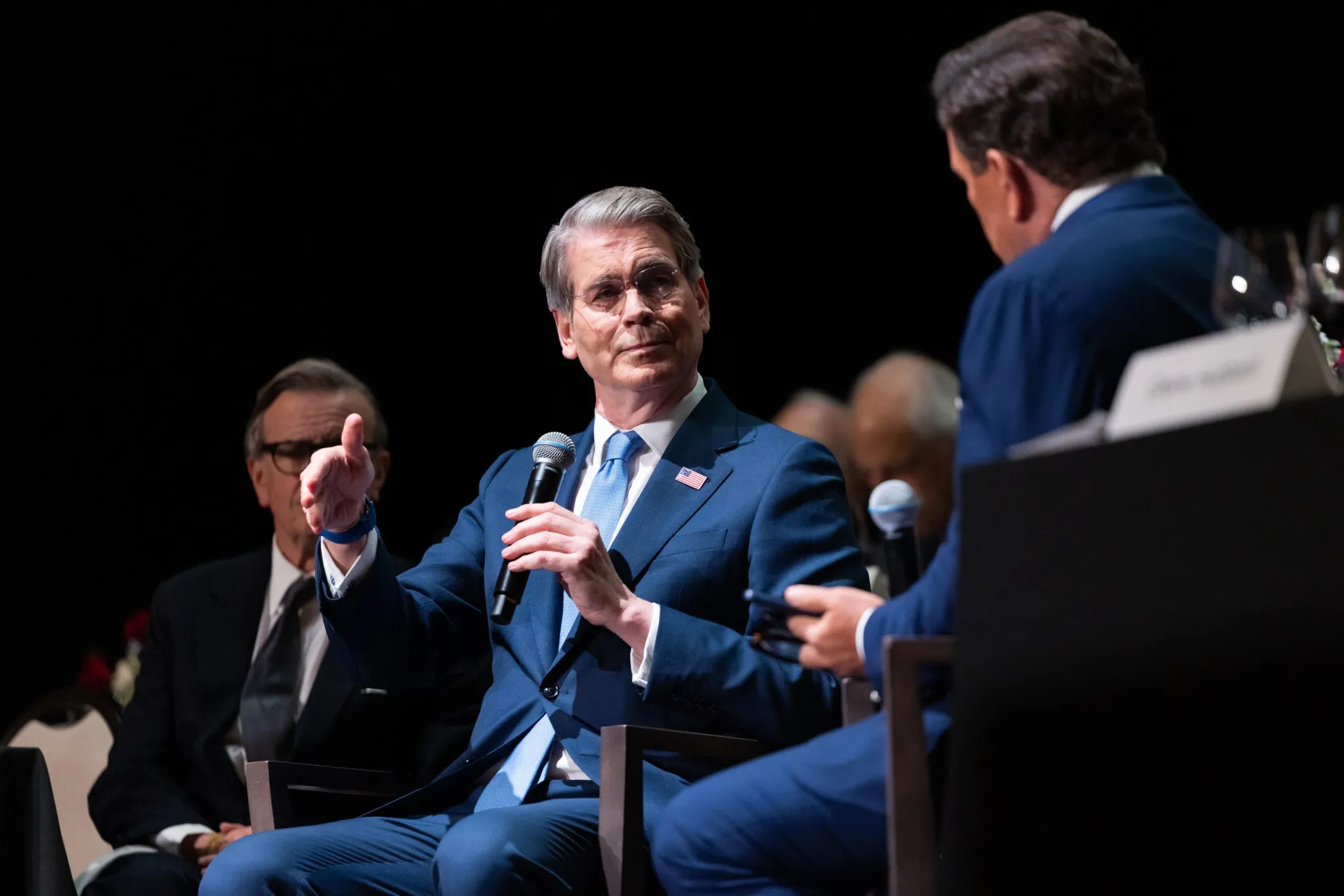
Treasury Secretary Scott Bessent addressed the relationship between executive policy and financial market realities during a speech at the Economic Club of New York in June. The Treasury Department under Bessent recently executed a multi-billion-dollar Treasury buyback program to manage market stability and maintain debt liquidity. The operation involves the federal government purchasing back less-liquid, off-the-run Treasury securities; it temporarily pushed yields lower and injected liquidity into sovereign debt channels.
Asked whether Warsh was facing executive pressure to lower rates despite economic data pointing toward elevated inflation, Bessent defended the central bank’s operational latitude. He noted that President Donald Trump had committed to respecting monetary independence during Warsh’s swearing-in ceremony.
“I am confident that the Fed chair will … optimize the path for both inflation and economic growth,” Bessent said at the event. “The president said at Chair Warsh’s swearing-in ceremony that he would be independent, that he should do what he wants.”
Bessent also described the authority of fixed-income investors. “Look, the president understands—he and I have talked about it quite a bit—… the bond market has taken out more governments than howitzers,” Bessent said. “So I believe that he has complete confidence in the Fed chair to do the right thing.”
The concept of bond markets overriding political objectives dates back decades. In 1983, Wall Street economist Ed Yardeni coined the term “bond vigilantes” for investors who sell sovereign debt to push yields higher as a protest against inflationary fiscal or monetary policy. Political strategist James Carville summarized that leverage in 1993 by observing that the bond market possessed the power to intimidate political leaders worldwide.
The market’s role has remained part of a broader debate over central bank independence. During the final year of former Fed Chair Jerome Powell’s tenure, the central bank faced persistent public friction with the White House over the direction of interest rates, illustrating the exposure of monetary policy to political pressures during periods of elevated inflation.
For Warsh, early in his leadership of the central bank, the fixed-income market continues to serve as an external barrier against potential executive overreach, reinforcing the boundary between elected officials and independent monetary governance.










One Comment