
Stablecoin Rewards Put Senate Vote at Center of Bank-Crypto Clash
Banks demand tougher limits on stablecoin incentives before Senate vote
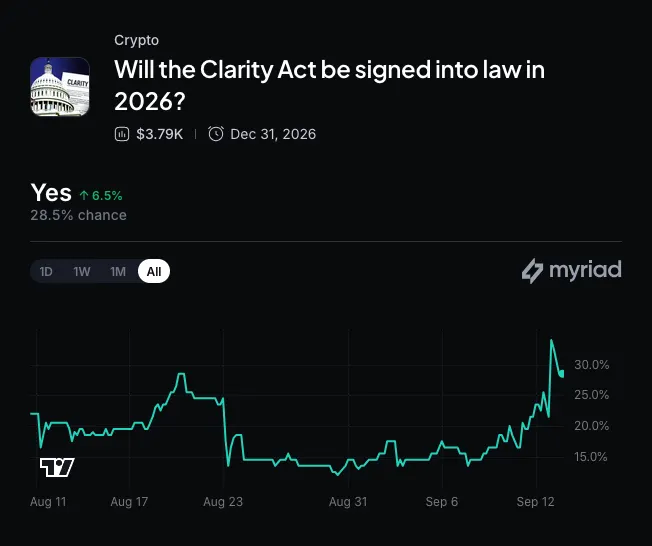
WASHINGTON — The revised Clarity Act, a proposed federal legislative framework for stablecoins, is at the center of a dispute over whether digital payment tokens should be allowed to offer incentives resembling interest-bearing bank deposits. Stablecoins are digital tokens designed to maintain a 1:1 peg with the U.S. dollar.
Ahead of Tuesday’s pivotal Senate procedural vote, eight financial trade organizations sent a joint letter Monday to Senate Republican Leader John Thune and Democratic Leader Chuck Schumer. The groups threatened to withhold support for the bill unless lawmakers adopt stricter prohibitions against yield-bearing payment stablecoins.
The signers include the American Bankers Association, the Bank Policy Institute, and the Independent Community Bankers of America. They argue that the current draft contains statutory loopholes that could allow stablecoin platforms to offer interest-like rewards and trigger a massive migration of deposits out of the traditional banking system.


Payment stablecoins such as Tether’s USDT, Circle’s USDC, and PayPal’s PYUSD maintain their currency pegs with reserve portfolios composed primarily of cash, central bank deposits, and short-term U.S. Treasury bills. As yields on short-term government debt have remained elevated following Federal Reserve interest rate hikes, those reserves generate substantial income for issuers.
Commercial banks say passing those earnings to users through promotional yields, holding rewards, or programmatic payouts would create an unregulated competitor to traditional checking and savings accounts. The trade groups wrote: “We support this distinction in principle, although we believe that the way the current legislative text is drafted provides loopholes and avenues for the prohibition to be easily evaded that would still allow interest and interest-like payments to be made on stablecoin balances.”
The banking organizations asked lawmakers to delete the word “solely” from provisions restricting payments linked to holding stablecoins. They said the qualifier narrows the scope of the ban. They also requested replacing an “equivalence” standard with a “substantially similar” test, which would make it easier for regulators to classify indirect financial incentives as prohibited deposit interest.
The proposed legislation has been debated across multiple sessions of Congress. In the House of Representatives, the Financial Services Committee previously advanced the Clarity for Payment Stablecoins Act, championed by former Chairman Patrick McHenry, to establish regulatory pathways for non-bank issuers.
The eight groups also asked Congress to eliminate language allowing permissible customer rewards to vary according to an account’s balance size, duration, or tenure. “Given that interest payments are often calculated by reference to duration, balance and tenure, this subsection appears to contradict the initial prohibition,” the trade groups noted.
Traditional lenders operate under federal regulations that include FDIC deposit insurance coverage capped at $250,000 per account. They are also subject to capital adequacy rules administered by the Federal Reserve, the Office of the Comptroller of the Currency, and state regulators.
Bank trade groups warn that depositors seeking yield could shift funds into stablecoin wallets, leaving commercial and community banks with higher funding costs and less capacity to originate mortgages, small business loans, and agricultural financing.
The coalition rejected a proposed statutory “circuit breaker” that would allow federal banking regulators to intervene only after significant capital outflows from traditional banks occur. “A circuit breaker that activates only after substantial deposit flight has already occurred is not a safeguard at all,” the groups stated in the letter. “Congress should address this risk upfront by ensuring the Clarity Act prohibits payment stablecoin rewards and incentives that function like deposit interest, rather than waiting for harm to banks, borrowers and communities before regulators are empowered to respond.”
The letter follows an earlier effort in May, when six banking associations raised similar concerns about holding-based incentives and requested a “substantially similar” statutory standard. Lobbying over the bill has since expanded into local congressional districts, where regional bankers have met with lawmakers to emphasize capital risks.
In the Senate, bipartisan proposals such as the Lummis-Gillibrand Payment Stablecoin Act have likewise sought to balance innovation with financial stability through reserve standards, redemption requirements, and state-versus-federal oversight boundaries. Digital asset companies and advocacy groups have mounted campaigns urging swift passage of clear regulatory ground rules.
Cryptocurrency industry trade groups, including the Blockchain Association and the Crypto Council for Innovation, have consistently argued that statutory rules are needed to protect consumer funds and establish clear reserve audit standards. Crypto proponents say cash-back rewards and promotional bonuses are standard marketing tools across retail and consumer technology sectors, and that banning ordinary commercial incentives could stifle payments innovation in the United States.
Those groups also argue that stablecoin legislation would preserve the global dominance of the U.S. dollar in digital commerce.