Batomon Showdown Review: A $6 Auto Battler Worth Your Time
Indie title combines creature collection with tactical team building at a fraction of competitor prices

Batomon Showdown has quickly established itself as a standout entry in the auto battler genre, offering a polished roguelike loop at a budget price point that undercuts major competitors. Released just two weeks ago by indie developer Berrymint, the title is available for $6 on Android and $15 on Steam, positioning it as an accessible alternative to free-to-play giants like Teamfight Tactics or Hearthstone Battlegrounds that often rely on aggressive monetization.
The game distinguishes itself through a hybrid design philosophy that merges the creature-collection appeal of Pokémon with the economic management of Super Auto Pets. Players manage a daily income to purchase monsters across varying rarities and elemental types, including fire, toxic, flying, and rock. Synergy is central to progression; assembling multiple creatures from the same faction unlocks stat boosts, while purchasing three identical units triggers a merge that levels up the monster and grants a trinket. This core loop is familiar to genre veterans, but Batomon Showdown adds strategic depth through selectable trainers who provide passive traits at the start of each run, forcing players to adapt their drafting strategy to specific character bonuses rather than relying solely on meta compositions.
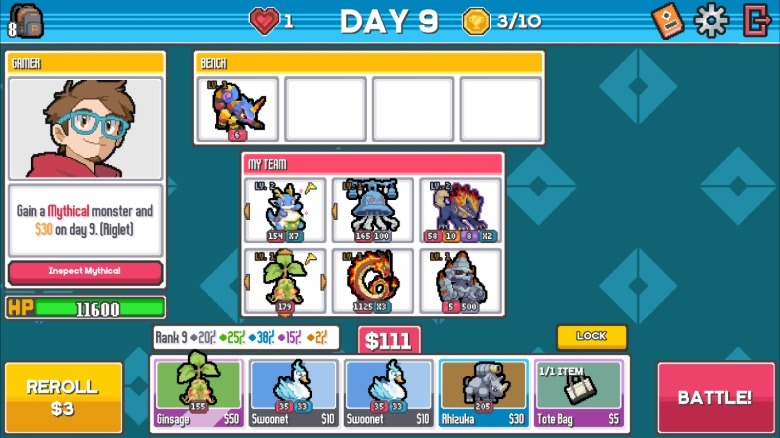


What elevates Batomon Showdown above standard auto battlers is its emphasis on individual monster mechanics over raw stats. Specific creatures serve as distinct win conditions when properly supported. Pipskull, a common ghost-type unit, exemplifies this design: it evolves after being knocked out multiple times, gaining a multicast ability that allows it to attack repeatedly in a single turn. As it continues to fall in battle post-evolution, its multicast stacks permanently, transforming a low-cost unit into a high-damage carry. Similarly, rock-type compositions can leverage Bonshell’s scaling shield generation alongside Rhizuka, which triggers attacks whenever allies apply shields, creating defensive feedback loops that reward patient team building over early-game aggression.
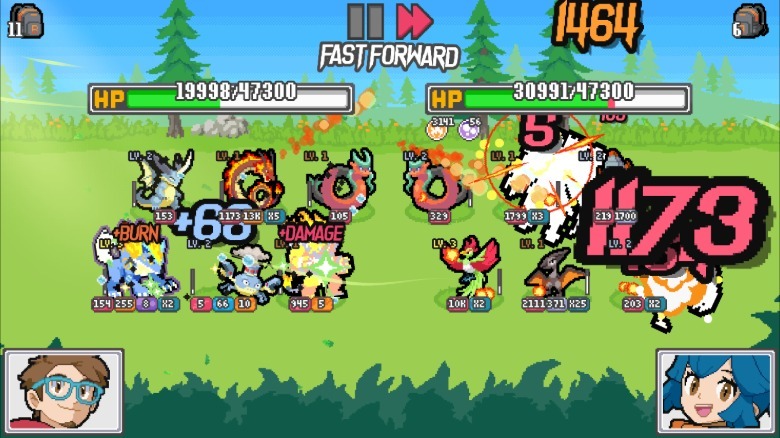
Berrymint has structured the monster roster by region, a design choice that facilitates future content expansion without disrupting existing balance. Creatures from different regions can occasionally appear in runs via specific traits, enabling cross-regional synergies that expand the strategic ceiling. The developer has already demonstrated responsiveness to player feedback, deploying a balance patch shortly after launch to address early dominance by Jinto-region monsters. This rapid iteration suggests a commitment to long-term support, with free updates planned to expand the roster and potentially introduce requested features like an infinite mode for post-victory play.
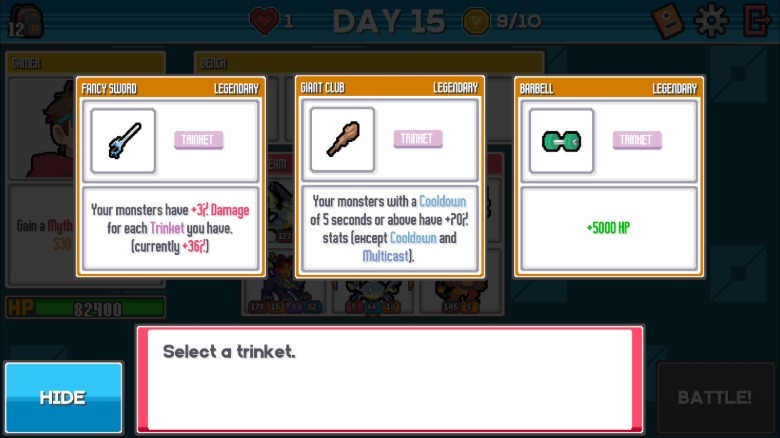
Despite its strengths, the current version has minor pacing issues. Runs conclude after earning 10 badges, which can feel abrupt when a team composition reaches its peak power level just as victory is achieved. Unlike Balatro or other successful roguelikes that offer endless scaling modes, Batomon Showdown currently lacks a way to test optimized builds against escalating difficulty beyond the standard campaign. However, given the game’s affordable entry price and active development cycle, these limitations are outweighed by the density of strategic options available. For players seeking a premium auto battler experience without live-service friction, Batomon Showdown delivers substantial value in its current state.