

Apple’s $1,999 iPhone Duo Takes Aim at Samsung’s Foldable Lead
Apple’s first foldable targets Samsung with a $1,999 dual-screen iPhone
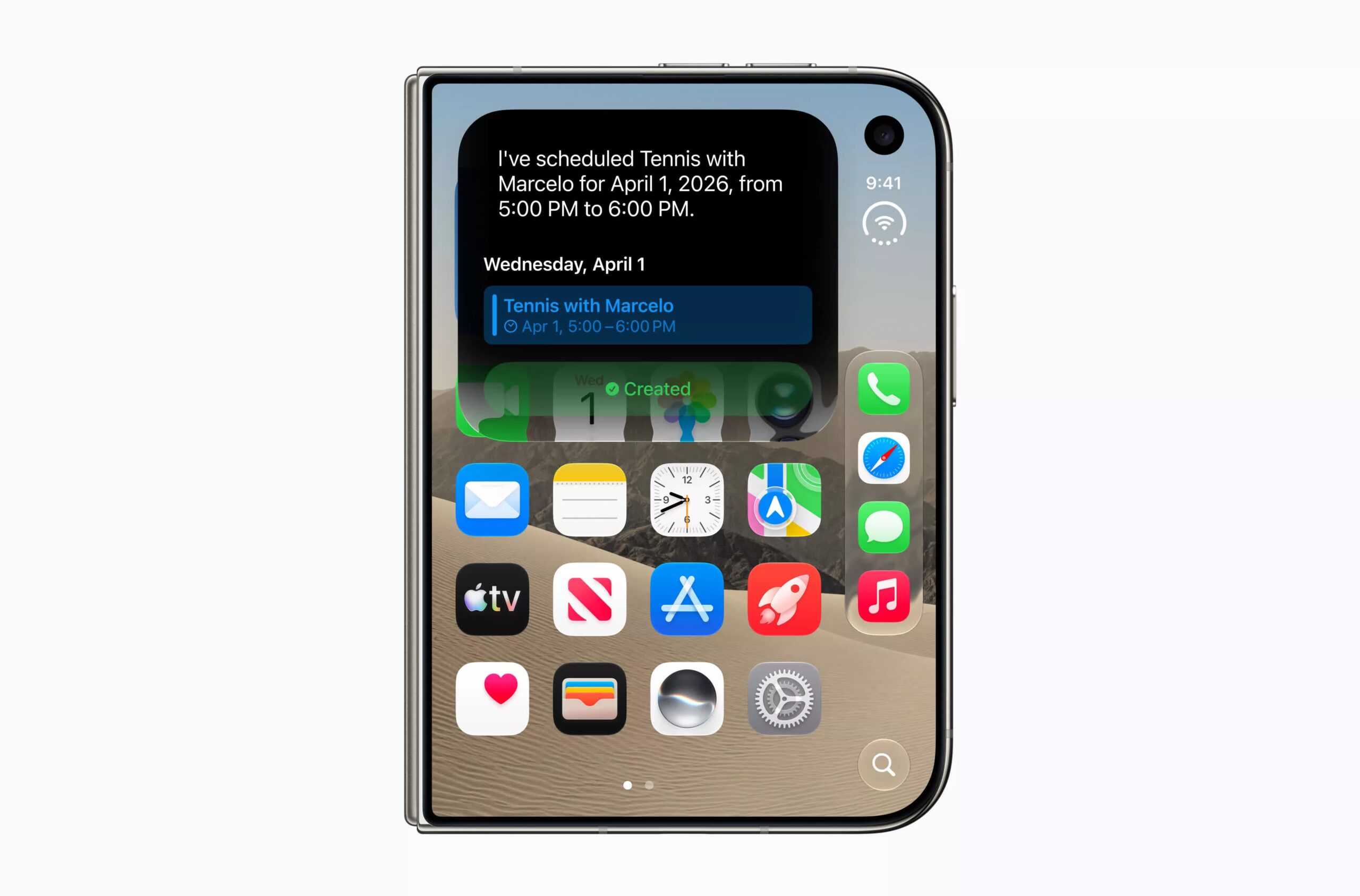
CUPERTINO, Calif. — Apple has officially entered the foldable smartphone market with the iPhone Duo, a premium dual-screen device designed to challenge Samsung’s long-standing dominance in the high-end folding category. The device is scheduled to begin shipping on October 23, with a starting price of $1,999 for a base 256GB configuration.
That price is $100 higher than the comparable Galaxy Z Fold 8, which starts at $1,899. For power users, Apple is offering storage tiers reaching a 2TB configuration priced at $3,199. Standard premium flagship devices such as the iPhone Pro Max series typically start around $1,199, placing the high-end Duo models well above them.
The iPhone Duo uses a passport-style silhouette, making it slightly shorter and wider than the Samsung Galaxy Z Fold 8. The design is intended to provide a more natural aspect ratio when closed, resembling a standard smartphone.


Apple’s launch presentation focused on integration between the hardware and a specialized version of its iOS operating system rather than on raw hardware specifications. The iPhone Duo includes software optimizations engineered specifically for its transforming screen.
Among them is a dynamic user interface that automatically moves application icons from the bottom of the screen to the sides when the device is unfolded, maximizing usable workspace. Apple also showcased an advanced rendering engine intended to manage the visual transition between the smaller front cover display and the expansive inner screen, eliminating latency or visual stuttering during unfolding.
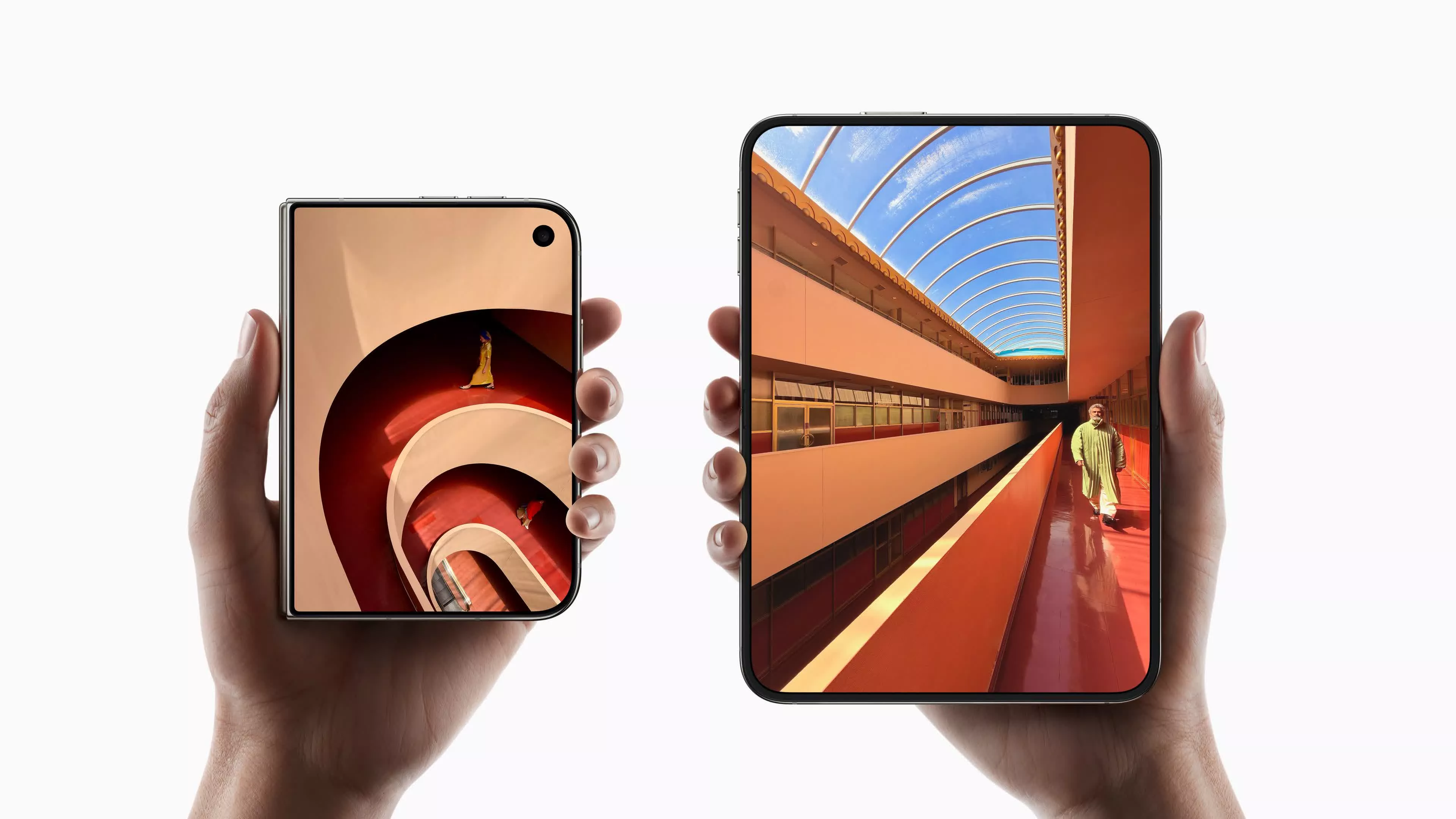
The Duo’s $1,999 base price positions it at the frontier of Apple’s hardware lineup and targets affluent consumers who have increasingly embraced ultra-premium smartphones. Apple is using the device to bridge the gap between traditional flagship handsets and portable productivity devices, marking a strategic pivot for a company that has historically allowed competitors to pioneer new hardware form factors before introducing highly refined iterations of its own.
Manufacturing reports indicate that initial iPhone Duo volumes remain conservative. Component yields for the complex folding display and nano-texture glass are limiting early production, and retail availability is expected to be highly constrained during the initial launch phase. As manufacturing lines mature and yield rates improve, broader distribution is projected to follow, establishing a new baseline for Apple’s hardware portfolio.
The supply limitations could heighten the device’s profile as an exclusive luxury item during the upcoming holiday shopping season. The product’s luxury status positioning also comes as foldable devices account for approximately 2% of the total global smartphone market.
Industry analysts expect Apple’s entry to catalyze consumer interest and potentially accelerate the foldable segment’s market share toward 10% over the next several years. Samsung has dominated the category since introducing the original Galaxy Fold in 2019, while Google, Motorola, and Huawei have also established footholds. An iOS-powered alternative is widely anticipated to expand the overall market size, benefiting supply chains and retail ecosystems connected to multiple competing brands.
Physical compromises remain between the two leading designs. Reflecting Samsung’s multiple generations of manufacturing refinement, the Galaxy Z Fold 8 is approximately 0.7mm thinner and 1.87 ounces lighter than the iPhone Duo.
The structural differences also extend to the hinge mechanisms. The Duo employs a firm, high-tolerance hinge assembly that offers distinct resistance during folding and unfolding.
Apple has equipped the iPhone Duo with slightly higher-resolution panels treated with a specialized nano-texture finish layer to address the display crease that has characterized folding screens since their inception. The physical etching technology was previously used by Apple to reduce glare on premium displays such as the Pro Display XDR and high-end iPad Pro models.
That finish scatters ambient light across the flexible screen. The manufacturing technique minimizes the visual appearance of the central crease, one of the primary consumer deterrents in the foldable category.

Durability is another point of separation. The iPhone Duo has achieved an IP68 rating for water and dust resistance, compared with the Galaxy Z Fold 8’s IP48 rating.
Under International Electrotechnical Commission (IEC) standard 60529, the “6” in the Duo’s rating signifies complete protection against dust ingress, or a dust-tight enclosure. The “4” in Samsung’s rating indicates protection only against solid objects larger than 1.0mm, leaving the device vulnerable to fine particles. Both devices share an “8” for liquid ingress, denoting certified protection against continuous immersion in water under specified conditions.