

Microsoft Tells Enterprises to Replace Slmgr.vbs Before VBScript Disappears
Enterprise admins must migrate Slmgr.vbs licensing workflows before Microsoft removes VBScript
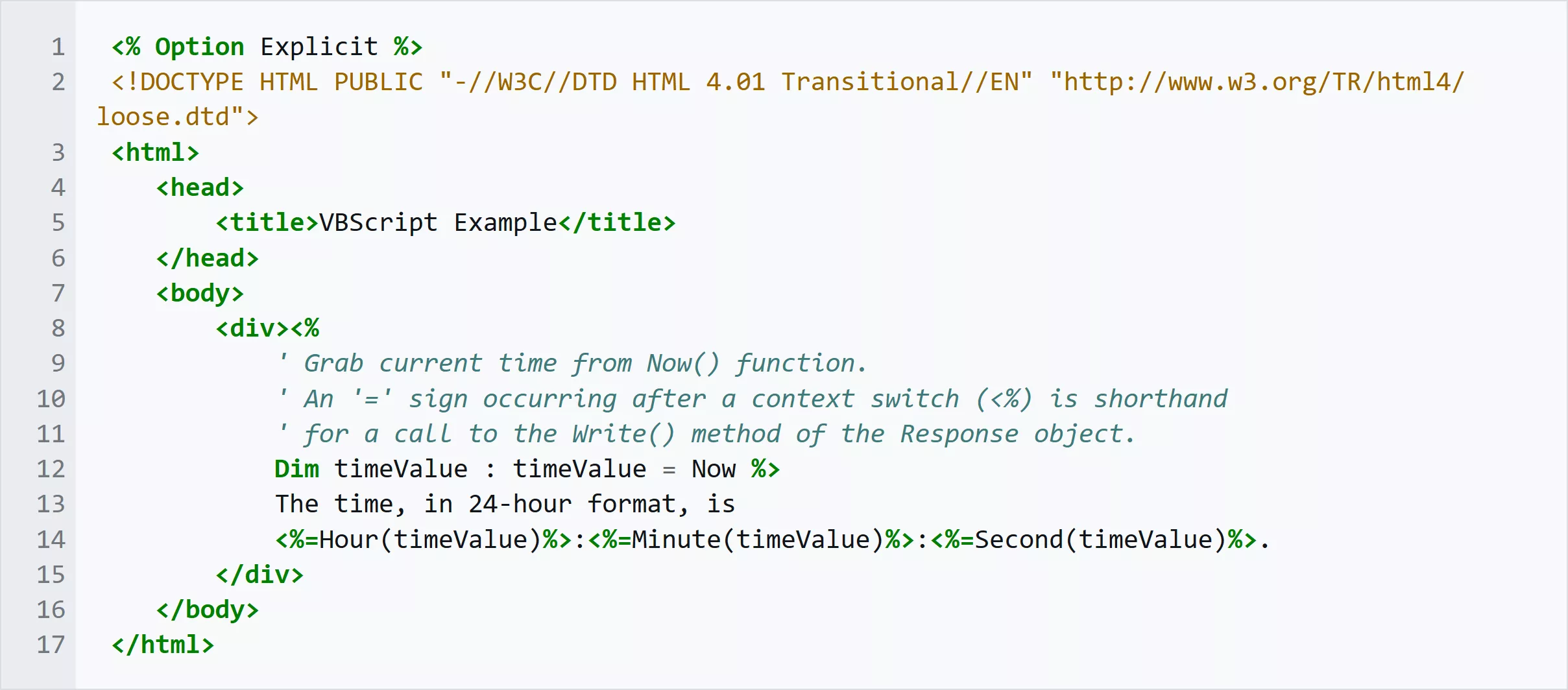
REDMOND, Wash. — Microsoft Corp. is urging enterprise IT administrators to overhaul legacy management workflows as it advances a plan to remove 1990s-era scripting technology from Windows. The company says organizations that rely on the command-line licensing utility `Slmgr.vbs` must move to native PowerShell alternatives before the underlying Visual Basic Script (VBScript) engine is completely removed from future Windows releases.
Microsoft officially added VBScript to its list of deprecated Windows features in October 2023. The technology was first released in 1996 alongside Internet Explorer 3.0 as a lightweight scripting language modeled after Visual Basic.
For nearly two decades, enterprise IT departments have used the Software Licensing Management Tool (`Slmgr.vbs`) to install product keys, query activation expiration dates, configure Key Management Service (KMS) host connections, and process Multiple Activation Key (MAK) requests across client and server deployments. The utility was introduced during the Windows Vista and Windows Server 2008 era to provide administrators with a command-line mechanism for managing system licensing.


Because `Slmgr.vbs` relies entirely on the VBScript execution environment, it will become non-functional as the language runtime is phased out. Organizations that do not update their systems risk losing the ability to run automated activation routines across managed device fleets.
Microsoft is directing organizations toward the `OSLicense` module built for Windows PowerShell 5.1. Its dedicated cmdlets are designed to provide equivalent licensing controls, including key registration, activation checks, and domain license queries.
According to Microsoft deployment documentation, client support for the `OSLicense` module will reach Windows 11 devices with the August 2026 Preview update, cataloged as KB5120998, or with subsequent cumulative updates. Native support for the new module is scheduled for inclusion in the next major milestone release of Windows Server.
The change is part of Microsoft’s broader effort to retire legacy Windows Script Host (WSH) dependencies in favor of modern security and automation frameworks. VBScript was built into Windows Script Host, allowing administrators and developers to automate operational tasks through executable files using the `.vbs` extension with the native `cscript.exe` and `wscript.exe` interpreters.
Over the past two decades, VBScript became a persistent initial access vector for malicious actors. Cybercriminals and state-sponsored threat groups frequently used weaponized `.vbs` files sent as email attachments or executed through malicious web pages to deliver malware, execute arbitrary code, and evade traditional security controls.
Microsoft’s defensive measures have also included disabling Visual Basic for Applications (VBA) macros by default in Office documents downloaded from the web, a change implemented in 2022. The company fully disabled the Internet Explorer 11 desktop application in favor of Microsoft Edge and deprecated and disabled the legacy Server Message Block version 1 file-sharing protocol, or SMBv1, because of structural vulnerabilities exploited in ransomware attacks.
Microsoft has additionally announced the planned replacement of legacy NT LAN Manager authentication, known as NTLM, with Kerberos across local network environments. The sunsetting of VBScript forms part of this series of actions to eliminate legacy vector surfaces.
VBScript is currently in Phase 1 of a three-phase deprecation timeline intended to give enterprise environments time to audit and update custom automation code. It has been transitioned into a Feature on Demand (FOD) component within the operating system, while current client builds such as Windows 11 version 24H2 keep the FOD package pre-installed and enabled by default for backward compatibility with enterprise software.
In Phase 2, targeted for 2027, the VBScript FOD package will remain available inside the operating system but will be disabled by default. Administrators that still require the runtime will have to manually install or enable the feature through administrative policies.
Phase 3 will arrive with a future major Windows release, when VBScript is completely removed from the operating system image. Native system tools that depend on the runtime, including `Slmgr.vbs`, and third-party `.vbs` scripts will cease functioning at that point.
Microsoft recommends that enterprise IT departments immediately audit operational scripts, login policies, deployment images, and management configurations. Legacy VBScript references can also be embedded in custom System Center Configuration Manager (SCCM / Microsoft Configuration Manager) task sequences, Group Policy Objects (GPOs), remote monitoring scripts, and third-party software installation wrappers.
For OS licensing management, organizations are being encouraged to evaluate modern hardware and domain activation models that bypass script-based execution entirely. One option is Active Directory-Based Activation (ADBA), introduced in Windows Server 2012 to activate domain-joined devices automatically through directory services.
Another alternative is cloud-managed subscription activation linked through Microsoft Entra ID.