

Apple Finally Enters the Foldable Arena With a Titanium-Clad iPhone Duo
Apple’s First Foldable: iPhone Duo Brings Titanium, Touch ID, and Nano-Texture Display
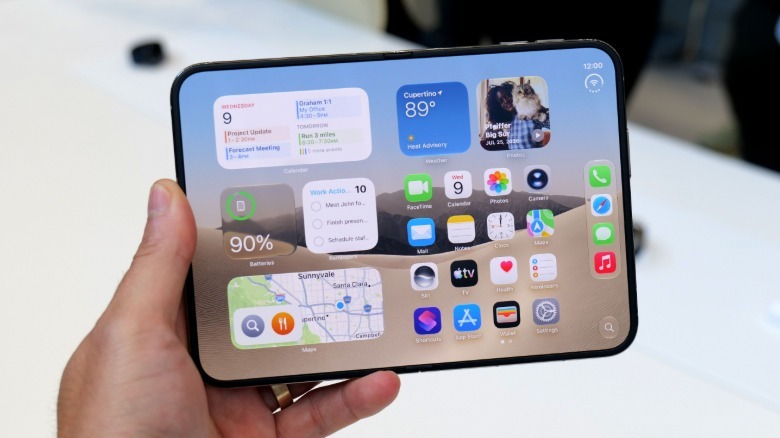
Apple Inc. has officially introduced the iPhone Duo, its first foldable smartphone, marking the most significant form-factor shift since the bezel-free iPhone X. The device is priced $100 less than Samsung’s top-tier Galaxy Z Fold Ultra but commands a $100 premium over the standard Galaxy Z Fold 8. Pre-orders begin on October 16 at 8:00 a.m. Eastern Time, with sales starting October 23.
Departing from the Face ID facial recognition arrays standard on Apple’s flagship smartphones, the iPhone Duo features a physical Touch ID fingerprint sensor integrated directly into the lock button. This biometrics integration mirrors the design choices Apple previously implemented on the iPad Air and the iPad mini, where the power button serves a dual purpose for secure authentication. The external chassis features rounded edges designed to facilitate opening, housing a 5.4-inch external OLED display.
When closed, the Duo measures 11.3mm in thickness and weighs 254 grams. This physical profile makes the Duo heavier and thicker than Samsung’s Galaxy Z Fold 8, which features a closed thickness of 9.7mm and a weight of 201 grams. The control layout includes a dedicated camera control button and a volume rocker positioned on the top edge of the device to accommodate user handling when transitioning between portrait and landscape orientations.


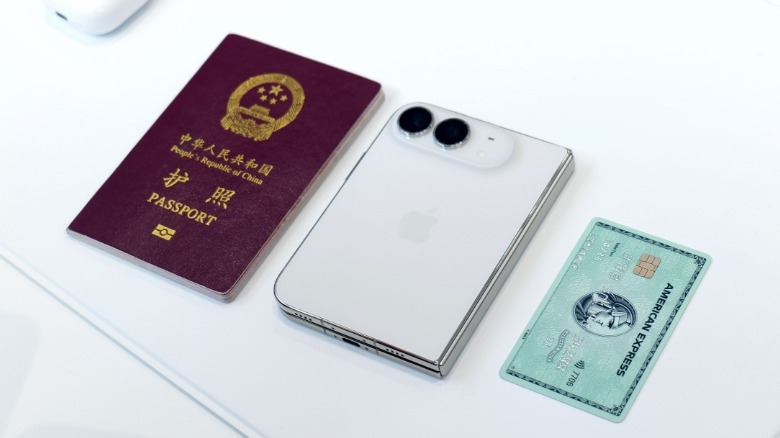
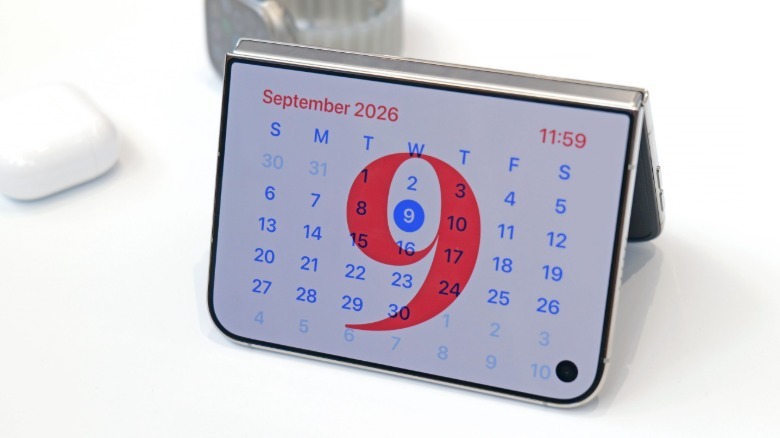
The titanium frame utilizes a premium material Apple first integrated into its smartphone line with the iPhone 15 Pro series. The device is engineered to achieve an IP68 rating for dust and water resistance, matching the durability standards of rival devices like Google’s Pixel foldables. The sensor array detects the angle of the hinge to adjust system software across multiple physical configurations, supporting a “tent mode” that enables the phone to rest on its outer edges to display static clocks or calendars.
Unfolding the device reveals a larger, flexible 7.6-inch interior OLED panel with a prominent matte nano-texture finish. Apple previously introduced nano-texture glass options on its high-end desktop monitors, such as the Pro Display XDR, and later expanded the option to the M4 iPad Pro to minimize glare. On the iPhone Duo, this matte layer serves to mitigate light reflections and visually obscure the physical crease where the screen folds.
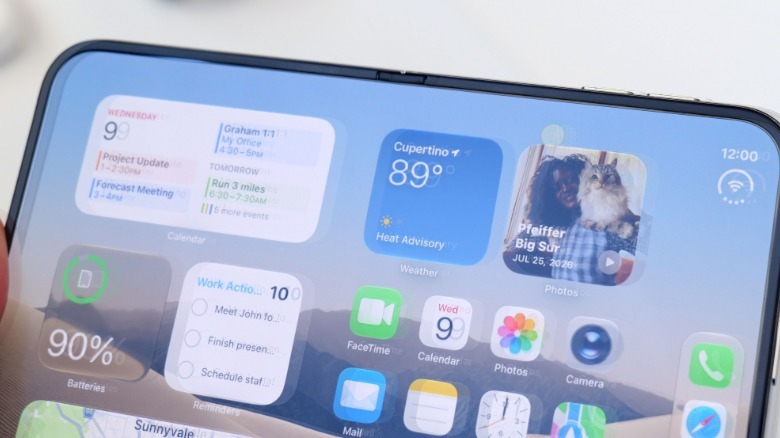
The Duo incorporates an under-display FaceTime camera sensor on the inner screen. Under-display camera (UDC) technology was first introduced to mainstream foldables by Samsung on the Galaxy Z Fold 3, though early iterations faced criticism for visible pixel grids over the lens. Apple’s implementation renders the sensor nearly invisible when inactive, utilizing a small circular group of glossy pixels directly above the lens that contrast with the surrounding matte finish.
Multitasking capabilities allow users to initiate split-screen configurations by long-pressing app icons or dragging active applications from the bottom taskbar. The interface supports direct drag-and-drop actions for transferring files and images between adjacent active windows. The matte texture of the primary display is engineered to provide tactile resistance for stylus input, and the iPhone Duo supports Apple Pencil functionality across both the external and internal displays, marking a rare expansion of the accessory’s compatibility outside of the iPad lineup.
On the rear, Apple has installed a dual-camera system housed within a horizontal camera visor that spans the entire width of the back panel. This wide-module design prevents the device from wobbling when placed flat on a surface. The imaging setup consists of a 48-megapixel Fusion primary camera—capable of outputting a 12-megapixel 2x crop telephoto shot—and a 48-megapixel ultra-wide camera. The Duo lacks the long-range optical zoom lenses and variable aperture controls present on the flagship iPhone Pro series.
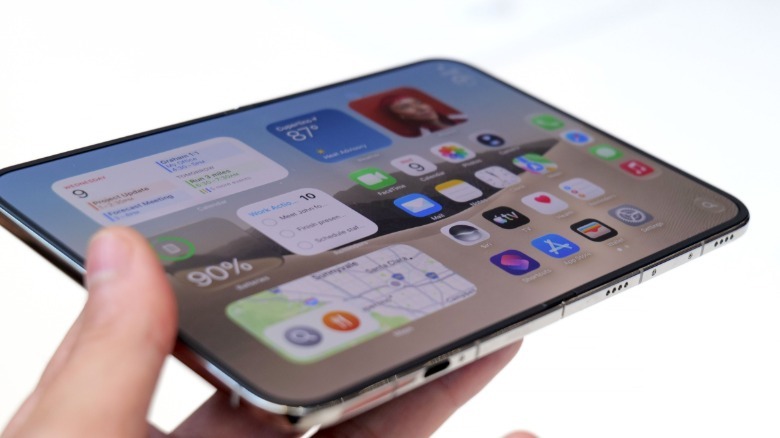
The software ecosystem on the iPhone Duo leverages elements of iPadOS to enhance mobile productivity. System transitions between the external 5.4-inch display and the interior 7.6-inch panel feature custom animations with gradient and depth effects to maintain visual continuity. Users can save preferred dual-app layouts as dedicated “app pairs” to launch simultaneous split-screen sessions instantly. The device also supports a tabletop mode and a partially bent orientation suitable for reading applications.










One Comment