Anthropic IPO Could Hit $2.4 Trillion on Enterprise AI Demand
Enterprise revenue dominance and falling AI unit costs shape the case for a record-breaking public debut.
A single early investor is projecting Anthropic will debut as the largest initial public offering in history, with a post-listing market capitalization reaching $2.4 trillion. That figure would eclipse SpaceX’s record-setting $2.1 trillion first-day close, though Anthropic has not yet filed an S-1 registration statement with the Securities and Exchange Commission.
The unnamed backer told Fortune that shares could be priced to reflect a $1.8 trillion valuation, slightly below the $2 trillion target reportedly favored by the company. The investor characterized the projected trading range of $2.3 trillion to $2.4 trillion as a reflection of fundamental worth rather than speculative momentum, calling Anthropic the fastest-growing company in history.
Public markets have not tested that conviction. A debut near $2 trillion would demand profit growth trajectories rarely sustained by software companies at scale. For context, Nvidia — the primary hardware beneficiary of the generative AI boom — took more than three decades to approach a $3 trillion valuation, propelled by monopoly-like margins in GPU manufacturing. Anthropic operates in a fundamentally different economic environment where compute costs remain extraordinarily high and model differentiation is constantly challenged by open-source alternatives.


Unlike its chief rival OpenAI, which derives roughly half of its sales from consumer subscriptions, Anthropic generates approximately 80% of its revenue from corporate clients. That enterprise concentration was cited by the investor as a primary reason for backing the San Francisco-based startup. Selling API access and custom deployments to businesses generally yields higher retention rates and more predictable recurring revenue than consumer-facing chatbots, which suffer from rapid churn when novelty fades.
That business-to-business reliance places Anthropic directly into a volatile pricing dynamic reshaping corporate technology budgets. As open-weight models from Meta and independent developers improve, the cost per token for AI inference continues to fall. However, enterprise adoption is accelerating so rapidly that total spending climbs even as unit economics compress. Chief financial officers face a paradox familiar from the cloud computing era: cheaper tools do not produce smaller bills when usage scales exponentially.
Wall Street remains divided on whether any current AI application company can justify valuations historically reserved for platform monopolies. While infrastructure providers like Nvidia and cloud hyperscalers capture value regardless of which AI model wins, application-layer companies must continuously prove their software cannot be replicated or replaced by a client building an internal tool. Anthropic’s safety-focused branding and Constitutional AI framework have secured contracts with major corporations, but sustaining those relationships requires constant technical advancement against competitors racing to release more capable systems.
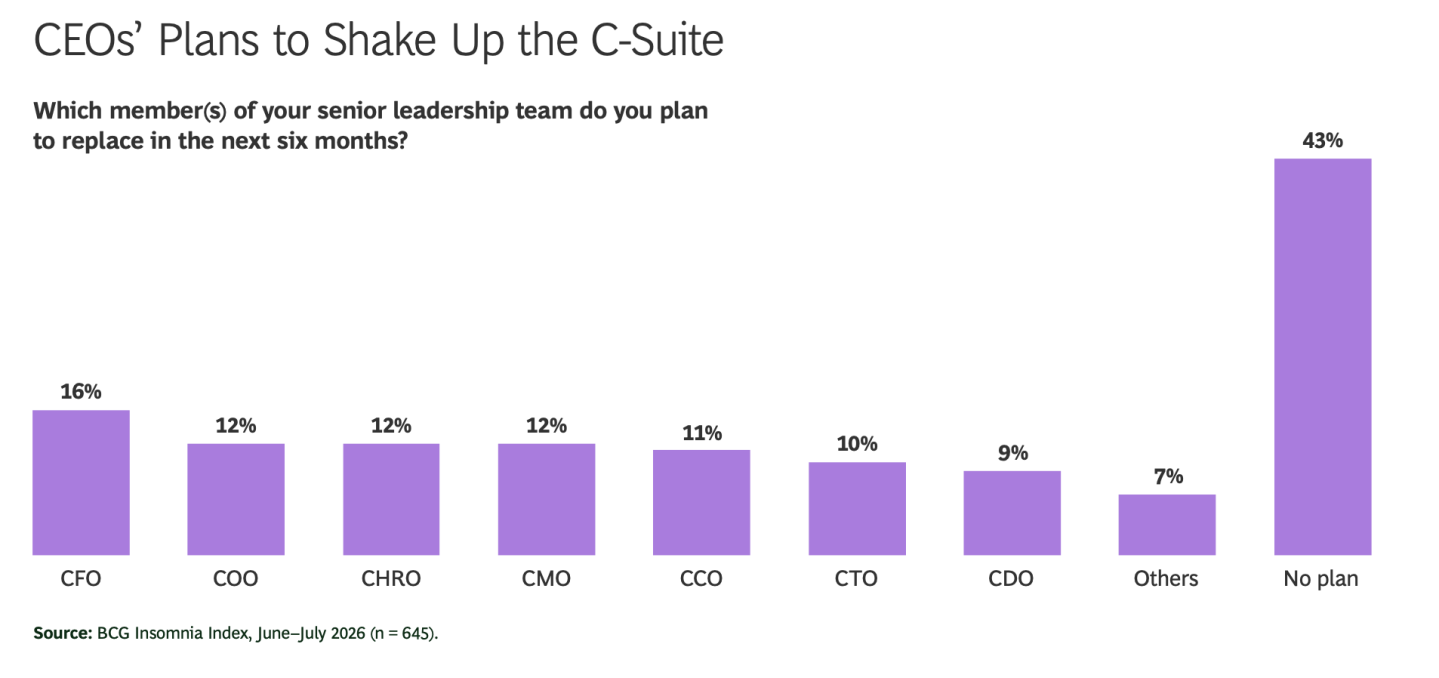
Beyond the AI sector, broader executive instability signals a turbulent environment for companies preparing for public scrutiny. According to the second edition of BCG’s CEO Insomnia Index, nearly 60% of chief executives plan to replace a senior team member within six months, with CFOs identified as the most vulnerable position. Only 63% of surveyed CEOs expressed confidence that their leadership teams could execute their vision over the next two to four quarters. The survey covered 645 CEOs at companies generating $100 million or more in annual revenue.
Leadership turnover is already accelerating across the technology and industrial sectors. Supermicro appointed former Western Digital finance chief Mark Long as CFO. SAIC named Northrop Grumman veteran Kenneth Crews as its next CFO, effective Dec. 7. Runpod, an AI developer cloud platform, hired Brian Erickson, who previously guided DigitalOcean through its IPO. MoonPay brought in Anne Giviskos, formerly interim CFO at Navan, while the NFL’s Denver Broncos tapped Joseph Sesin from Angel City Football Club to lead its finances.
Trust deficits between executives and rank-and-file workers are widening alongside these personnel shifts. BCG found that while nearly 90% of CEOs believe employees trust their leadership, only 46% of workers agree. Forty percent of employees reported that their CEO lacks transparency regarding how artificial intelligence will affect their roles, compared with just 15% of executives who worry their AI strategies might erode trust. Half of the employees whose trust increased due to transparent AI communication said they became more willing to exceed expectations at work, compared with fewer than 10% among those whose trust declined.
Anthropic’s exact timeline for going public remains unconfirmed. Any S-1 filing will require disclosing audited financials, risk factors related to compute dependency, and detailed breakdowns of customer concentration that institutional investors will use to stress-test the multi-trillion-dollar thesis.