Tesla Roadster Rocket Flies in Texas Demonstration
SpaceX-engineered cold gas thrusters enabled the single-seat EV to hover, flip and land during a live test near Waco, Texas.
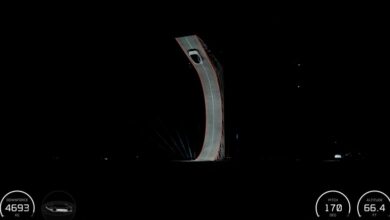
A prototype Tesla Roadster executed inverted launches, mid-air flips and sustained hovering maneuvers Thursday night outside Waco, Texas, marking the first public flight demonstration of a production-intent passenger vehicle. The event, held adjacent to SpaceX’s McGregor rocket testing facility, showcased the automaker’s most extreme engineering project to date: a single-seat electric sports car equipped with perimeter-mounted cold gas thrusters capable of lifting it off the ground.
Elon Musk confirmed the successful test, declaring that flying cars are now a reality. He characterized the next-generation Roadster as a direct collaboration between Tesla and SpaceX engineers, blurring the traditional boundaries between automotive manufacturing and aerospace technology. While Musk insisted the demonstrated hardware represents the actual vehicle destined for roads, regulatory realities present a formidable barrier. Tesla has explicitly stated the top-tier model is not approved for public road use, will be distributed by invitation only, and will not be available in every region.
The airborne capabilities rely on all-electric actuators making continuous micro-adjustments to stabilize the chassis during flight. During the demonstration, the prototype climbed a curved ramp until fully inverted before launching, flipping and landing back on the pavement. It also hovered above a moving convoy consisting of a Cybercab, Cybertruck, Tesla Semi, Model Y and Model 3.
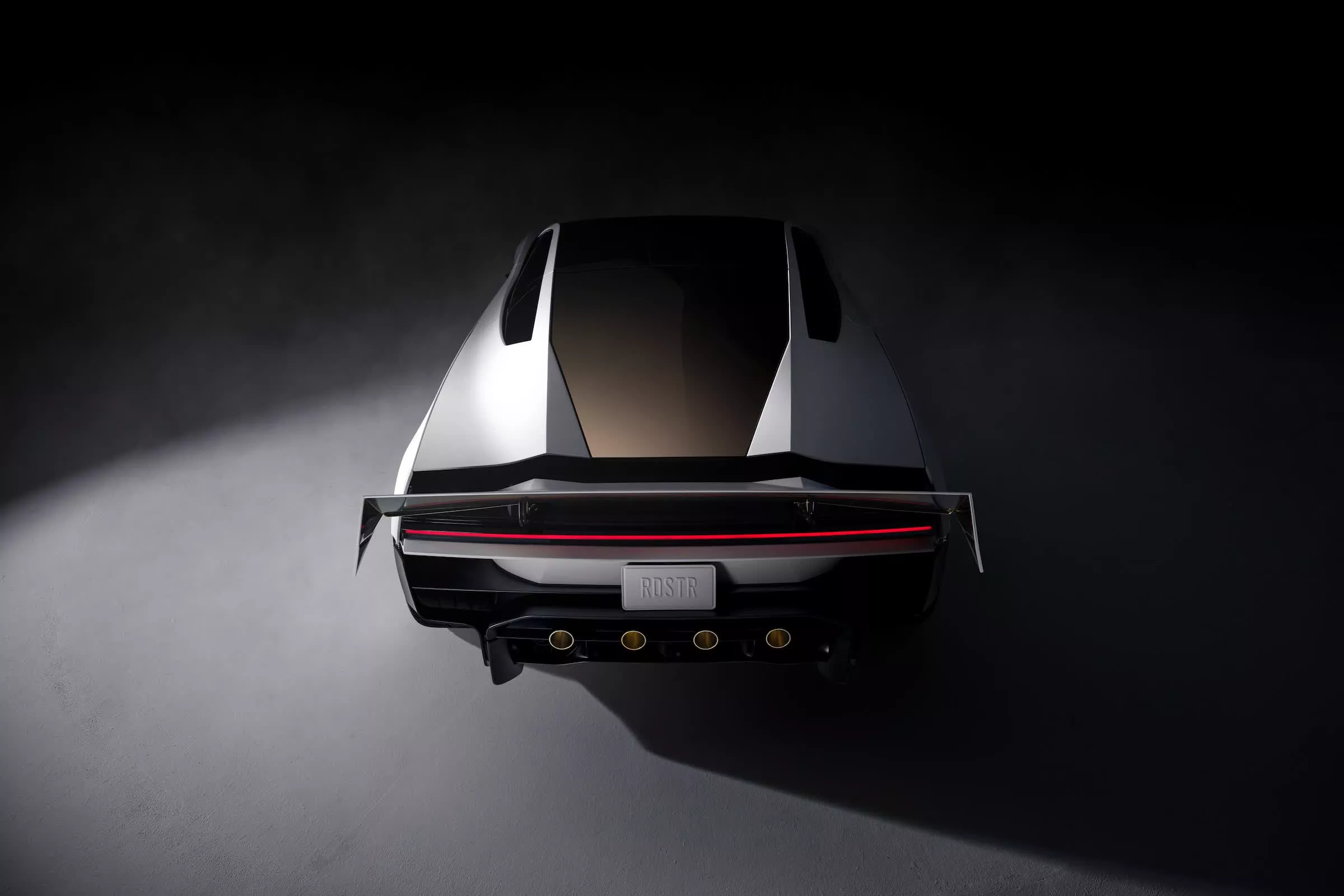
Tesla structured the new Roadster into three distinct configurations, each escalating in performance and complexity. The entry-level two-seat Performance variant utilizes an active fan system and ground seals to pull air from beneath the chassis, creating enough suction to hold the car upside down even when stationary—a significant departure from conventional aerodynamic downforce that requires forward momentum to function. This version includes active wings, a Track Mode that lowers ride height, and claims a zero-to-60 mph time under 1.6 seconds. Reservations are currently open for this tier.
The intermediate Thrust configuration retains the two-seat layout but integrates rear-mounted cold gas thrusters, dropping the claimed acceleration time below 0.9 seconds. Tesla positions this version as race-ready and plans a limited release.
The flagship Rocket variant eliminates the passenger seat entirely to accommodate its comprehensive thruster array. Tesla publishes a zero-to-60 mph time below 0.59 seconds for this model—considerably faster than the sub-one-second run observed during the live demonstration—alongside a top speed exceeding 230 mph and a range surpassing 300 miles. For context, current hypercars like the Rimac Nevera achieve zero-to-60 mph in approximately 1.74 seconds; a sub-0.6-second claim would require overcoming immense tire-traction physics limitations, likely relying heavily on the downward thrust vectoring provided by the SpaceX propulsion package rather than mechanical grip alone.
To manage the extreme forces involved, Tesla engineered the chassis using magnesium, titanium and carbon fiber. Weight reduction was further achieved by eliminating power seat adjusters in favor of a fixed seating position and replacing traditional steering linkages with a steer-by-wire yoke. The cabin centers around a primary touchscreen flanked by two smaller driver displays.
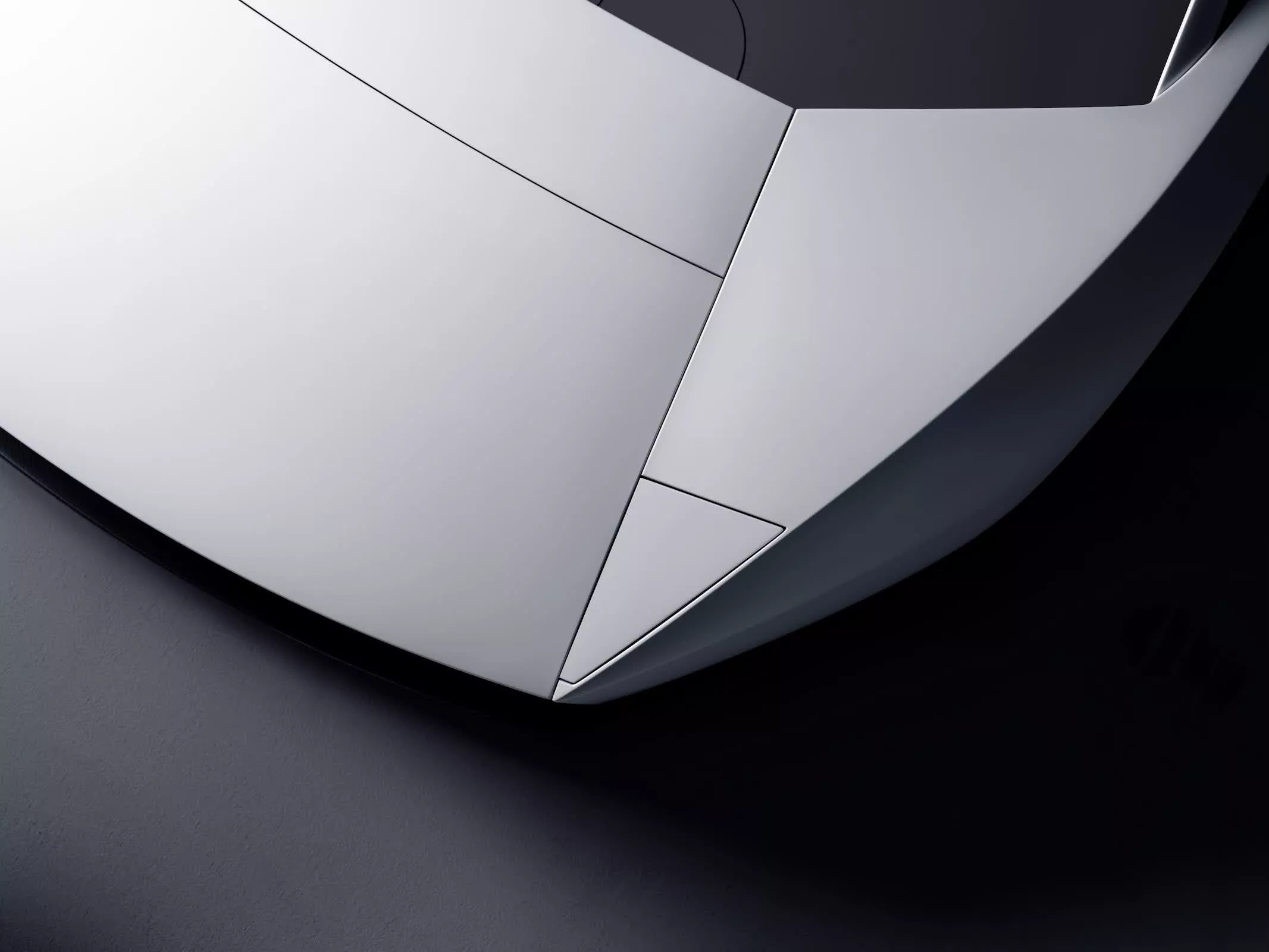
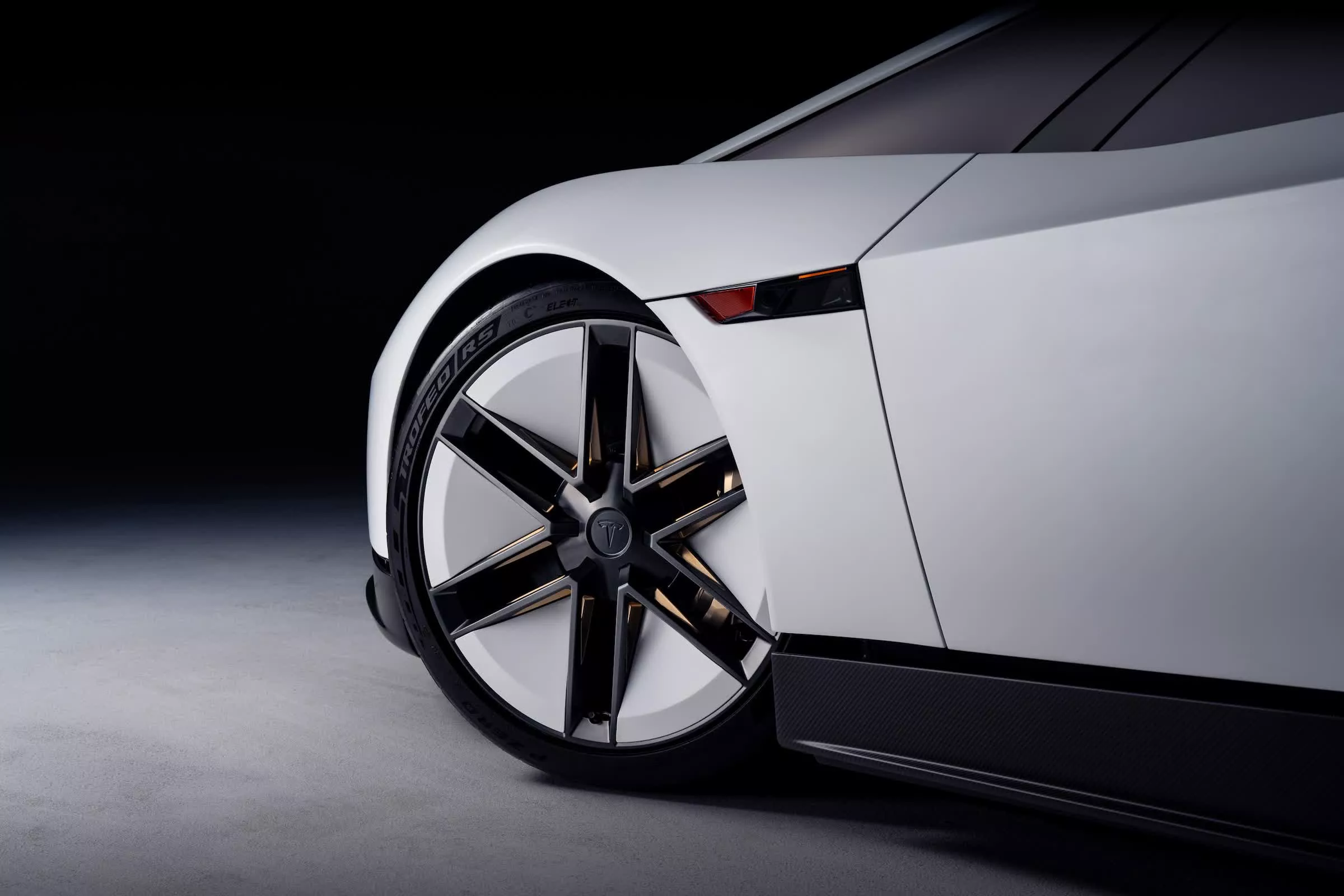
Externally, the design borrows heavily from aerospace aesthetics. Headlights remain hidden until activated, while a full-length taillight spans the rear. The body is finished in Ano White, a paint formulation inspired by spacecraft coatings, and the gold-tinted glass mimics spacesuit visors. The interior pairs Ultrawhite materials with gray microsuede.
The original second-generation Roadster was unveiled in November 2017 with a target production date of 2020. Repeated delays pushed the timeline back nearly a decade as Tesla prioritized mass-market vehicles like the Model Y and the Cybertruck. The integration of SpaceX thruster technology, first teased by Musk years ago as an optional package, fundamentally altered the vehicle’s engineering scope and regulatory classification.
Musk acknowledged the Roadster’s niche status, calling it “the best of the last of the human-driven cars” while conceding he is unsure if the project moves the needle significantly regarding corporate revenue. He also issued a blunt warning to prospective buyers whose primary concern is safety, advising them against purchasing the vehicle.
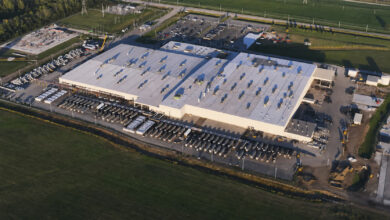
Tesla has reopened reservations requiring a $50,000 deposit, though final pricing remains undisclosed. Manufacturing is slated for Giga Texas, with Musk projecting production to commence 12 to 18 months following the Waco demonstration, targeting a 2027 or 2028 build window.