AI Exposes the Gap Between Growth and Corporate Durability
Markets price the cost of building operational defenses long before they recognize the payoff during periods of disruption.

Wall Street’s obsession with recurring revenue is colliding with artificial intelligence, forcing a fundamental reassessment of what actually protects a business when conditions deteriorate. The market has spent decades rewarding growth while treating corporate resilience as an afterthought—a defensive luxury only valued in hindsight. That calculus no longer holds.
The software industry illustrates the fracture most clearly. Generative AI is actively dismantling the assumption that subscription-based SaaS revenue is inherently stable. Platforms sold by the seat for tasks that algorithms can now automate face immediate churn risk. By contrast, software deeply embedded in proprietary data pipelines and core operational workflows demonstrates genuine stickiness. Investors historically screened companies by sector labels rather than measuring this depth of entrenchment, a blind spot now being rapidly exploited by shifting technology economics.
This dynamic has exposed severe vulnerabilities in leveraged buyouts. Private equity sponsors acquired hundreds of software firms during the 2021 peak, structuring debt loads around the premise that subscription income would reliably service interest payments. While the duration of that debt remains fixed, AI is compressing the effective duration of the underlying revenue unevenly across portfolios. Firms that failed to distinguish between superficial recurrence and structural durability are now managing assets whose cash flows evaporate faster than their liabilities mature.


Beyond technology, physical infrastructure and regulatory moats provide a different category of defense. Healthcare, defense, and energy sectors benefit from institutional trust and compliance barriers that digital disruption cannot easily bypass. Demand for these essential services often accelerates precisely when broader economic conditions worsen. A hospital network becomes more critical to its community during a crisis—the exact environment where marginal software vendors lose customers.
Saudi Aramco demonstrated this principle operationally. Years of investment in redundant logistics, including the East-West Pipeline and diversified storage networks, allowed the state oil giant to maintain supply reliability within days of regional conflict and disruptions in the Strait of Hormuz. The flexibility was expensive to build but proved instantly valuable when geopolitical shocks materialized.
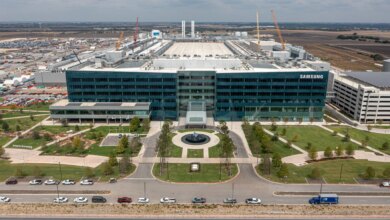
Semiconductor manufacturing reveals how markets systematically misprice this type of preparation. TSMC accepted significant near-term margin compression to diversify fabrication capacity outside Taiwan. Overseas facilities carry higher construction and operating costs, punishing quarterly earnings reports. Yet the company’s Arizona factories achieved yields matching its Taiwanese operations by late 2024. The financial models penalized the expenditure immediately while ignoring the strategic insurance it purchased against supply chain paralysis.
A parallel risk is emerging at the macroeconomic level: companies appearing resilient by silently draining capacity from shared systems. The explosive power requirements of AI data centers are consuming the spare electrical grid capacity originally engineered to absorb unexpected shocks. In May, the North American Electric Reliability Corporation issued its highest-severity alert following a sudden, massive swing in computing demand, sharply raising its peak electricity forecasts. Individual technology firms may look operationally sound while transferring systemic fragility onto public utilities.
JPMorgan Chase operates on the inverse philosophy. Rather than extracting optionality from its environment, the bank engineered a balance sheet specifically designed to absorb financial contagion, diversifying well beyond traditional investment banking. That architecture allowed it to navigate liquidity crises that crippled less complex peers, proving that internalizing risk carries long-term compounding value.
Amazon established the modern template for this strategy during the dotcom collapse. After expanding fulfillment capacity from 300,000 square feet to over five million square feet in 1999—far ahead of actual demand—the company faced a 95% stock decline by 2001 alongside liquidating competitors. Instead of retrenching, Amazon leveraged its excess warehouse space to open its network to third-party retailers and independent sellers. Idle overhead transformed into a platform monopoly because the infrastructure already existed.
Redundant capacity, fortified balance sheets, and operational flexibility always depress short-term returns before they generate outsized survival advantages. Markets consistently price the cost of building these defenses while failing to model their payoff until a shock arrives. NERC’s elevated grid warnings and the ongoing repricing of leveraged software portfolios signal that the gap between perceived growth and actual durability is narrowing fast.