Robot Labor Costs $2 to $40 an Hour. Utilization Decides.
Agility Robotics' SEC filings and conflicting analyst estimates reveal why keeping machines running matters more than their sticker price.
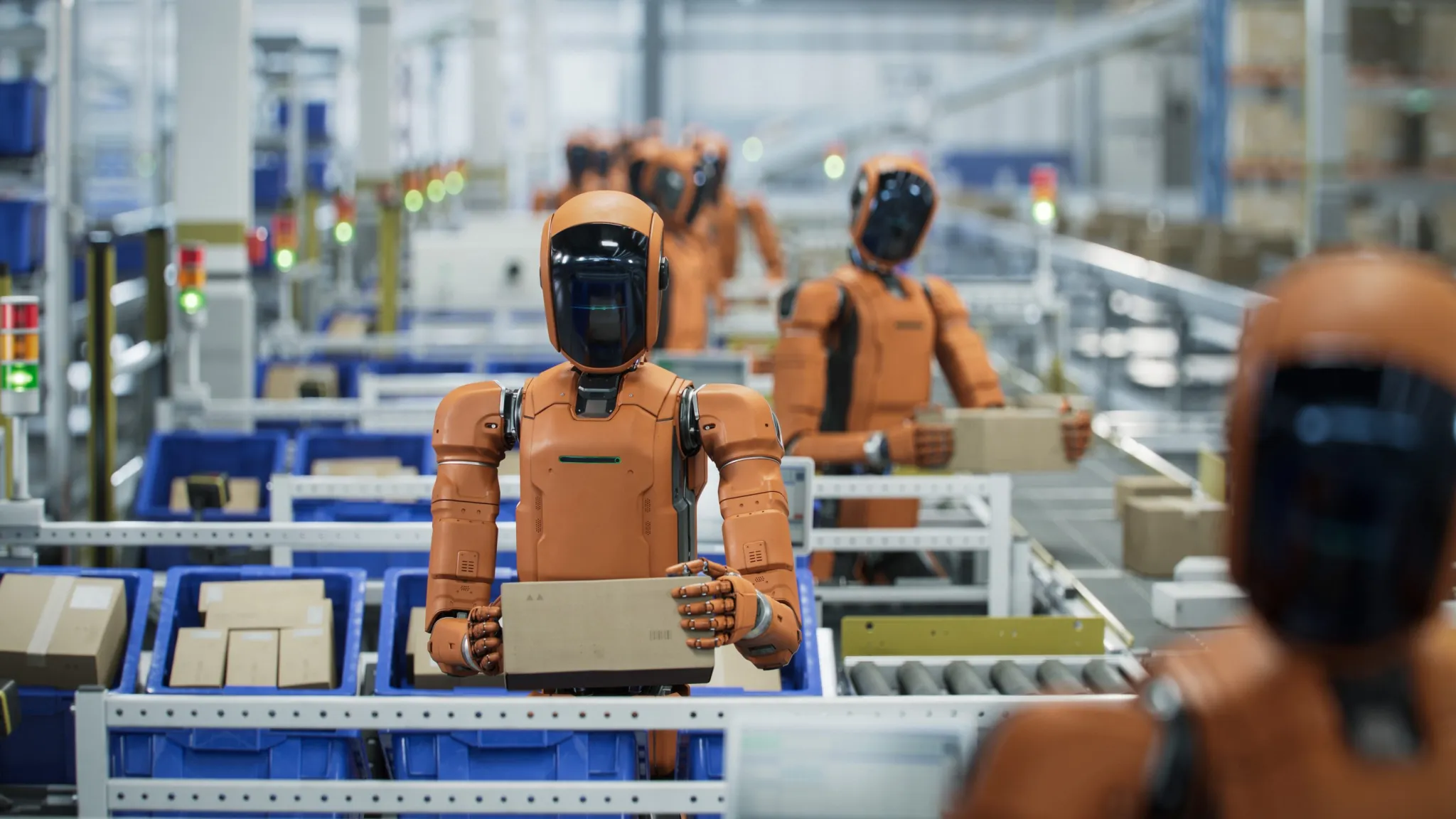
Agility Robotics generated $1.78 million in net sales across the first three quarters of 2025 while posting a $140.2 million operating loss. The figures, disclosed in an S-4 filing ahead of the company’s planned merger with Churchill Capital Corp XI, quantify the central economic tension in physical AI: building robots is no longer the hard part. Keeping them working enough hours to justify their existence is.
The robotics industry routinely circulates conflicting hourly cost estimates. A Roland Berger analysis published earlier this year pegged robot labor at $2 per hour. JPMorgan places current humanoid deployments between $10 and $12. Early industrial rollouts frequently exceed $35. These numbers do not contradict one another. They measure entirely different variables, exposing how easily hardware vendors can obscure the true cost of automated labor by altering what goes into the denominator.
The $2 figure represents marginal running costs—energy, software licensing, network connectivity, and scheduled maintenance—at theoretical volume. It strips out the purchase or lease price of the machine itself. Against the average U.S. warehouse worker’s fully loaded wage, that math only holds if the robot operates productively 60% to 70% of the time. When capital expenditure enters the equation, the arithmetic shifts violently. A $90,000 industrial unit amortized over five years at 2,000 annual working hours adds roughly $9 to every operating hour before maintenance or integration expenses are applied. Cut those productive hours in half because the machine sits idle waiting for tasks or requires constant human intervention, and the effective hourly rate doubles.


JPMorgan’s research indicates it currently takes two humanoid robots to match the output of a single human worker. That ratio immediately negates any theoretical hourly savings until software improves individual machine productivity. Unlike hardware prices, which depreciate on fixed schedules, utilization rates must be engineered directly on factory floors cluttered with unpredictable variables.
Agility’s public filings provide the most granular view available of these dynamics in practice. Its Digit robots have logged more than 65,000 operational hours across nine customer sites, including facilities operated by GXO, Schaeffler, and Toyota Motor Manufacturing Canada. The company models its next-generation platform at approximately $400,000 over a five-year lifespan. Running a single 2,000-hour shift yields an hourly cost near $40. Moving to two shifts drops that figure closer to $20. Because Agility benchmarks a fully loaded human worker at $30 per hour, the robot only becomes economically viable after surpassing 2,700 productive hours annually—a threshold requiring multi-shift operations and minimal downtime.
Achieving those hours outside controlled environments remains the primary technical bottleneck. Decades of robotics demonstrations feature machines folding laundry, pouring coffee, or stacking boxes under ideal lighting with predictable object placement. Production facilities operate differently. Packaging dimensions change without warning. Pallets arrive misaligned. Forklifts block aisles. A task executed flawlessly during a pilot program fractures into a continuous stream of edge cases during live operations. A machine requiring an engineer to resolve environmental deviations functions as an expensive integration project rather than autonomous labor.
This reliability gap has forced a structural shift in how automation companies package their technology. Selling capital equipment to logistics operators demands massive upfront bets on unproven systems. The emerging alternative, structured as Labor-as-a-Service, transfers deployment risk back to the vendor. Customers contract for moved pallets, sorted packages, or unloaded trailers rather than purchasing hardware. Providers assume responsibility for uptime, maintenance, and software updates, pricing their services against completed work. This model eliminates the ability to hide behind successful pilots or optimistic unit forecasts, as revenue depends entirely on sustained productive capacity.
For operations leaders, the relevant financial comparison is no longer a robot’s sticker price versus a worker’s hourly wage. It is the total cost of automated service measured against the fully loaded expense of manual labor, which includes overtime premiums, turnover, chronic vacancies, safety incidents, and lost throughput. In manufacturing and logistics, where persistent labor shortages constrain output, the strongest initial applications involve repetitive, hazardous tasks that remain chronically unfilled. Automating these specific workflows generates real-world operational data that laboratory testing cannot replicate. Each deployment exposes the underlying foundation models to novel variations, improving exception handling, expanding adjacent task capabilities, and ultimately increasing the hours each system can operate without supervision.
The ambition to deploy general-purpose humanoids capable of executing any manual task drives significant venture capital interest but offers a less credible path to near-term scale than narrow operational wedges. Warehousing, automotive assembly, and food processing present immediate opportunities because the work is highly repetitive, demand is structurally persistent, and facilities already run multiple shifts designed to maximize asset utilization.
Agility’s S-4 filing notes $300 million in milestone-contingent orders from a single undisclosed customer, signaling enterprise willingness to fund scaled deployments once utilization thresholds are met. The broader physical AI sector now faces a transition period defined less by breakthroughs in robotic dexterity than by the operational discipline required to keep machines running continuously through the friction of actual production environments.