Samsung Taylor chip plant readies Texas semiconductor hub
Federal CHIPS Act funding and decades of Austin operations underpin the massive Texas fabrication expansion.
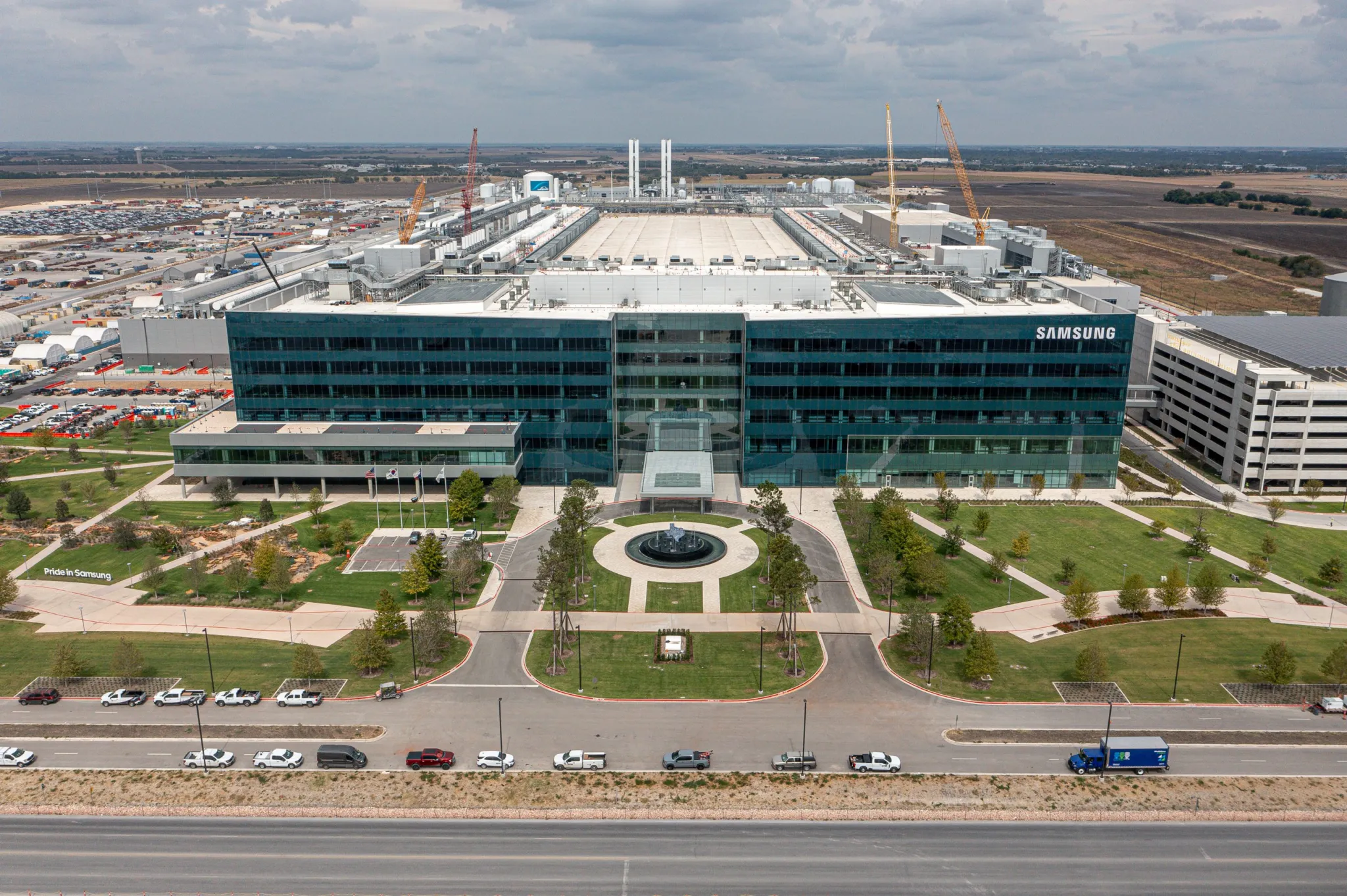
A new advanced semiconductor fabrication plant in Taylor, Texas, is nearing operational status as Samsung Electronics moves to solidify its position within the U.S. chip manufacturing supply chain. The facility represents a critical expansion for the South Korean electronics giant, which has operated silicon production lines in nearby Austin for nearly three decades.
The Taylor campus began staffing hundreds of employees last year, drawing on veteran technicians from the Austin operations while simultaneously training a newly recruited local workforce. Unlike greenfield projects that attempt to build a labor pool from scratch, Samsung is leveraging institutional knowledge accumulated since it first established Central Texas manufacturing capabilities in the 1990s. That continuity addresses one of the most persistent bottlenecks in the domestic semiconductor industry: the severe shortage of workers trained in advanced lithography, cleanroom protocols, and yield engineering.
Federal policy has accelerated these timelines. Under the CHIPS and Science Act, signed into law in 2022, the U.S. Commerce Department awarded Samsung up to $6.4 billion in direct funding to support its Texas expansion. The federal subsidies were designed specifically to reduce reliance on East Asian foundries following pandemic-era supply chain disruptions that crippled automotive and consumer electronics production globally. Samsung originally committed roughly $17 billion to the Taylor site before expanding that pledge to over $40 billion across multiple planned phases, including facilities dedicated to advanced packaging and research and development.

Beyond the fabrication floors, the company is attempting to anchor its supply chain regionally. Semiconductor manufacturing requires highly specialized gases, chemicals, and precision equipment. By expanding partnerships with local schools and colleges, Samsung aims to cultivate a pipeline of technicians capable of supporting not just the primary fab, but the network of tier-two and tier-three suppliers required to keep it running at capacity.
This regional integration mirrors a strategy Samsung has deployed elsewhere in the United States, where it claims cumulative investments exceeding $100 billion over nearly five decades. In Newberry, South Carolina, the company opened its first U.S. home appliance manufacturing plant in 2017. That facility has generated more than $900 million in economic impact for the surrounding area, demonstrating how industrial sites can alter local tax bases and employment dynamics long after construction ends.
To sustain those employment pipelines, the company funds STEM initiatives such as its Solve for Tomorrow program. Launched in 2010, the initiative challenges middle and high school students to apply science and technology to local problems. More than 620,000 students across 4,300 schools have participated nationwide. At Newberry High School in South Carolina, students utilized the program to design a pollinator garden and composting system, directly linking classroom curricula to community infrastructure needs.
The broader U.S. semiconductor buildout faces ongoing headwinds despite massive capital deployment. Competitors like TSMC have encountered significant delays and labor disputes at their own Arizona campuses, underscoring the difficulty of transplanting complex manufacturing ecosystems. Intel, meanwhile, continues to restructure its foundry ambitions amid shifting market demands for artificial intelligence processors.
Samsung currently supports more than 175,000 jobs across its American operations, with U.S. facilities generating an estimated $40 billion in annual economic impact. As the Taylor site transitions from construction to volume production, the immediate focus shifts to achieving target yields on advanced process nodes—a metric that will ultimately determine whether the billions in federal and corporate capital translate into competitive commercial output.