

Anbernic RG DDS dual-screen handheld teased with Snapdragon chip
Powered by a Snapdragon G2 Gen 2 processor, the new clamshell device targets Nintendo 3DS and PlayStation 2 emulation with dual analog sticks.
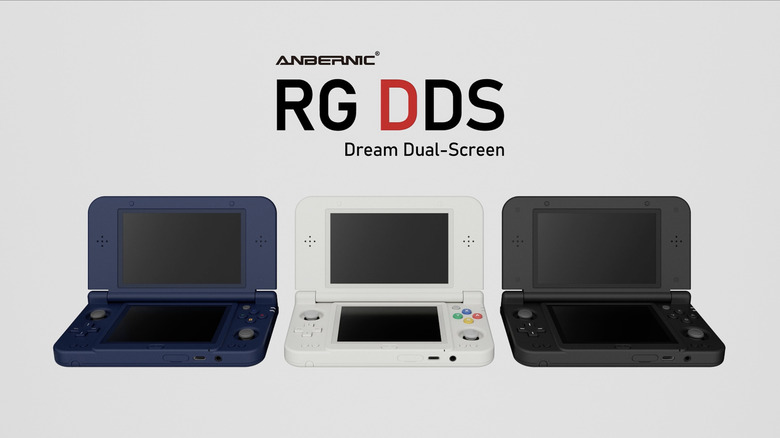
Anbernic has unveiled the RG DDS, a clamshell emulation handheld built around Qualcomm’s Snapdragon G2 Gen 2 processor and designed to replicate the dual-screen experience of the Nintendo 3DS. The device signals a rapid pivot for the Chinese manufacturer, which released its original DS-inspired hardware just twelve months ago.
The processing leap defines this release. While the first-generation RG DS relied on modest silicon adequate only for retro systems up through the PlayStation Portable era, the Snapdragon G2 Gen 2 shifts the device into modern console emulation territory. Qualcomm engineered the G-series specifically for dedicated gaming hardware rather than smartphones, prioritizing sustained thermal performance and GPU throughput. In practical terms, the chipset gives the RG DDS enough overhead to run Android-based emulators for the Nintendo Switch and PlayStation 2, platforms that routinely overwhelm budget portable devices.
Screen geometry remains the central engineering challenge for any third-party dual-screen hardware attempting to mimic Nintendo’s proprietary layouts. Anbernic opted for a 4.7-inch primary display running at 1,200 x 720 resolution, producing a 5:3 aspect ratio. The lower screen measures 4 inches at 960 x 720, yielding a 4:3 ratio. Neither panel perfectly matches the 5:3 top and 4:3 bottom screens found on the original Nintendo 3DS XL, meaning users running 3DS software through emulators such as Citra or its active forks will likely encounter minor letterboxing or require integer scaling adjustments to avoid visual artifacts.


Physically, the control layout mirrors Nintendo’s design but introduces a second analog stick on the right side of the lower deck. This addition addresses a long-standing complaint among 3DS owners who had to purchase the bulky Circle Pad Pro peripheral to gain dual-stick functionality in specific titles. A retractable capacitive stylus is housed directly within the chassis, preserving the touch-screen interaction model essential for navigating menus and playing specific genres.
Power delivery comes from a 6,000mAh battery. Dual-screen clamshells historically consume more energy than single-panel portables because two backlights must remain active simultaneously. For context, Nintendo equipped the New 3DS XL with a 1,750mAh cell, though it was driving vastly lower-resolution screens and far less demanding architecture. How effectively the Snapdragon G2 Gen 2 manages power draw under heavy emulation loads will determine whether the larger battery translates to competitive play sessions or merely offsets the increased hardware demands.
One unexplained feature is a dedicated AI button integrated into the shell. Anbernic has not clarified what artificial intelligence functions this key triggers. Within the emulation community, AI integration typically refers to real-time machine translation overlays for importing Japanese-exclusive games, neural network-based texture upscaling, or automated save-state management. Until the firmware details emerge, the button’s utility remains speculative.
Pricing and availability are currently unconfirmed. The previous RG DS launched at $99, establishing Anbernic’s reputation for undercutting competitors. The upgraded processor and dual-display assembly guarantee a higher manufacturing cost, but industry watchers expect the company to price the unit aggressively against the Retroid Pocket Duo and its Lite variant, which entered the market starting at $149.
The broader dual-screen Android handheld segment has expanded rapidly over the past year, driven by the maturation of open-source emulators capable of mapping secondary displays via custom Android launchers. Anbernic’s decision to iterate on its clamshell concept after only one year reflects the pace at which mobile silicon is advancing, compressing hardware cycles that previously took console manufacturers half a decade.









