US Chip Export Controls Failed to Stop China’s AI Rise
Huawei's 3D chip stacking and CXMT's new memory architecture expose the limits of Washington's semiconductor blockade.
Nvidia’s share of China’s data center chip market collapsed to 34% in the first half of 2026, with shipments of its AI accelerators plunging 44% year over year. The retreat of the world’s dominant AI hardware supplier underscores a reality that U.S. policymakers have spent four years trying to avoid: sweeping export controls designed to cripple China’s semiconductor ambitions instead accelerated the creation of a parallel domestic supply chain.
When the Biden administration imposed its first major restrictions on advanced chips and chipmaking equipment in October 2022, the strategy rested on the assumption that denying Beijing access to cutting-edge silicon would permanently stall its artificial intelligence development. That premise ignored how modern AI systems actually operate. Robotics, smart cameras, autonomous vehicles, and industrial automation—the applications driving the bulk of global AI deployment—do not require the most advanced nodes. By severing Chinese firms from Western suppliers for these broader commercial uses, Washington effectively subsidized Beijing’s push for self-reliance.
Huawei, which U.S. sanctions pushed to the brink of irrelevance in the smartphone market just a few years ago, has shipped more than 100 million devices powered by its homegrown Kirin processors since 2023. The company is no longer merely surviving; it is setting architectural standards. In May, He Tingbo, president of Huawei’s semiconductor business unit, introduced the “Tau Scaling Law.” Rather than chasing the shrinking transistor sizes dictated by Moore’s Law, Huawei’s framework prioritizes signal speed across a computing system through three-dimensional chip stacking, targeting 1.4-nanometer-equivalent density by 2031.


This pivot to advanced packaging compensates for a specific physical bottleneck. Dutch lithography giant ASML, under sustained U.S. pressure, has withheld export licenses for extreme ultraviolet (EUV) machines since 2019. Without EUV tools, Chinese foundries like Semiconductor Manufacturing International Corp. (SMIC) cannot print the smallest circuit features conventionally. They are forced to use older deep ultraviolet (DUV) equipment, relying on multi-patterning techniques that increase manufacturing complexity and lower yields. Three-dimensional stacking offers a workaround, allowing Chinese engineers to build performance vertically rather than horizontally.
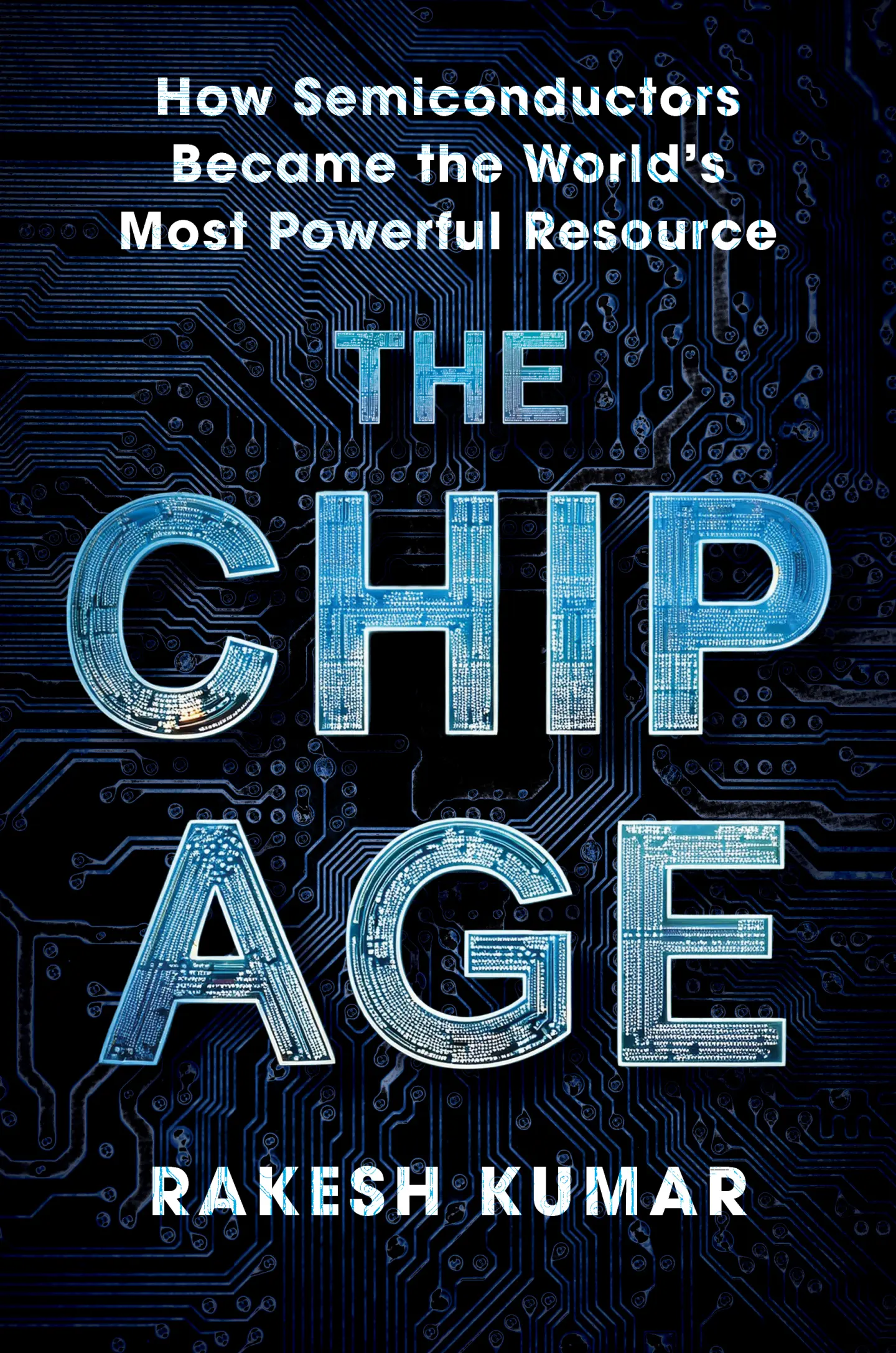
The software ecosystem has adapted in lockstep. Chinese AI lab DeepSeek and startup Z.ai retooled their flagship models to run natively on Huawei’s Ascend processors, breaking the industry’s reliance on Nvidia’s CUDA software platform. Meituan, China’s largest food delivery network, trained a 1.6-trillion-parameter model entirely on domestically manufactured chips earlier this year. Rakesh Kumar, a professor of electrical and computer engineering at the University of Illinois Urbana-Champaign and author of Chip Age: How Semiconductors Became the World’s Most Powerful Resource, notes that Chinese models now perform nearly identically to top-tier American systems despite the hardware constraints.
Memory architecture presents an even sharper challenge to Western dominance. ChangXin Memory Technologies (CXMT), China’s leading memory manufacturer, announced plans at a recent Shanghai industry conference to debut a new memory chip architecture before the end of 2026. If validated, the design would leapfrog current offerings from Samsung, SK Hynix, and Micron Technology. High-bandwidth memory remains one of the most critical bottlenecks in AI server construction globally, making CXMT’s trajectory a direct threat to the established hierarchy.
U.S. officials have quietly recalibrated their rhetoric in response. The stated objective has shifted from halting Chinese AI progress to maintaining American leadership at the technological frontier. Enforcement agencies point to persistent black-market workarounds, noting that banned Nvidia B200 and B300 processors continue to surface inside China. American frontier labs, including Anthropic and OpenAI, allege that Chinese competitors engage in model distillation—training smaller networks on the outputs of larger, restricted American models to close the capability gap cheaply.
Yet strategic parity does not automatically translate into commercial supremacy. While Chinese open-source models have gained massive global adoption due to their low operational costs, the underlying inference infrastructure serving those models internationally still relies heavily on American chips hosted in Western data centers. If Chinese fabs could generate tokens more efficiently than their U.S. counterparts, global traffic would route through Chinese servers. That shift has not materialized. Squeezing performance out of DUV machines and stacked dies works for national security priorities, where cost is secondary to capability, but it struggles against the raw cost-efficiency of scaling transistors on EUV-fabricated silicon.
The global semiconductor industry itself operates under structural pressures that predate the trade war. Foundry consolidation has left Taiwan Semiconductor Manufacturing Co. as the sole reliable producer of the world’s most advanced logic chips. Meanwhile, the cost of building each successive transistor generation has begun to rise, ending decades of predictable economic scaling. Before generative AI triggered unprecedented demand, the sector was bracing for a severe post-pandemic inventory glut. Artificial intelligence effectively rescued the foundry business, though demand extends far beyond frontier labs like OpenAI, driven by a continuously expanding base of enterprise customers.
ChangXin Memory Technologies intends to formally unveil its next-generation memory architecture at an industry event before December 31.