Adaptive Driving Beam Headlights Arrive in the US as Automakers Navigate Strict NHTSA Standards
Strict NHTSA photometric testing forced automakers to shift headlight engineering from optics to real-time software processing.
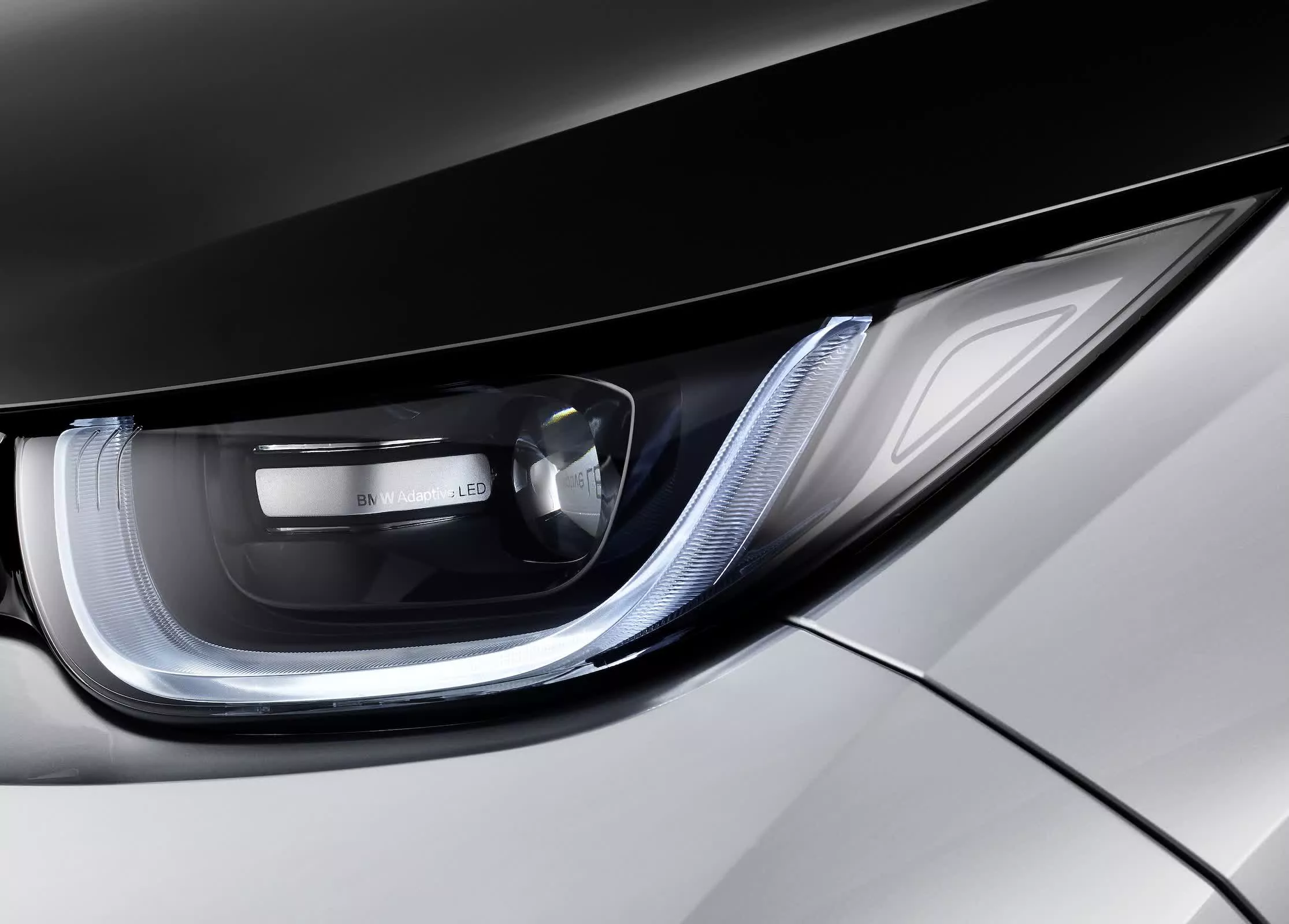
The transition from halogen to LED headlamps solved one problem for drivers while creating another. The sharper, whiter light of modern LEDs improved visibility but triggered widespread complaints about blinding glare on two-lane roads and highways. Adaptive driving beams, or ADBs, represent the industry’s engineering answer: systems that keep high-beam illumination active while surgically removing light from the exact space occupied by other drivers.
Unlike traditional headlights that force a binary choice between high and low beams, ADB technology divides the light source into multiple independently controlled segments. Onboard cameras, steering-angle sensors, accelerometers, and GPS data feed software algorithms that detect approaching vehicles or cars ahead. The system dims only the specific LED clusters aimed at those targets while maintaining maximum brightness across the rest of the road surface. The safety implications are substantial. Federal Highway Administration data shows that roughly half of all traffic fatalities occur at night, despite nighttime driving accounting for only about 25 percent of total vehicle miles traveled.
European and Asian drivers have used matrix-style adaptive lighting for over a decade under regulations established by the United Nations Economic Commission for Europe. American motorists were locked out until the National Highway Traffic Safety Administration finalized updated Federal Motor Vehicle Safety Standard 108 requirements in 2022. The delay was not bureaucratic inertia but a fundamental disagreement over testing methodology. Where European rules historically relied on subjective visual assessments during track tests, NHTSA mandated objective photometric measurements with defined pass and fail thresholds.

Carlos Montes, Rivian’s senior manager of lighting systems, who previously implemented ADB technology at Jaguar Land Rover, described the American regulatory framework as significantly harder to engineer because it replaces subjective evaluations with measurable criteria that apply uniformly across all manufacturers.
Meeting those criteria has shifted the primary engineering burden from optics to software. Automakers must write code capable of processing sensor inputs and adjusting individual LED segments in real time without flickering, lagging, or miscalculating the position of an oncoming driver. This computational demand explains why several luxury brands sold vehicles in the US equipped with matrix LED hardware that remained functionally crippled. The physical headlamp assemblies contained dozens of controllable segments, but federal limits prevented them from operating dynamically while the vehicle was in motion. Manufacturers defaulted to using the advanced hardware for static welcome sequences and departure animations instead of active beam shaping.
That dormant hardware now represents a potential shortcut to market. Vehicles already built with segmented LED arrays may not require new physical headlamps to gain full ADB functionality. Tesla demonstrated this pathway by enabling adaptive lighting through software updates across the Model 3, Model Y, Model S, and Model X lineups. Porsche, which also sells US vehicles with matrix-capable assemblies, has not yet activated the feature. A company representative stated Porsche is evaluating technical solutions to implement the capability within specific US regulations and will share details later.
Rivian is taking a bifurcated approach to deployment. Its refreshed R1 vehicles rely on lighting hardware and control software supplied by OPmobility. For the upcoming R2 SUV, Rivian moved development entirely in-house, writing its own lighting-control logic and ADB software. Internalizing the code allows the automaker to refine beam performance and push improvements via over-the-air updates without depending on external suppliers.
Legacy luxury manufacturers are targeting the 2027 model year for broader US introductions. Audi confirmed the upcoming Q9 SUV will feature smart headlights. Volvo plans to bring the technology to the American market in the 2027 EX60, and Mercedes-Benz will include it on the 2027 S-Class.
The underlying architecture of ADB systems opens possibilities beyond glare reduction. Because the headlights can project precise patterns onto the pavement, automakers are exploring integration with navigation systems to display directional arrows directly on the road surface. Audi has demonstrated laser matrix lighting prototypes capable of projecting warnings such as “stop” onto asphalt to alert pedestrians and cyclists. These projection features remain largely unavailable in the US pending further regulatory clarity.
While ADBs address compliant factory lighting, NHTSA continues to combat the proliferation of illegal aftermarket headlamps that exacerbate glare issues. Non-compliant replacement bulbs and assemblies sold through e-commerce platforms frequently exceed legal photometric limits. Sean Ruston of NHTSA confirmed the agency actively works to remove such devices from retail sites like Amazon. Drivers caught operating vehicles with non-compliant headlamps face escalating fines and potential driver’s license suspensions.
Initial ADB availability remains concentrated in premium electric and luxury vehicles due to the cost of high-resolution LED arrays and the computing power required to run the control software. As component costs decrease and standardized software architectures spread across vehicle platforms, the technology is expected to migrate into mainstream models. Porsche currently lists ADB implementation for the US market as under evaluation without a confirmed activation timeline.