Adaptive Cruise Control Limits: Why Drivers Trust It Too Much
Research reveals drivers using gap-maintaining radar systems are significantly more likely to speed and disengage from the steering wheel.
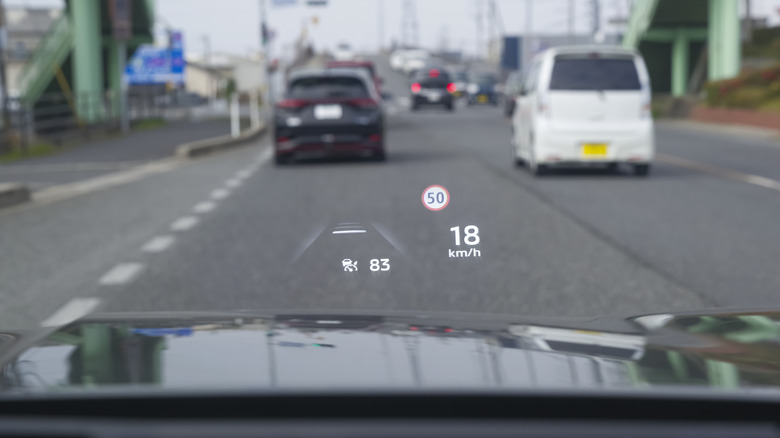
Drivers using adaptive cruise control are 24% more likely to speed on highways, according to research by the Insurance Institute for Highway Safety. The technology, which has quietly managed highway following distances since the late 1990s, is fundamentally a gap-maintenance tool. Yet behavioral studies show motorists increasingly treat it as an autonomous driving system.
A joint study by IIHS and MIT’s AgeLab tracked 20 volunteers over a month. Participants given vehicles equipped with both adaptive cruise control and lane centering were more than three times as likely to manipulate a phone or infotainment console by the final week compared to the first. They were 17 times more likely to drive with both hands off the steering wheel. The complacency stems from a misunderstanding of what the hardware actually perceives.
The entire system relies on two components: a millimeter-wave radar mounted behind the front grille or emblem, and a forward-facing camera positioned near the rearview mirror. The radar bounces radio signals off the vehicle ahead, timing the echo to calculate distance and closing speed regardless of darkness. The camera identifies lane markings so the software knows exactly which vehicle to follow. Bosch long-range radar units have been capable of detecting objects up to 530 meters away since succeeding their 250-meter predecessors introduced in 2014.

This hardware configuration leaves critical blind spots. Volvo explicitly warns owners that its adaptive cruise systems do not brake for pedestrians, animals, bicycles, oncoming traffic, or stationary vehicles. If a car is already stopped at the back of a traffic queue, the radar may not register it as a target to track, meaning the host vehicle maintains its set speed directly toward the obstruction. The distinction between adaptive cruise control and automatic emergency braking—a separate safety system designed specifically to detect stationary hazards and apply maximum stopping force—remains dangerously blurred in the minds of many drivers.
Automakers universally restrict when the feature should be engaged. Toyota advises against using radar cruise control in rain, fog, snow, heavy traffic, on sharp bends, or down steep hills. Heavy precipitation degrades radar performance significantly, while standing water combined with computer-maintained throttle inputs creates ideal conditions for hydroplaning. Honda limits recommended use to relatively straight roads requiring minimal braking.
Software integration has expanded well beyond basic distance-keeping. Ford’s BlueCruise uses GPS map data through its Predictive Speed Assist to reduce vehicle speed before curves and adjust to posted speed limits before signs appear. General Motors utilizes LiDAR-scanned routes for its Super Cruise network, recently adding 750,000 miles of rural roads to the compatible map. Hyundai introduced machine learning into its Smart Cruise Control in 2019, allowing the system to analyze individual driving habits and replicate them. Honda’s Low Speed Follow enables complete stops in traffic queues, resuming movement when the driver taps the accelerator or a steering wheel button.
Physical interference routinely disables the baseline sensors. Aftermarket license plate frames, bumper stickers applied over emblems, or minor parking impacts can misalign the radar unit, causing sudden system dropouts without warning.
The National Highway Traffic Safety Administration continues to investigate crashes involving advanced driver assistance systems where operator inattention was a primary factor, issuing standing guidance that all current Level 2 systems require continuous human supervision despite marketing terminology that implies otherwise.