Europe’s Corporate Gap Widens as U.S. Businesses Pull Ahead
Executives cite regulation, energy costs and weak AI adoption as Europe’s biggest competitive obstacles

European businesses are falling further behind their American counterparts as executives call for regulatory reform, lower industrial energy costs and faster technological adoption to prevent long-term economic stagnation. The gap is visible in corporate earnings: revenues for companies on the Fortune 500 Europe list rose 4% to a record $15.5 trillion this year, while profits increased 3% to $1 trillion.
That headline growth weakens after adjusting for exchange-rate fluctuations. European revenues expanded by less than 1% in constant-currency terms, and net profits contracted. By comparison, companies on the U.S. Fortune 500 posted a 12.4% surge in net profits and a 5.4% increase in revenues over the same period.
The figures echo the assessment released in September 2024 by former European Central Bank President Mario Draghi. His Draghi report on EU competitiveness described an “existential challenge” for Europe unless it undertakes sweeping reforms, tackles structural inefficiencies and raises annual public and private investment by as much as €800 billion.

At the Fortune CEO Forum in London, business leaders identified regulation as one of the main barriers to innovation. Samer Abu-Ltaif, president for Europe, the Middle East, and Africa at Microsoft, said Europe has exceptional talent and a history of responsible innovation, but needs to change its policy approach.
Abu-Ltaif called for the existing regulatory framework to move from “being sometimes pre-regulating or over-regulating to becoming one that drives innovation,” so the continent can capitalize more fully on its technological potential. The debate is unfolding as the European Union continues implementing its AI Act, a legislative framework intended to regulate artificial intelligence.

EU officials present the AI Act as a way to protect citizens and establish global standards. Many technology executives, however, argue that premature regulation could stifle domestic AI development and push innovative enterprises toward other markets.
Energy costs are another immediate constraint. After the geopolitical disruptions of 2022 led Europe to decouple from cheap Russian gas, industrial electricity prices remained significantly higher than those in North America and Asia, leaving European manufacturers at a structural disadvantage.
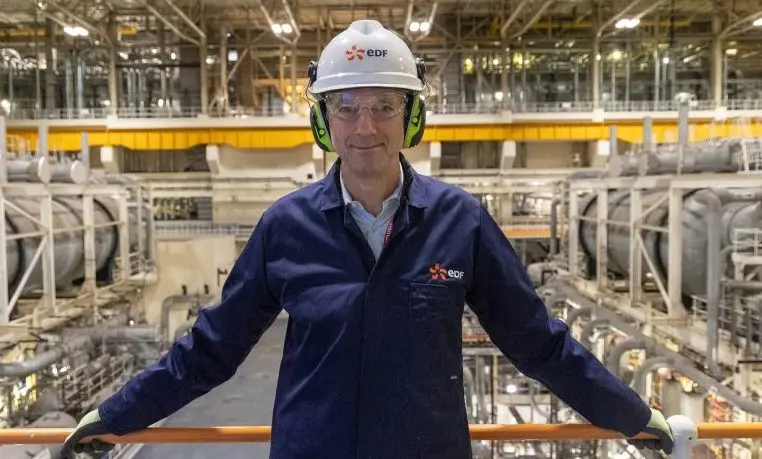
Alex Chisholm, the U.K. chair of French energy giant EDF, said high energy costs are a major driver of Europe’s lack of competitiveness, a problem documented in both the Draghi report and the British government’s industrial strategy. Europe imports 97% of its crude oil and approximately 83% of its natural gas, creating a massive outflow of capital.
Chisholm also noted that the European energy system is only 23% electrified. “If we improve our electrification, that will be very good for the environment, economy, and employment,” he said, urging European nations, including the post-Brexit U.K., to take a more aggressive approach to electrification and secure cheap, plentiful domestic power.
Nicole Melillo, managing director of Volvo U.K., sees a different part of the transition as an economic opportunity. She said the global effort to lower carbon emissions could drive future growth because transport is a major contributor to emissions. Volvo and other manufacturers, she added, are working together to advance sustainable transport technologies.
Europe’s difficulty is not limited to energy or regulation. The continent has struggled to turn innovation into scalable, large-scale businesses and has produced few global technology giants comparable to those in the United States, partly because of fragmented capital markets and insufficient late-stage venture funding.
Kelly Devine, president of Mastercard Europe, said Europe has a rich history of academic innovation but does not scale enough of its homegrown businesses. “European companies need to foster that innovation from the talent that’s coming out of our universities and create the investment capacity,” Devine said.

Devine added that Europe needs programs enabling entrepreneurs to grow and scale their businesses domestically, rather than allowing talent and capital to migrate abroad. The need for that investment is also tied to productivity, an area in which Europe has lagged behind the U.S. for decades.
Hanneke Faber, CEO of Logitech, described Europe as a wealthy market of roughly 500 million people with world-class engineering schools and technical universities. She said productivity must rise for that potential to be unlocked.
Logitech has integrated more than 3,000 AI agents across all of its business functions, from engineering onward, Faber said. The effort contributed to a roughly 200-basis-point increase in the company’s operating expenses as a percentage of sales last year, which she characterized as a necessary investment in efficiency.

Anant Maheshwari, president and CEO of global regions at Honeywell, agreed that energy security and sustainability remain primary challenges for companies operating in Europe. He also said the continent begins from a strong position, with nearly half of its energy mix already coming from renewable sources.
Maheshwari argued that Europe’s route to sustained growth involves doubling down on its existing global strongholds. “Europe definitely has a lot of capability within life sciences and healthcare, and I think that should remain Europe’s key advantage compared to the rest of the world,” he said.
He added that a renewed focus on aerospace and defense could stimulate adjacent engineering and manufacturing industries across the continent. Those sectors are receiving increased funding because of changing global security dynamics.
For AI to produce the productivity gains Europe needs, corporate leadership must also change its approach. Pip White, head of U.K. & Ireland, Northern Europe, and Israel at Anthropic, said the primary obstacle to Europe achieving its growth potential is the absence of a strong mandate at the CEO and board levels.

White observed that AI adoption remains in its infancy, with most organizations concentrating on narrow, isolated productivity use cases. To accelerate growth, she said corporate boards must move beyond small-scale implementations and begin discussing whole-scale organizational transformation.