Qantas Job Cuts Move 850 Roles to India While the AI Comes Later
The airline's own statement sends the work to India now and automates it "in time" — 98 days after it told the union there was no plan to move jobs offshore.
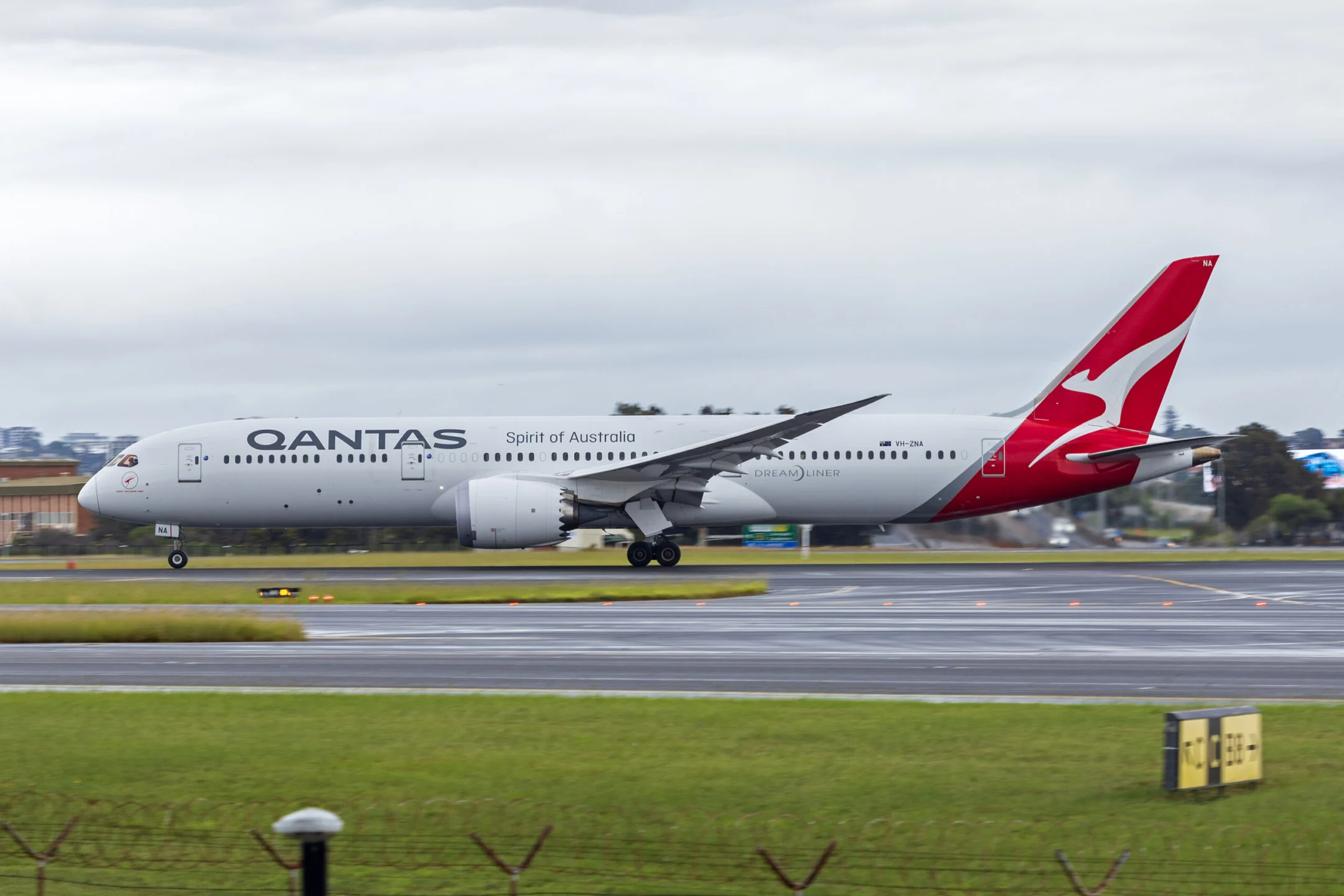
The union says Qantas told it, 98 days ago, that there was no plan to offshore Australian jobs. On Tuesday the airline announced 850 jobs going, mostly to India, and said it had never given that assurance.
The Qantas job cuts arrived in a staff email on Tuesday morning, and the statement that followed puts the change in a different order from the headline. Some services will move to Accenture, it says, delivered mostly by its teams in India and some in Australia, “and in time be transformed further with automation and AI.” Hudson said the aim is to “fundamentally redesign how the work behind our airline gets done, so it is simpler, more connected and keeps getting better, with automation and AI built in from the start.” The first changes are expected by mid-2027, starting in finance, procurement, people and marketing.
Project iQ was the name inside the airline for the plan, and it was public in August. The Australian Financial Review reported then that Qantas was considering moving as many as 1,000 marketing, finance, human-resources and other back-office roles to India through Accenture. A Qantas spokesperson said discussions were in early stages and “no formal agreement is in place and no decisions have been made.” The same statement pointed to the other direction of travel. The airline had added thousands of operational roles in Australia, and a technology hub opening in Adelaide the next month would hold more than 400 roles. The Australian Services Union’s national secretary, Scott Cowen, said Qantas had informed the union “there is no plan to offshore any Australian jobs” and demanded the airline “stay true to these commitments.” “If that commitment from Qantas turns out to be worthless, it won’t just be a broken promise to the ASU. It will be a deep breach of trust with the Australian public who have stuck by this airline through everything it has put them through.”


On Tuesday, Qantas denied the assurance existed. “We have never given assurances to the union that some jobs wouldn’t move offshore,” a spokesperson said, adding that the airline had met the union “on a number of occasions over the last few months to discuss the potential for some roles to move to Accenture, with work to be delivered by their teams in India and in Australia.” The August record settles part of the argument. What the spokesperson actually said was that no agreement was in place and no decisions had been made, a statement about the state of the talks rather than a promise about where the work would go. The union says it heard a commitment. The airline says it gave none. Cowen’s answer on Tuesday was that “Qantas staff have the right to an explanation.” The union met affected members the same day.
Neither the airline nor Accenture has said how many of the 850 roles will disappear to automation and how many will simply move. No savings figure has been disclosed, and neither has the value of the contract. The partnership runs for seven years, and Qantas says it spends more than A$1 billion a year on technology. The work Accenture is taking on sits on top of more than 1,000 legacy applications. Qantas says they “were never designed to work together.” The amount Accenture will invest upfront to modernise the data platforms has not been disclosed.
Qantas has done this before, on the tarmac rather than in the office. On 30 November 2020 it announced the outsourcing of 1,820 ground handling roles across 10 airports, and the Federal Court ruled in July 2021 that the move was adverse action under the Fair Work Act. The timing, the judge found, was to stop the workers taking industrial action or bargaining in 2021. Qantas lost its High Court appeal, agreed in December 2024 to pay $120 million in compensation, and in August 2025 was fined $90 million, slightly less than 75 per cent of the maximum the union had sought. The two bills together come to more than $210 million. The Transport Workers’ Union, which brought the 2020 case, condemned Tuesday’s decision and cited both the earlier outsourcing and the tickets Qantas sold for flights it had cancelled.
The announcement is the third of its kind in three weeks. National Australia Bank said on 20 October it would cut up to 2,500 roles, about 6 per cent of its workforce. Up to 1,500 go before the end of the year, with a restructuring charge of about A$300 million. Canva said on 4 November that 1,271 people, 22 per cent of its workforce, would lose their jobs, see their roles change or be asked to move to centralised hubs. With Qantas’s 850, that is 4,621 roles in three weeks, 71 more than the 4,550 figure circulating in Tuesday’s coverage, which rounds Canva’s 1,271 down to 1,200. A leaked NAB workforce plan shows the same geography. Its technology team’s Australian share falls from 53 per cent to 40 per cent by 2027. India rises from 14 per cent to 30 per cent, Vietnam from 13 per cent to 20 per cent. The union there says about 180 roles are going to Vietnam and India.
“At what point does a national carrier stop being national?” u/hotel_motel asked on Reddit, where the announcement drew 189 comments. “If it’s offshoring jobs and no longer serving Australia’s interests, what’s ‘national’ about it besides the logo?” The most upvoted comment went for the money Qantas took during the pandemic. “Cool. Wanna give the $2.7B back you got handed to you during Covid courtesy of the Australian tax payer,” u/Antho204 wrote. Qantas did receive $2.7 billion in taxpayer support during the pandemic, including about $900 million in JobKeeper, a figure the airline’s then-chief executive confirmed in 2023.
The most repeated demand in the thread was a tax on offshoring. “Offshoring tax, NOW,” u/iball1984 wrote, and set out the arithmetic. A levy of 100 per cent of the average Australian wage for each role moved offshore. “This bullshit needs to be banned. Redundancy protections should extend to outsourcing just like the baggage handling fines,” u/MDInvesting wrote. u/itstoohumidhere answered Hudson’s claim that AI is changing what customers expect. “I’ll tell you what I as a customer doesn’t want, poorer service and shitty AI support.”
Qantas shares closed 6.34 per cent higher at A$9.90 on Tuesday, a 12-week high, on turnover of A$103.5 million. The rise was not the announcement’s alone. The broader market climbed 1.1 per cent as oil prices fell, and cheaper fuel is worth more to an airline than any restructuring. The airline lodged no announcement with the ASX at all. The cuts went to staff and the media while the shares rose. The Qantas job cuts come after a $1.3 billion net profit for 2025/26, down 19.8 per cent on the year before, with a $150 million buyback cancelled and fares expected to rise in 2027.
Qantas says it will consult affected employees and their unions before individual outcomes are determined, and will try to redeploy as many staff as possible, including into new Australian roles. The Adelaide innovation centre will house around 400 staff. Individual outcomes have not been determined.