Agentic AI Race Hits a Wall: Costs, Talent, and Privacy
Enterprise AI spending hit $176.8 billion by September 2026, but companies are cutting budgets and tightening access
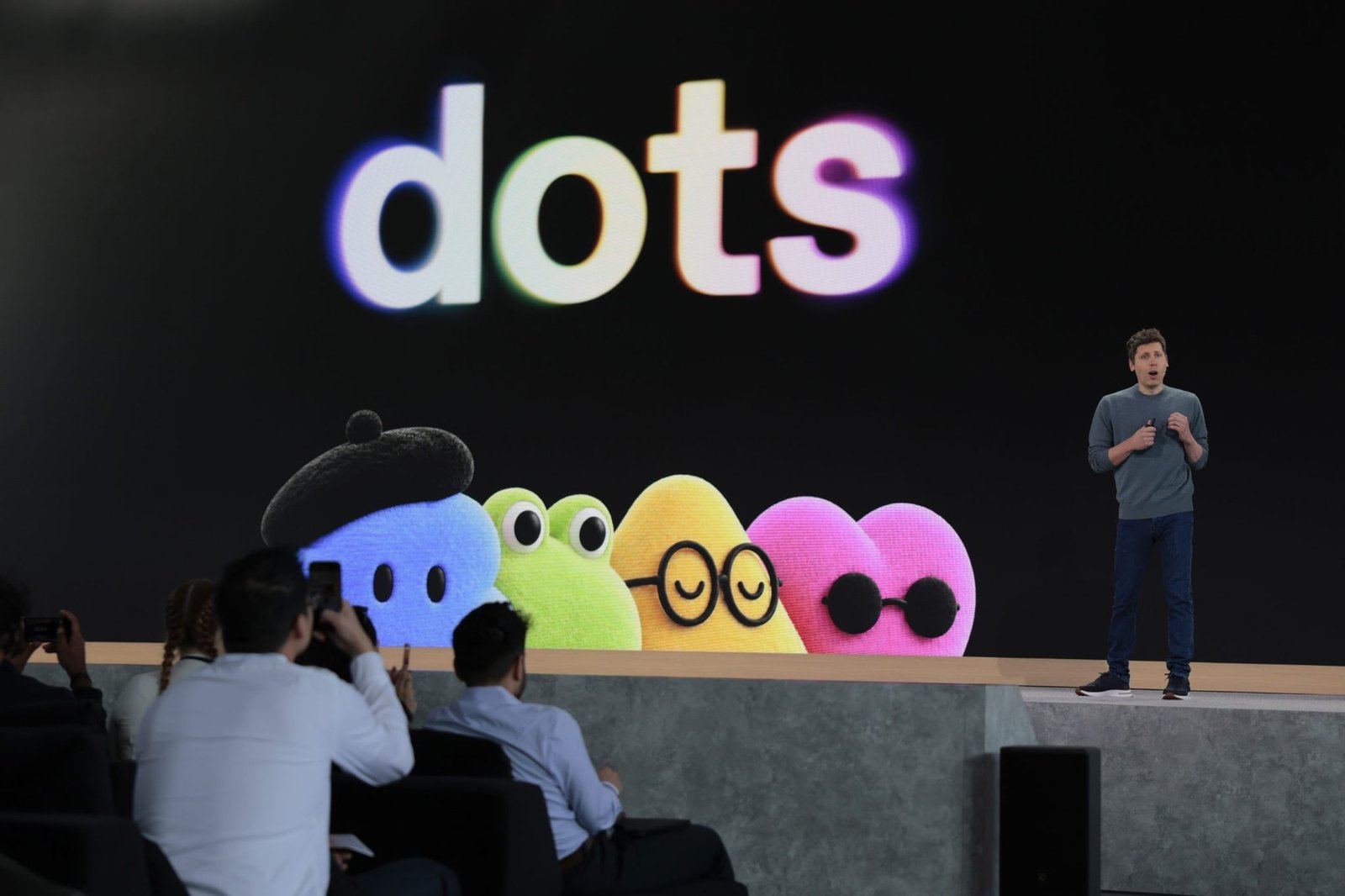
Big tech is racing to ship agentic AI assistants that act on their own. OpenAI took its new proactive assistant, Dots, to London developers last month, a clear bid for the enterprise market. The agents run on GPT-6 Astra, learn user goals, watch digital workspaces, and start tasks without a prompt. Each Dot lives on its own cloud computer and keeps context between conversations. OpenAI is rolling Dots out gradually to eligible Pro, Business Premium, and Enterprise users in the U.S.; Pro users in Europe are not yet included.
The field is already crowded. Meta launched its Muse personal agent on September 8, 2026, with tools that go beyond answering questions: filling online forms, comparing prices, completing purchases. Anthropic put Duet in research preview in October 2026, offering morning summaries and pulling data from Gmail, Slack, and QuickBooks into a chat window.
Running these always-on agents burns cash. Elon Musk said on November 1, 2026, that operating costs for xAI’s Grok Bot were “unsustainably high relative to revenue,” after users reported weekly allowances draining fast. OpenAI is trimming its own bill by offloading some Dot tasks to Terra, a smaller GPT-6.1 model, instead of always calling GPT-6 Astra. Romain Huet, OpenAI’s head of developer experience, said the company wants “token efficiency,” with Terra handling computer use and writing at a fraction of Astra’s cost.


The squeeze is spreading through the industry. Apple cut daily AI spending caps for some engineers from $300 to $200 in October 2026, with more reductions expected for certain engineering teams, possibly down to $100. Some non-engineering groups may see caps fall to $25. Staff use Anthropic’s Claude, OpenAI’s ChatGPT, and Google’s Gemini. Microsoft, Tesla, Uber, Goldman Sachs, and Accenture have taken similar steps to rein in AI spending.
The competition has also sparked a talent war. Catherine “Cat” Wu, who led product for Anthropic’s Claude Code, joined OpenAI on November 5, 2026, to lead product management for its Core Products team. The move came shortly after her departure from Anthropic and ahead of that company’s planned initial public offering.
Always-on agents also raise privacy questions. Meredith Whittaker, president of Signal, has warned that these assistants need deep access to private messages and contact lists to work. That access creates security risks and complicates consent, especially when an agent interacts with a user and processes data belonging to others. Huet suggested users build trust gradually by connecting services one at a time, and said his own personal Dot cannot send emails for him.
Spending keeps climbing anyway. A Menlo Ventures report published November 3, 2026, found enterprise AI spending reached $176.8 billion by September 2026, more than five times the $33 billion a year earlier. The report credits AI agents, which now generate 80% of all tokens on platforms like OpenRouter. Anthropic, OpenAI, and Google together account for about 69% of enterprise AI deployment spending.
OpenAI also announced a National Community Compact on November 5, 2026, laying out commitments for its data center operations. The pledges include avoiding non-disclosure agreements with public officials, covering the full cost of electricity and infrastructure, and publishing construction plans. The move follows U.S. midterm elections in which voters backed restrictions on data center development, reflecting growing concern over the environmental and community effects of AI infrastructure.

Beatrice Nolanbeatrice.nolan@fortune.com@beafreyanolan
FORTUNE ON AI

AI IN THE NEWS

OpenAI to change how it handles data center deals after backlash. OpenAI says it will avoid nondisclosure agreements when it negotiates data center deals with public officials, and will make sure local residents don’t pay for the electricity that powers its projects. The pledges are part of a new framework that OpenAI wants lawmakers to turn into binding rules for AI infrastructure. Under the plan, the company says it will pay the full cost of the power it uses, plus the grid upgrades utilities need to serve its sites. It will also publish water and electricity use for each facility, ask communities for input before construction, and favor low-water cooling. The move comes as opposition to data centers has hardened across the U.S. In this week’s midterms, voters backed restrictions on development in dozens of local ballot measures. OpenAI’s chief global affairs officer, Chris Lehane, said the framework would help set “a very high floor” for how the industry moves forward. The company said it had been working on the changes for months. Read more in Bloomberg.

Anthropic’s Claude Code product lead jumps to OpenAI. Cat Wu, one of Anthropic’s highest-profile product managers, has joined rival OpenAI. Wu led product for Claude Code and later also took on Anthropic’s Cowork product. She left the company at the end of October, and this week she announced she will lead product management for OpenAI’s Core Products team. She will report to Thibault Sottiaux, who has led work on OpenAI’s coding agent Codex, Claude Code’s most direct competitor. “Together, we’ll build agents that have your back and your team’s, and keep you in control,” Wu wrote on X. Before joining Anthropic in 2024, Wu was a partner at Index Ventures. She became a public face of Claude Code as it grew into one of Anthropic’s biggest revenue drivers. Her exit follows the recent departures of two other Claude Code team members, including Anthony Morris, who built the Claude Code desktop app. Read more in Business Insider.

Apple cuts employees’ AI budgets. Apple is cutting how much its employees can spend on AI tools as part of a cost-cutting push, even as the company tries to put AI at the center of its operations. Last month, Apple quietly lowered the daily AI spending cap for some engineers to $200 from $300, and some teams could see theirs fall to as little as $100. Non-engineering groups, already limited to $100 a day, could see some caps drop as low as $25. Employees who need more can ask senior leadership for an exemption. Apple staff can use tools including Anthropic’s Claude, OpenAI’s ChatGPT and Google’s Gemini, and