50M Users In, Meta’s Edits Lands on Mac With AI Co-Editing
AI co-editing via Model Context Protocol sets new desktop workflow
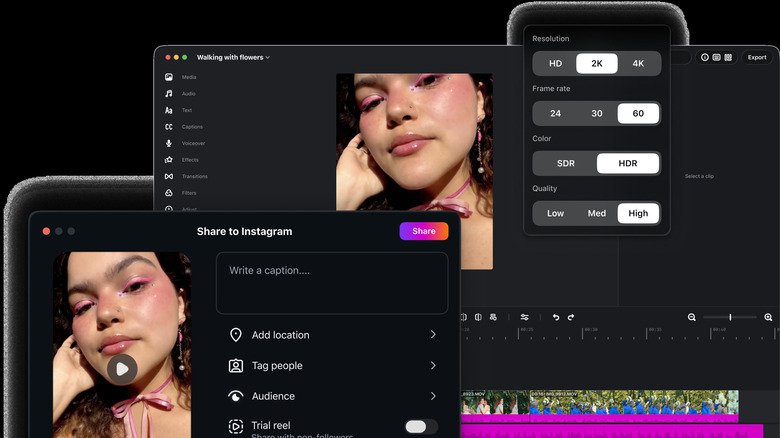
A creator starts a cut on the subway, refines it on a MacBook at a desk, then hands the rough assembly to an AI agent that restructures the pacing — all inside the same app. That workflow moved closer to reality this week when Meta released Edits for Mac, the desktop companion to the mobile video editor that has quietly amassed more than 50 million active users since its April 2025 launch.
The Mac build, available since November 5, brings a multi-track timeline, keyframe animation, and audio waveforms precise enough for frame-accurate cuts. Color grading tools include wheels, log conversions, and curves. Keyboard shortcuts behave like a proper nonlinear editor. Custom fonts install system-wide. Exports carry no watermark and publish straight to Instagram.
What separates this release from a standard feature parade is the Model Context Protocol integration. Edits on Mac can now connect to AI agents — Meta’s own Muse among them — that generate rough cuts from prompts or raw footage. A creator can alternate between agent-driven assembly and manual trimming without leaving the timeline. The protocol is open, meaning third-party agents could plug in later.


The numbers behind the rollout are striking. Seven million downloads in the first mobile week — 1.2 million on iOS, 5.9 million on Android. Mark Zuckerberg disclosed the 50-million-user milestone during Meta’s third-quarter earnings call in October 2026, positioning Edits as the most serious homegrown challenger yet to ByteDance’s CapCut, the default editing suite for a generation of TikTok creators.
Meta has signaled that project portability between desktop and mobile is next. The ability to move a session fluidly across devices would close the loop that currently forces creators to choose between phone-speed convenience and desktop precision. Whether the AI co-editing layer remains a novelty or becomes a standard part of the creative rhythm will depend less on the protocol and more on whether agents like Muse can actually understand narrative intent.