Artemis II GPS Holes: Three Disturbances, Not Two — and the Small Burns Hit Hardest
The preprint behind the headlines found three disturbances, not two. The giant rocket made the weakest mark, the small burns hit hardest, and no GPS error was ever measured.
The paper opens with three disturbances, listed on its first page like a contents list: one from the launch, one from an engine burn two hours later, one from a burn a full day after that. The headlines that reported the paper counted two, blamed the biggest rocket, and warned that self-driving cars might crash.
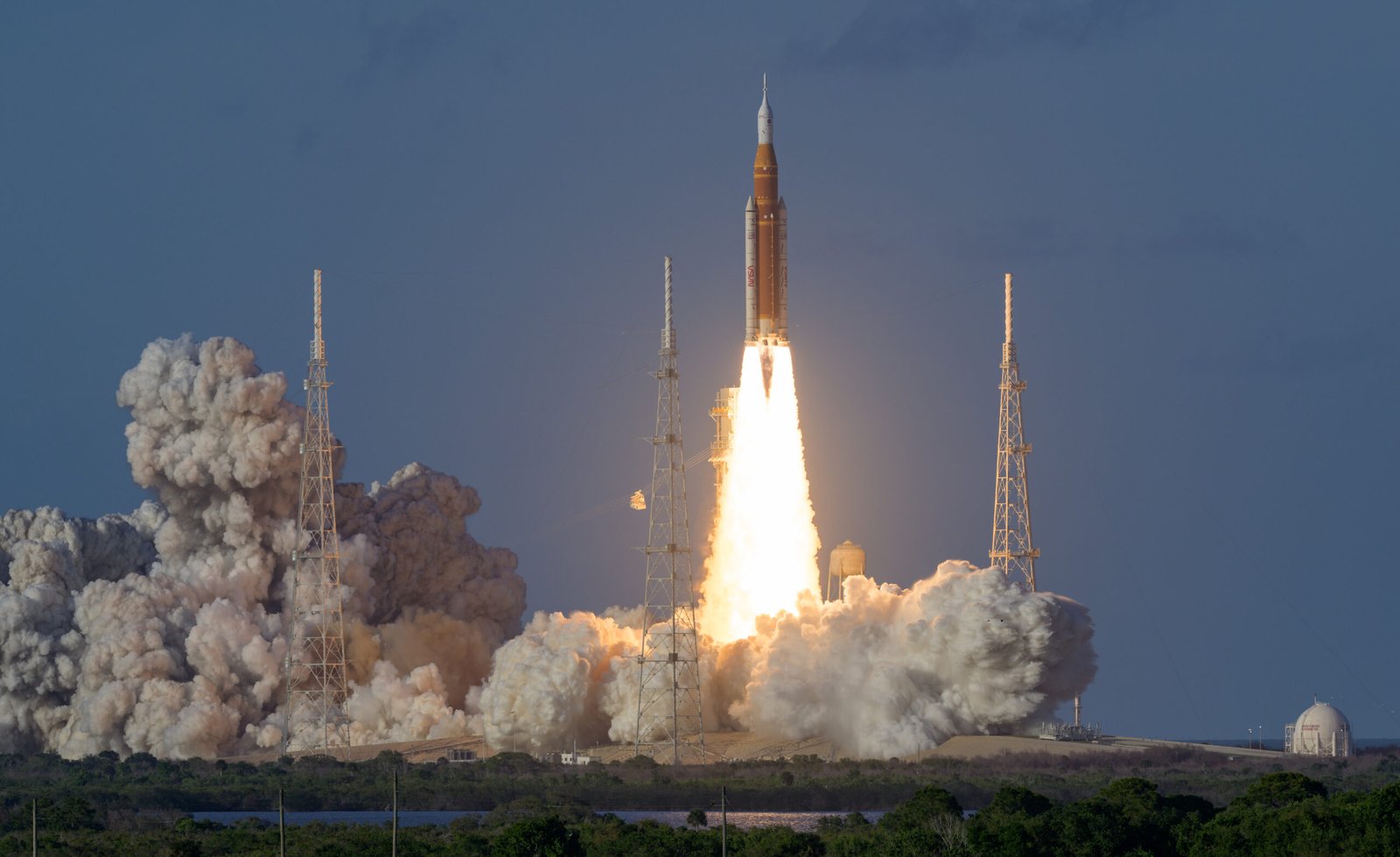
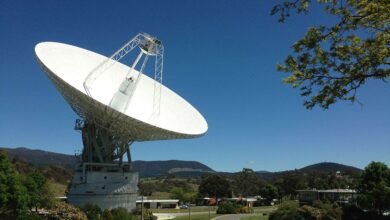
Ground stations across America recorded the launch. About 3,500 of them — GPS, GLONASS and Galileo receivers sampling every 30 seconds, the same networks that track millimetre movements of the Earth’s crust before earthquakes — measured total electron content in the ionosphere as Artemis II climbed away on April 1. What they measured was the density of free electrons, expressed in TECU, a unit of electron density. The study is a preprint. It was posted online for the journal Geophysical Research Letters, and it has not been peer-reviewed. It contains no GPS error figure at all: no metres, no cars, no drones. The metres came from the interview. “A positioning error of a couple of meters is enough to cause an autonomous car to change lanes,” Charles Lin, an earth science professor at National Cheng Kung University and a co-author of the paper, told Space.com, which reported the stations had detected changes equivalent to errors of several metres and added that such errors could throw self-driving cars off track and cause collisions.
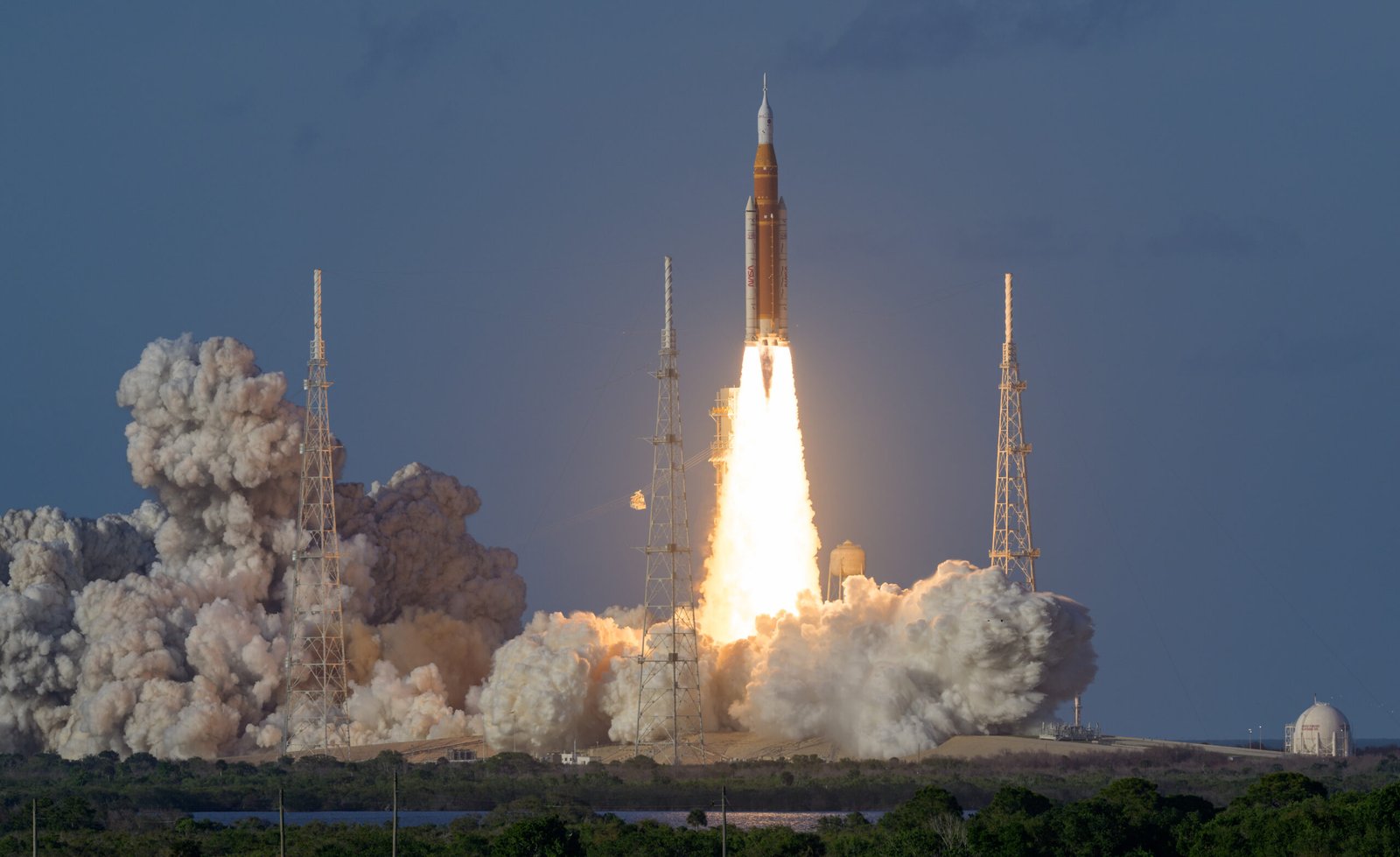
Three disturbances crossed North America in about 25 hours, and the paper dates each of them. The first followed the SLS liftoff at 2235 UT on April 1: shock-acoustic waves near the launch site at about 1.3 kilometres a second, then gravity waves running north and south at 600 to 670 metres a second for more than 1,000 kilometres, the largest barely 0.16 TECU. The second came from the Apogee Raise Maneuver at 0023 UT on April 2, an 18-minute burn by the Interim Cryogenic Propulsion Stage that began over 28.5°N, 107.7°W. It left disturbances from 110°W to 60°W, more than 5,000 kilometres, at 2.5 to 3.7 TECU, travelling at 8.2 kilometres a second, close to Orion’s own orbital velocity of 8.3. The third came from the trans-lunar injection burn at 2349 UT on April 2: five minutes and 50 seconds of the Orion engine, starting over 27.4°N, 118.9°W. It spanned about 20 degrees of longitude at 1.0 to 2.4 TECU and 10.3 kilometres a second, close to Orion’s 10.5. Orion, the capsule the crew named Integrity, flew past the moon on April 6 and splashed down on April 10, nine days after launch, having taken its crew farther from Earth than any humans have travelled, 252,756 miles at the farthest point.


SLS is the most powerful rocket NASA has flown, its core stage rated at 8,896 kilonewtons of thrust, and it made the weakest mark on the sky. The Apogee Raise Maneuver ran on 110 kilonewtons and the trans-lunar injection burn on 26.7, and both hit harder. On the paper’s like-for-like comparison the second disturbance ran four to nine times the launch’s amplitude, the third two to eight times. On the raw differential measure the ratios reach 15 to 23 times and 6 to 15 times. The paper’s explanation is placement, not power. The big rocket burned most of its energy low down, and only a weakened echo reached the ionosphere; the small burns fired directly inside it, at 190 to 400 kilometres, where the energy went straight into the plasma. Previous launches the team cites ran 0.5 to 0.75 TECU at 600 to 1,500 metres a second for 15 to 20 minutes; the Artemis burns ran 2.5 to 3.7 TECU at 8 to 10 kilometres a second for more than an hour.
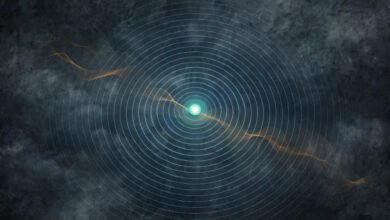
The paper’s subject is travelling waves in the ionosphere, and the holes are a separate question. Its disturbances fall into three kinds the field has named before: shock fronts, electron-density undulations, and bite-outs, the temporary depletions that read as holes. The paper measures the waves, and says plainly that the depletions from the orbit manoeuvres will be examined in a separate study. Space.com reported “two such holes” all the same, one from the core stage and one from the two upper-stage burns, stretched across the continent like 3,100-mile contrails, and the rest of the coverage followed. The word the headlines built on is the part of the work the authors have not published yet.
The record starts in 1961, with a missile, not a moon rocket. A paper that year reported the F-region of the ionosphere thinning as a missile passed through it. Apollo launches left shock cones and acoustic disturbances in their wake, reported in 1970 and 1971, and the Skylab launch in 1973 tore a large-scale hole that the literature still cites. A SpaceX Falcon 9 shock wave did the same in 2017, a hole that may have disturbed navigation signals for an hour or two, and de-orbiting SpaceX boosters still carve holes above the south-central United States about 90 minutes after launch, glowing red as the gas reionises, closing within 10 to 20 minutes. The bombs of the Second World War weakened the ionosphere too, measurably, 1,000 kilometres from the raids that caused it.
“This article is garbage,” u/literalsupport wrote on Reddit’s r/ArtemisProgram, quoting the collision line back at the piece: “anyone who thinks autonomous vehicles are using GPS to avoid collisions is grossly misinformed.” u/iKnowRobbie, the top comment on the r/technology thread, called the Starship comparison apples and oranges and added, “Pretty sure that’s false, GPS telemetry data is always taken as a secondary reference with visual navigation being the primary. And skyscrapers.” u/Klutzy-Residen, replying to him, wrote that civilian GPS is far too crude to steer a vehicle, and that navigation apps only look accurate because they assume the driver is on the nearest road rather than trusting the raw position.
“Why does SLS create a bigger disturbance than Starship? Is it because of exhaust composition?” u/fighter-bomber asked on r/ArtemisProgram, and the longest answer on the r/technology thread took the chemistry route. “As it so happens, Starship has no solid rocket motors, doesn’t use chlorine, and doesn’t burn alumina,” u/Accomplished-Crab932 wrote. “SLS on the other hand has two of the largest SRBs ever flown. This is why the disturbance caused by the Artemis II flight was 10x larger than Starship’s.” That is the commenter’s explanation, not the paper’s. The paper itself never mentions Starship. Its own answer is placement. Space.com reported the disturbances as up to ten times more intense than those after Starship test launches; the paper’s comparison is with earlier launches in general, and its mechanism is where the energy was released, not what the propellant was made of.
The burns that did the damage are the kind every lunar mission has to make. An apogee raise and a translunar injection fired inside the ionosphere are not optional extras on the way to the moon; they are the route, and the paper calls them a distinct and repeatable source of human-made space weather. Lin told Space.com the effects will become much more significant as more missions fly to the moon and to Mars. The paper ends by calling for continuous monitoring with dense GNSS networks and dedicated modelling of exhaust energy deposited in place, so the next burns can be assessed as they happen.