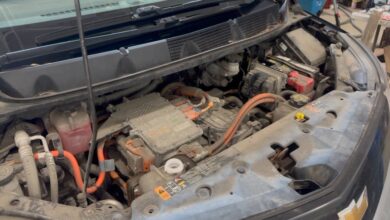
Why Modified Corvette LS1 Engines Keep Blowing at 7,000 RPM
Aftermarket camshafts and LS6 heads pushed a standard Corvette V8 past its lubrication limits
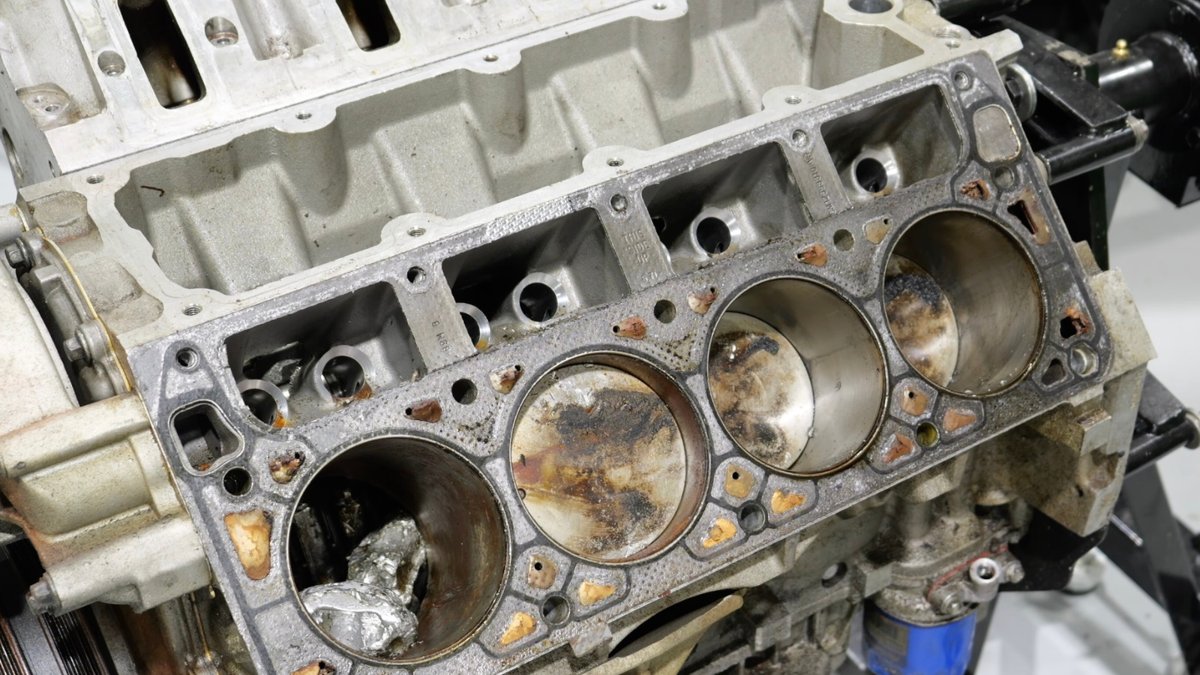
A destroyed 2004 Chevrolet Corvette engine is exposing the financial risks of mixing factory hardware with aftermarket upgrades. The 5.7-liter V8, torn down by YouTube channel I Do Cars, failed catastrophically after someone installed non-original performance parts and pushed the motor to its mechanical limits.
The block has two holes punched through it. Two pistons shattered completely. A cylinder sleeve disintegrated. Connecting rods and bearings took heavy damage, according to the teardown presenter, Eric. Yet the oil pan held surprisingly little large debris, a detail that points away from a slow, grinding failure and toward a sudden, violent event during high-rpm operation.
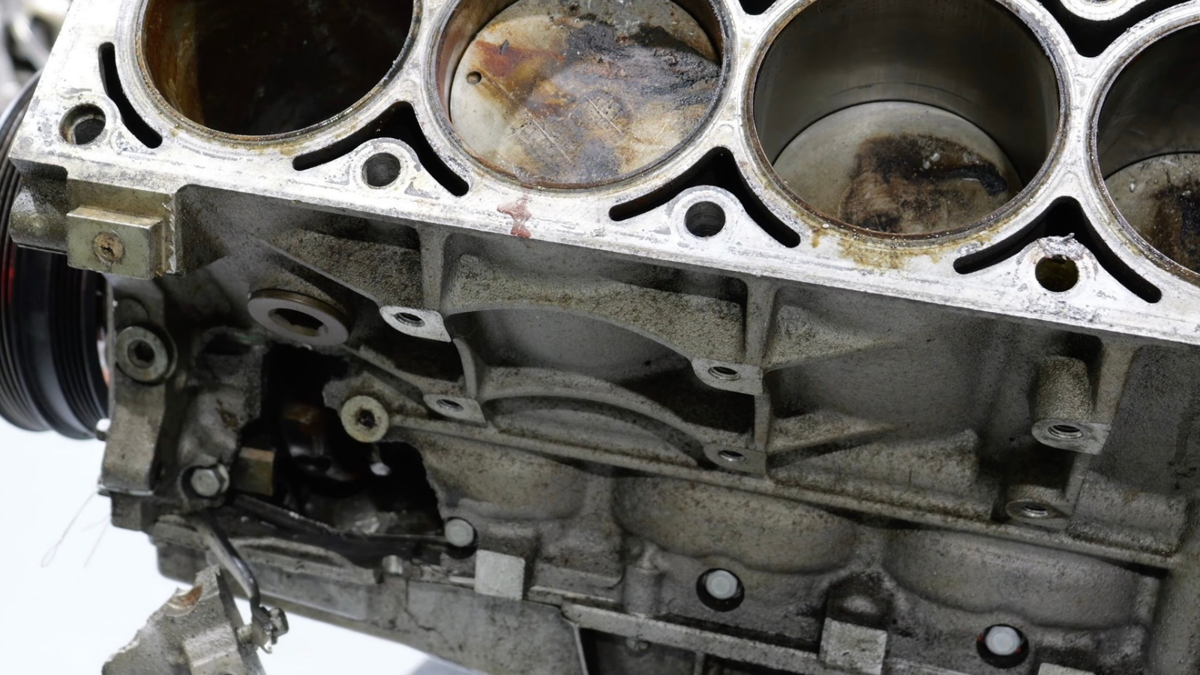


This was not a stock engine. General Motors originally rated the 2004 version of this third-generation small-block at 350 horsepower, following a factory upgrade introduced in 2001 for the Corvette C5. But the previous owner had already altered the internals. The teardown revealed a Summit Racing camshaft and LS6 cylinder heads bolted onto the block. Someone also stripped the valvetrain — rocker arms and lifters are missing — before returning the ruined motor as a core exchange, Eric noted during the inspection.
That combination of modifications creates a specific vulnerability. Sustained operation near 7,000 RPM places extreme demands on an engine’s lubrication system. The standard wet-sump oiling setup in the C5 Corvette was engineered for the factory power output and redline. Adding an aggressive aftermarket camshaft and higher-flow LS6 heads increases valvetrain stress and oil demand without upgrading the pump or pan baffling. If oil pressure drops even momentarily at high speed, bearing surfaces lose their protective film. Friction spikes. Metal overheats. The connecting rod lets go.
Used LS1 cores currently trade between $1,500 and $3,000 depending on mileage and condition in the secondary market. A full rebuild after a thrown-rod event frequently exceeds $6,000 once machine work, new rotating assembly components, and labor are factored in. For buyers sourcing engines for project cars or track builds, verifying whether a block has been modified is now just as critical as checking compression numbers.
GM’s own engineers recognized the limitations of the base architecture when they developed the LS6 for the C5 Z06. That variant eventually produced 405 horsepower, but it required revised oiling pathways, sodium-filled valves, and stronger internal components to survive sustained track use. Bolting LS6 heads onto a standard bottom end does not replicate those underlying structural changes.
Lubrication failures remain the leading cause of catastrophic V8 destruction across all manufacturers. As I Do Cars has demonstrated in previous teardowns, even mass-produced, highly reliable engines like Toyota’s 2ZR-FE four-cylinder will seize if oil levels drop too low. The Corvette case simply shows what happens when that basic maintenance requirement collides with unverified aftermarket tuning.