White House Denies Throttling Ukraine Drones as Air Defenses Fail
Treasury authorized Russian diesel imports nine days before military satellite links restricted Ukrainian interceptor drones to 100 mph.
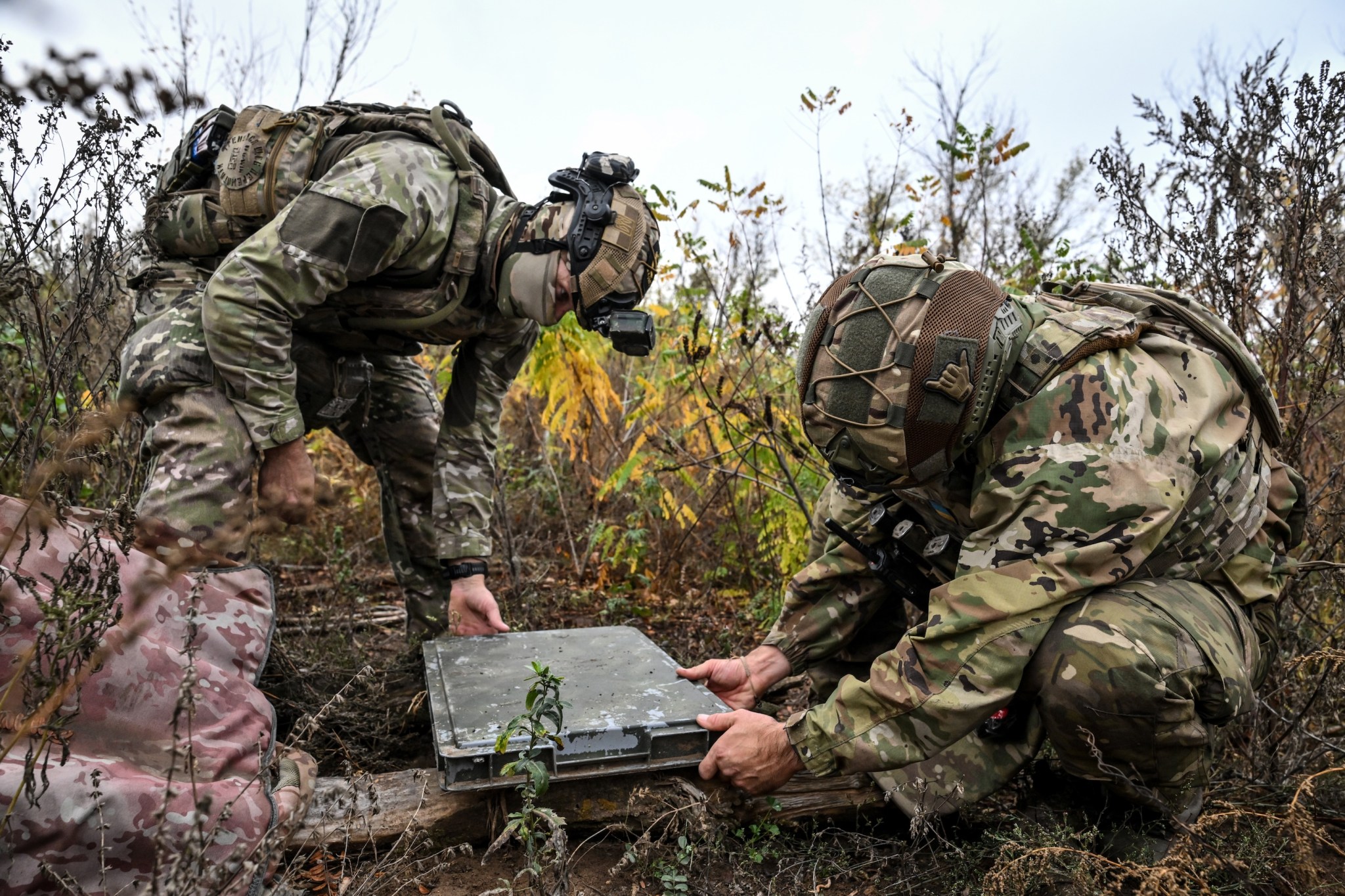
Ukrainian interceptor drones can no longer outrun the Russian jet-powered aircraft they were built to destroy. A connectivity restriction imposed overnight on Oct. 13 severed satellite links for military hardware traveling faster than 100 mph, according to Serhii “Flash” Beskrestnov, a defense technology adviser to Ukraine’s president. The cutoff instantly degraded Kyiv’s primary defense against Russia’s Geran-3 attack drones, which fly at speeds up to 230 mph.
The restriction coincides with a rapid dismantling of U.S. economic pressure on Moscow. Nine days before the drone networks went dark, the Treasury Department issued General License 135, authorizing the sale and import of Russian-origin diesel through April 7, 2027. Sanctions had blocked those fuel sales since 2022. On Oct. 16, President Donald Trump signed an executive order waiving nearly all substantive sanctions, tariffs, and restrictions in the Lindsey O. Graham Sanctioning Russia and Iran Act of 2026—a law he had signed just one month earlier—before its provisions took effect on Oct. 18.
Washington is simultaneously tightening financial lifelines for Russia while degrading the tools Ukraine uses to defend its airspace. The administration has also threatened to cut arms supplies to Ukraine, and Trump has called for Ukraine to get a new president. Trump announced a diesel deal with Putin on Oct. 9, blaming Ukrainian strikes on Russian oil refineries for rising energy prices ahead of the midterm elections.


Starshield, the government-focused satellite network operated by Elon Musk’s SpaceX, manages the affected terminals. SpaceX’s civilian service, Starlink, has more than 12 million customers. Secretary of State Marco Rubio said over the weekend that Ukraine does not currently have access to Starshield and that its request is “under conversation.”
Musk posted on X, which he owns, that “Starshield systems are owned and controlled by the US government. Any limits on speed or usage are decided by the US military and ultimately POTUS.” Two U.S. officials and a Western official told Reuters that the order came from inside the White House. A senior Ukrainian official told the news agency that Kyiv contacted the White House, State Department, and Pentagon and was told it was a White House decision. The Telegraph, citing four sources, reported that Musk proposed the caps to Trump, who approved them.
Rubio, who serves as both secretary of state and national security adviser, called reports of a deliberate slowdown “categorically false,” according to Al Jazeera. He stated that “no one at the White House ordered anyone to slow down internet or slow down speed so that certain drones couldn’t use it,” adding that service had been restored. Trump told reporters, “It wasn’t me, and I don’t think it was Elon,” per CBS News.
Kyiv disputes the claim that service has returned to normal. “The maximum speed today is 161 km/h; after exceeding it, Starlink shuts down and we lose the drone,” Ukrainian President Volodymyr Zelenskyy said on Oct. 17. He noted that Ukrainian specialists tested terminals at 180 km/h inside the European Union without losing connection, stating, “The restrictions operate on the territory of Ukraine and do not operate on the territory of EU countries.” Ukraine’s Defense Ministry said service had partially stabilized below about 160 km/h. Appearing on NBC’s Meet the Press on Oct. 18, Zelenskyy said the throttling was “a message from [the] American government to limit the speed,” according to Yahoo Finance.
Units reported failures well below the 100 mph threshold. Ukraine’s 7th Rapid Reaction Corps said connections dropped for 10 to 20 seconds at 110 to 120 km/h. Ukrainian activist Serhii Sternenko, citing military reports, claimed drops at speeds as low as 60 to 70 km/h. Ukrainian sources have said terminals need to work at speeds of at least 450 km/h to counter the jet drones.
Poland, which has paid for tens of thousands of the terminals Ukraine uses, publicly challenged Musk. Foreign Minister Radosław Sikorski posted on X: “Hey, @elonmusk, big man, are you playing politics with your products again? As your European customers, we are watching you.” The two clashed in 2025 when Musk told Sikorski to “be quiet, small man” in a dispute over Starlink in Ukraine.
Sen. Thom Tillis (R-N.C.) asked Musk on X to confirm the “overnight disruptions to Starlink terminals in Ukraine were unintended,” warning that “intentionally degrading Ukraine’s ability to defend itself might be construed as aiding and abetting a mass murderer.” He later called for a Pentagon inspector general investigation. Sen. Jeanne Shaheen (D-N.H.) wrote that “these restrictions on Ukraine’s access to Starshield must stop immediately.” Fortune reached out to both senators’ offices for comment but did not hear back before publication.
A White House spokeswoman has said the sanctions authorities give the president tools to pursue peace. Critics argue that renewed fuel sales and suspended sanctions put more money in Vladimir Putin’s pocket to fund the war. Economic measures take months to alter battlefield dynamics. Severing satellite links for fast-moving interceptors removes air defenses instantly.