Alphabet Plans Over $200B in AI Spending as Automation Looms
McKinsey projects automation will impact half of U.S. work hours by 2035 as a historic wealth transfer reshapes corporate investment.
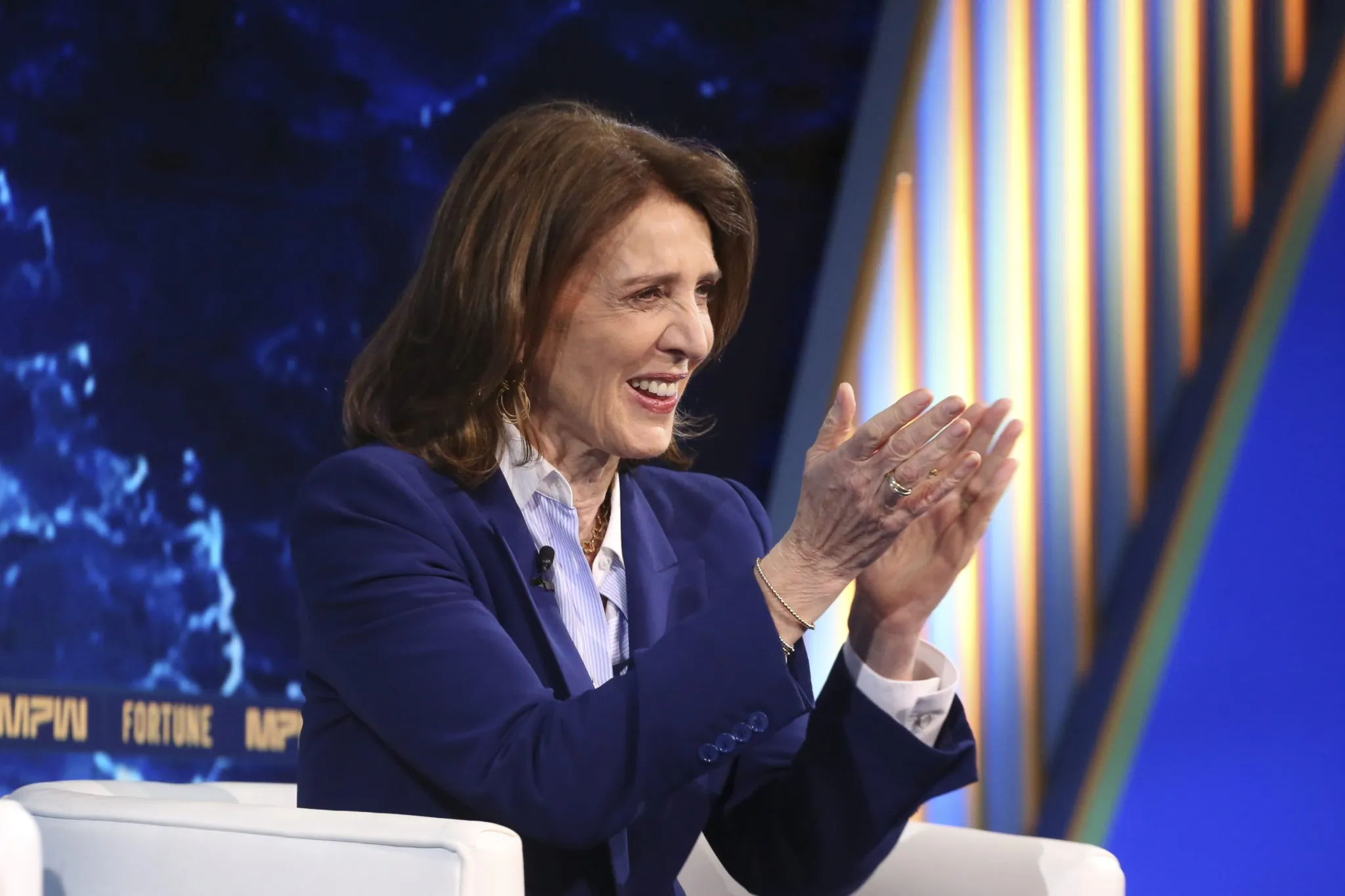
Alphabet is preparing to spend roughly $200 billion this year expanding its artificial intelligence infrastructure, with expenditures expected to climb further in 2027. The commitment from the parent company of Google underscores how deeply entrenched the hyperscaler arms race has become, even as executives signal that capturing the technology’s economic upside requires immediate action on its risks.
Ruth Porat, Alphabet’s president and chief investment officer, outlined the capital deployment during the Fortune Most Powerful Women Summit in Santa Barbara, California. Porat, who joined the tech giant from Morgan Stanley in 2015, framed the spending not merely as a technological sprint but as an industrial-scale buildout requiring massive investments in energy capacity and skilled trades. Her emphasis on physical infrastructure reflects a broader industry reality: data center power consumption has become one of the most significant bottlenecks in AI development, forcing companies to secure dedicated grid access and invest heavily in cooling systems.
“If we don’t collectively fortify the downside risk of AI, we will not have the opportunity to capture the upside,” Porat said. That warning arrives alongside projections from McKinsey indicating that automation could account for more than half of all U.S. work hours by 2035. Office and administrative roles face the steepest exposure. Unlike previous waves of mechanization that primarily affected manual labor, generative AI targets cognitive tasks, accelerating pressure on employers to reskill their workforces rather than simply replace them.


The sheer volume of capital flowing into AI development threatens to overshadow another structural economic shift. Approximately $124 trillion in wealth is projected to transfer between generations in the United States by 2048, with women positioned to receive a dominant share through inheritance from both parents and spouses. Financial leaders at the summit warned that corporate and institutional focus remains disproportionately fixed on frontier models and geopolitical friction, leaving the wealth transfer under-leveraged.
Morgan Stanley managing director Seema Hingorani, who founded the nonprofit Girls Who Invest to increase female representation in asset management, noted that firms are beginning to build incubators specifically for women launching technology ventures. Meanwhile, Carmen James Randolph, CEO of the Women’s Foundation of the South, reported that incoming philanthropists are directing funds toward localized crises such as maternal healthcare deserts rather than traditional endowment models.
Corporate leadership pipelines remain constrained despite demographic shifts in higher education. Women have earned more college and graduate degrees than men since the mid-1990s, yet their rate of promotion into senior executive roles is decelerating. Hayden Brown, CEO of the freelance marketplace Upwork, attributed part of the gap to internalized limitations, noting it took direct intervention from her board chair a decade ago to prompt her to consider the top job.
For executives operating in highly regulated or politically charged sectors, visibility carries distinct liabilities. Centene CEO Sarah London described the volatility of leading a major health insurer while attempting to digitize care delivery and invest in affordable housing. Public frustration over healthcare costs frequently positions executives as targets, complicating efforts to implement long-term technological integration.
Broader market signals reflected ongoing global volatility. S&P 500 futures opened flat following a 0.6% decline in the previous session. Asian markets experienced sharp sell-offs, with South Korea’s KOSPI dropping 5.5% and Japanese chipmaker SK Hynix falling more than 10%. Bitcoin traded near $84,000. In corporate developments outside the technology sector, Delta Air Lines CEO Ed Bastian indicated that airfares are likely to remain elevated regardless of fuel price fluctuations, sustained entirely by persistent consumer demand.