

Alphabet Plans to Raise Its $200 Billion AI Spending Next Year
Ruth Porat says demand remains capacity-constrained as Google Cloud profits triple and free cash flow turns negative for the first time.
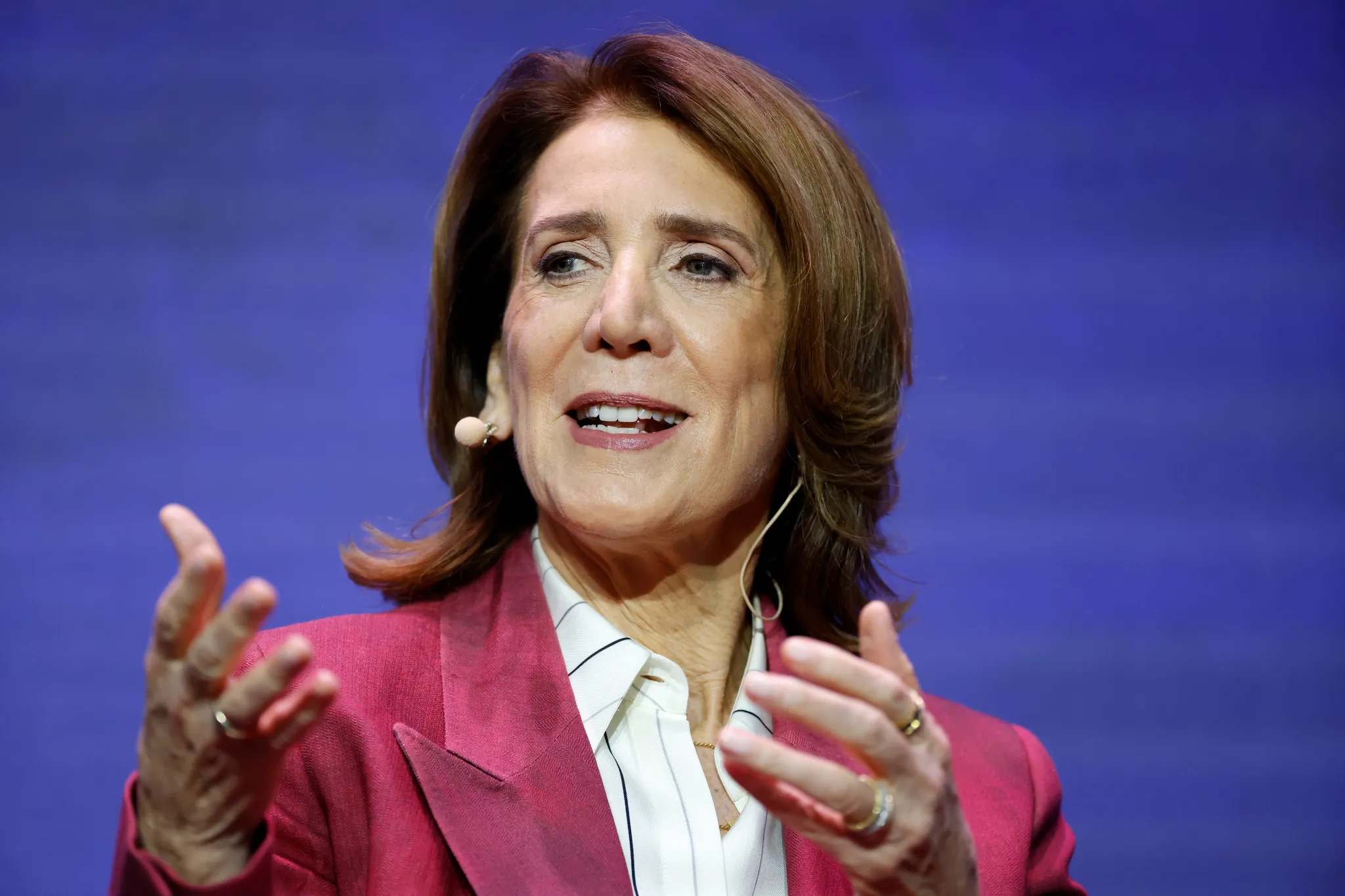
Alphabet intends to push its capital spending beyond this year’s roughly $200 billion mark as the company races to secure enough computing power for artificial intelligence workloads. Ruth Porat, Alphabet’s president and chief investment officer, confirmed Monday that expenditures will “increase significantly” in 2027, signaling that the technology giant views the current infrastructure expansion as a multi-year buildout rather than a near-term peak.
The commitment places Alphabet at the center of an unprecedented capital deployment cycle across the U.S. technology sector. Microsoft, Amazon, and Meta Platforms have similarly escalated their data center investments, with combined industry spending projected to exceed half a trillion dollars annually by the end of the decade. Unlike previous technology cycles driven primarily by consumer hardware or software adoption, this wave is anchored in physical infrastructure—specialized semiconductors, cooling systems, and power generation required to train and run large language models.
Porat’s remarks, delivered at Fortune’s Most Powerful Women Summit in Santa Barbara, California, directly addressed mounting Wall Street skepticism over whether these outlays will generate proportional returns. In July, Alphabet raised its 2026 capital expenditure forecast to as much as $205 billion. The stock fell more than 6% the following day, reflecting investor anxiety over the sheer scale of the financial commitment.


That anxiety stems from recent shifts in Alphabet’s balance sheet. During the second quarter, capital expenditures reached $44.9 billion, pushing free cash flow to negative $5.9 billion. It marked the first time in Alphabet’s two decades as a public company that quarterly cash flow dipped below zero. However, the underlying business driving the spend is accelerating. Google Cloud revenue surged 82% year-over-year to $24.8 billion in the same period, while operating profit for the division more than tripled to $8.8 billion. For context, Amazon Web Services took nearly a decade to reach comparable profitability margins after its launch, illustrating how rapidly enterprise AI demand is compressing traditional cloud adoption timelines.
Porat rejected the premise that the industry is headed for massive capital destruction, a warning recently issued by Jefferies global head of equity strategy Chris Wood. Wood argued that cheaper open-source Chinese models could erode U.S. market share. Porat countered that persistent capacity constraints across enterprise and government clients prove demand is outstripping supply, making it “illogical” to suggest the spending cannot yield returns. She emphasized that success depends on delivering tangible value to partners while maximizing compute efficiency—a nod to Alphabet’s ongoing development of custom Tensor Processing Units designed to lower the cost per calculation compared to off-the-shelf graphics processors.
The physical footprint required to sustain this growth has triggered local opposition nationwide. A recent Gallup poll found that approximately 71% of Americans oppose data center construction in their communities. Concerns typically center on grid strain, water consumption for cooling systems, and noise pollution. Alphabet is attempting to neutralize this resistance through energy investments and workforce programs. The company has backed nuclear, geothermal, solar, and wind projects to expand grid capacity without raising consumer utility rates. It also cofounded the Skilled Trades Alliance alongside Ford, BlackRock, and Carhartt to train electricians, welders, and other tradespeople essential to the construction pipeline.
Porat, who ranks No. 11 on Fortune’s 2026 Most Powerful Women list, draws on her experience navigating systemic financial risk to frame the current AI race. As Morgan Stanley’s CFO during the 2008 crisis, she led the team advising the Treasury Department on Fannie Mae and Freddie Mac, as well as the New York Federal Reserve on AIG. She identified falling behind in AI infrastructure as the modern equivalent of the vulnerabilities exposed in 2008, arguing that companies must fortify against competitive threats before they materialize.
Her oversight extends beyond data centers. Since transitioning from Alphabet’s chief financial officer role in 2023, she has managed the company’s investment arms, including GV and CapitalG, its “Other Bets” ventures, and real estate portfolios. The strategic groundwork for the current spending spree traces back to 2016, when Alphabet shifted its corporate mandate from “mobile first” to “AI first,” long before generative AI entered mainstream commercial use.
Alphabet is scheduled to report its third-quarter earnings later this month, which will provide the next definitive update on whether its cloud division’s revenue trajectory continues to offset the widening capital deficit.









